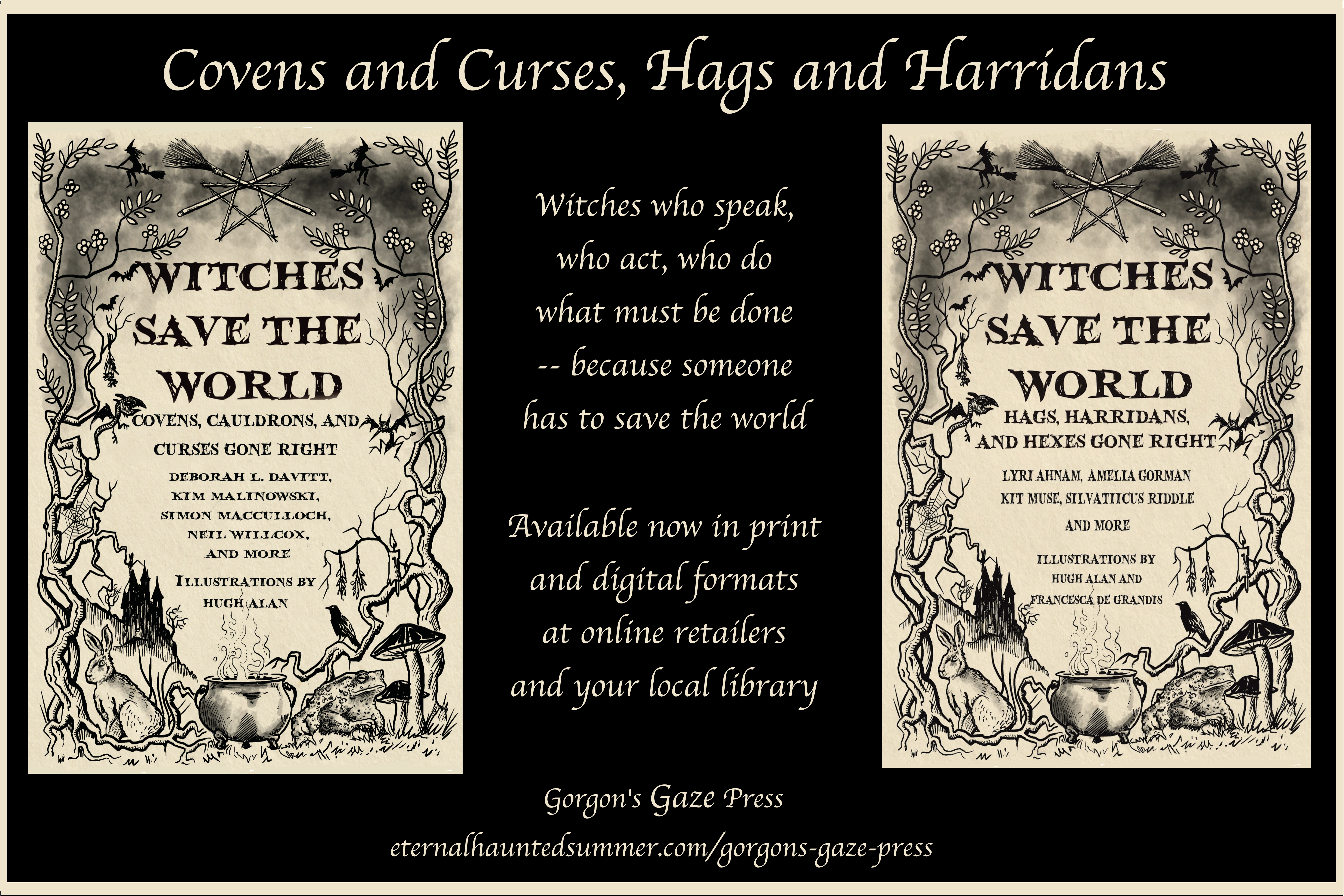
Welcome to the last — yes the LAST! — installment of the Witches Save the World Micro-Interviews! In honor of the Halloween/Samhain holiday, and in celebration of the release of Witches Save the World, Forests Haunted By Holiness has featured a series of interviews with the contributors throughout October. This marks the final interview. Tomorrow, two names will be randomly drawn from the comments, and each will be given one free copy of one of the anthologies: either Hags, Harridans, and Hexes Gone Right or Covens, Cauldrons, and Curses Gone Right.
Witches Save the World was a labor of love. Across these two volumes you will find poems, short stories, and essays celebrating the witch and their role as wisdom keeper, protector of nature, avenger of the forgotten, and defender of the oppressed. Individual poems and stories range from historical fantasy to contemporary horror to science fiction, with many questioning the nature and cost of honor, integrity, and freedom.
Ready? Let’s get started!
Forests Haunted By Holiness: What is the title of your story and can you give us a spoiler-free summary?
Alice Dillon: My story is called ‘The Blackened Grin of Justice’. It follows a woman called Agatha as she acquires an unholy ally in her fight against contagion.
FHBH: How did you go about writing your story? Lot of research? Or did you just wing it?
AD: I almost never know where a story will end up until I’m writing it, and this one was no different. I wrote it in a bit of a frenzy, scribbling in my notebook every spare moment, and even typing on my phone as I walked. Perhaps, like Agatha, I was possessed by some kind of demon.
FHBH: What draws you to the character and theme of “the witch”? What do you find so compelling about it?
AD: The figure of the witch appears in many forms across literature, but her status as an outsider is almost always present. She is the queered Other who lives on the fringes of society and makes her own rules. Whether she applies those rules for good or ill, or perhaps a mixture of both, she represents the power that comes from refusing to follow the status quo. For anyone who has ever been marginalised by society, there is no archetype more compelling.

