Prologue
The scent of blood and smoke mingled with the morning mist. Ketil clung to Tofa, both silent before their captor, Hakon — a man Ketil’s father once called friend.
Ketil was sold to Roman slavers as a thrall. That was the last time he saw his mother. On Hakon’s longboat, tears and blood staining her cheeks. All she could do was stare at him with hopeless eyes. He stared back from the slaver’s dock until she and Hakon vanished into the mist.
The slavers quickly sold Ketil. The snowcapped mountains and icy fjords of his homeland soon gave way to the fortified walls and rocky hills of Constantinople. He was bartered like cattle, treated poorly by some, better by others. Through years and many masters, he never forgot his mother’s bloodied face or his father’s belt around Hakon’s waist as the ship disappeared into the mists of the Volga River.
The night before everything changed, Sigvid, Ketil’s father, told him a story about that belt—a trophy he and Hakon had taken while raiding. It was good leather, fitted with a bronze buckle and a serpent’s head.
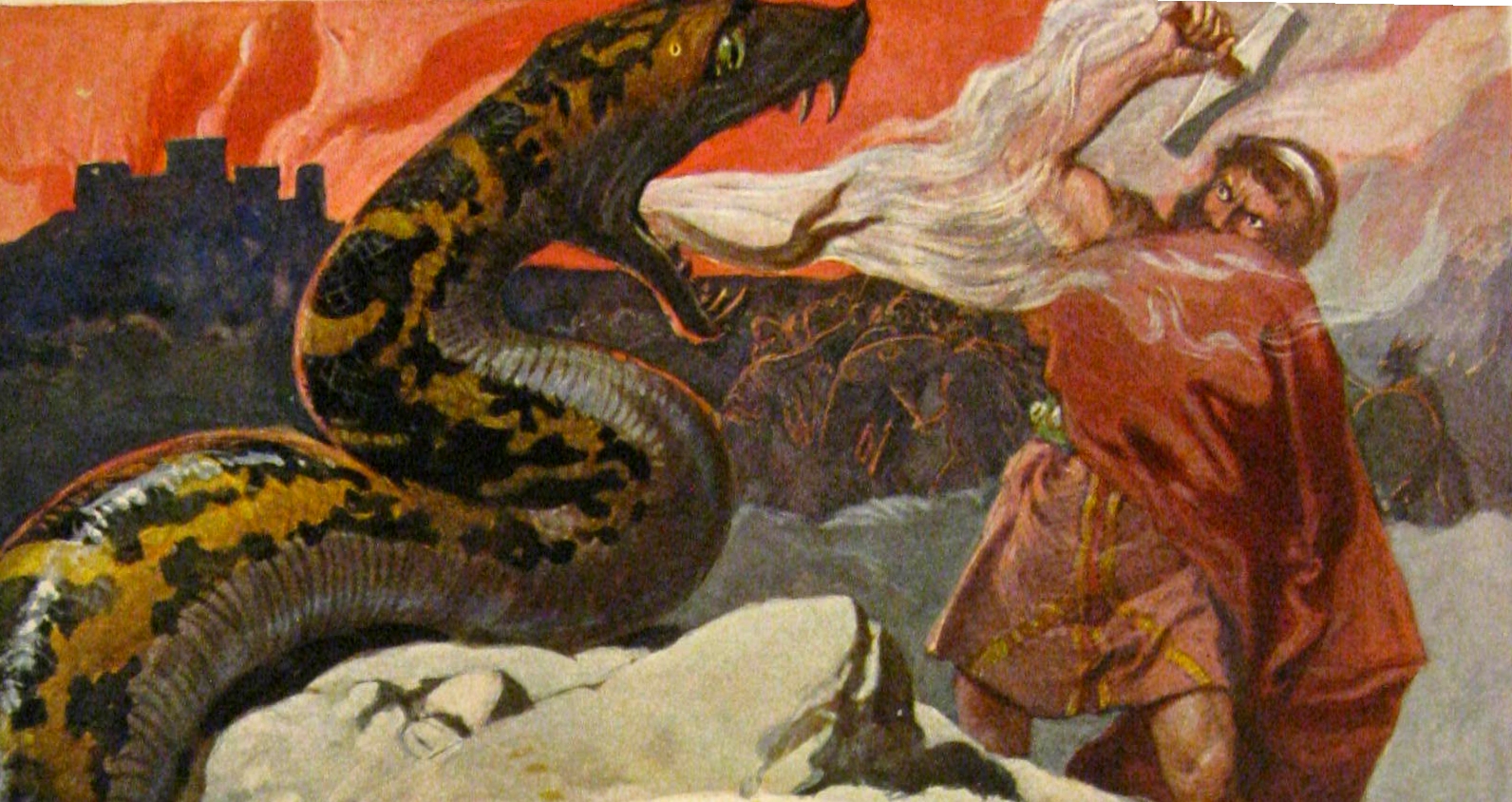
“It is Jörmungandr,” said Sigvid, “Thor’s-Bane. He is the serpent who squeezes the world, a remnant of the old stories and the son of Loki, the betrayer. The old legends are dying, and so too are the old ways. Remember where you come from, son, and the warriors from whom you are descended.”
A Holmgang
Through might and guile Ketil escaped his lowly life as a thrall. He joined the Varangians. Northern mercenaries employed by a southern emperor. After two years Ketil earned enough prestige to demand a holmgang with Hakon, who had risen high in their ranks. Not realizing who the young warrior was, Hakon dismissed Ketil’s challenge. When Ketil revealed himself, Hakon had no choice but to accept or risk being seen as a coward. The place was set near the sea, among bones of the unclaimed, away from the emperor’s gaze.
Axe and shield clashed as two sons of the north met that day, knowing only one would walk away. Hakon fought with years of raiding behind him. Ketil sang his father’s song. He knew Sigvid watched from Odin’s Hall
Remember where you come from, son, and the warriors from whom you are descended.
A Bed of Bones
Hakon sundered Ketil’s last shield to splinters. The young warrior was without a shield and grievously wounded. Through bloody teeth, Hakon smiled a wicked smile and raised his axe to deal the final blow. Seeing an opportunity, Ketil charged Hakon, grabbed his father’s belt, and pulled. The old belt broke in two, causing Hakon’s breeches to fall. Surprised, Hakon looked down. With the last of his strength, Ketil brought the head of the bronze snake down into Hakon’s revealed neck. The old warrior dropped silently onto the bone-littered shore. Over Hakon’s broken body, Ketil sang his father’s song.
Remember where you come from, son, and the warriors from whom you are descended.
[A.C. Mallard is a writer from North Central West Virginia. His work includes short fiction, poetry, screenplays, and play scripts. Nature and mythology inspire much of his writing. A.C. believes the old stories are key to understanding humanity. When not writing or at his day job, A.C. attends art shows with his talented artist wife, chases fish in local streams, or explores the woods of his Appalachian home with his four-legged best friend.]

