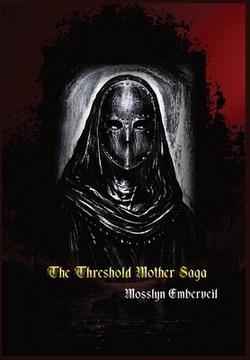
[Today we sit down for a quick interview with debut author Mosslyn Emberveil. Here, she discusses her new book The Threshold Mother Saga; the research that went into it; and her forthcoming projects.]
Forests Haunted by Holiness: How do you define your personal spiritual practice? Does it have a name or is it more intuitive and eclectic?
Mosslyn Emberveil: My practice is rooted in seiðr, the old Northern traditions of spirit work, fate work, and relationship with land, ancestors, and the unseen. While many people use broad terms like “Norse Pagan” or “Heathen,” neither fully captures what I do, but I will use both terms for quick conversation. I have practiced seiðr for more than two decades. My work is deeply informed by Old Norse sources, but it is also shaped by the realities of the place where I live: the marshes, forests, and farmlands of the American South. Rather than attempting to recreate the past exactly as it was (or worse, bastardize it to suit personal views or gain), I seek to cultivate a living relationship with the powers that still speak through land, memory, story, and sacred encounters. I like to say I am inspired by the past, not bound to it. We live in modern times with all the pleasures and displeasures that brings. In my eyes, this religion has always been about adapting to live within the world around you, both seen and unseen while maintaining your connection to the land, the ancestors and the gods/godesses.
FHBH: Which Deities, Powers, or other spirits do you honor in your practice?
ME: My practice centers primarily on Freyja, Hel, the Nornir, and Heimdall. Each represents a different aspect of the mysteries I work with: transformation, endurance, fate, and sacred watchfulness. Beyond the gods, I honor ancestors, land spirits, and what many Northern traditions would call the hidden folk. I do not see the spiritual world as divided neatly into categories. It is a living community of relationships, obligations, and encounters. I am just lucky enough to get to see those threads of connection. For me, honoring these beings is less about worship in the modern sense and more about maintaining relationships through respect, offerings, remembrance, and action.
FHBH: Your debut novel The Threshold Mother Saga is coming out in August 2026. First, congratulations! Second, what does the title mean? What sort of threshold and what does it mean to be a mother in this context?
ME: Thank you, I’m truly beside myself with excitement to bring this creation into reality with the guiding hands of The Three Little Sisters.
The threshold in this story exists on several levels. It is the place between worlds, between the living and the dead, between memory and forgetting, between who we have been and who we may become. It is also the moment of decision when a person can either step forward into transformation or retreat into comfort. I know, it’s super cryptic. I am a bog witch after all.
The Threshold Mother is not simply a biological mother. She is the keeper of crossings. She is the figure who stands at the gate and asks whether we are willing to continue. I myself have walked through life never being a mother in the physical sense. I have never given birth or been pregnant due to extensive health issues. However, what has been shown to me many times over through others and my own encounters is that a woman does not have to give birth to be a mother and every woman who bears a child is not necessarily a mother in action. That is where the other parts come in, within my dedication I thank the ones that made me a mother through action and name not by birth. The Threshold Mother could be a biological mother, but she is more the embodiment of the threshold and those who walk through it. Throughout mythology, initiation often requires a guide, a guardian, or a witness. The Threshold Mother embodies all three. She nurtures growth, but she also demands courage. She cannot carry us across. She can only open the way.
FHBH: The description for the book notes “the story […] is no mere retelling or imaginary creation, it is a modern saga of re-encountering.” To begin, how did you learn to distinguish between imagination and remembering?
ME: I don’t believe the line is always as clear as modern culture would like it to be. Stories have always been one of humanity’s primary ways of carrying memory. Sometimes a thing arrives as imagination. Sometimes it arrives as dream, symbol, intuition, or sudden knowing. The challenge is not proving one is real and the other is not. The challenge is learning to sit with an experience long enough to understand what it is trying to communicate. What I call remembering is not necessarily recalling a historical event. It is recognizing something that feels older than oneself. A pattern. A truth. A story that seems to know you before you know it. The saga emerged from those encounters woven beautifully with real lived events during the time I wrote The Threshold Mother Saga. There was this bending of time, dreams, visions, reality, and what lay just beyond that veil throughout the whole experience. I could probably fill another book just with those lived events. My journals certainly overflowed during those months.
FHBH: Additionally, how did you go about translating that remembering into a story? Long hours typing away at the computer? Scribbling notes when your thoughts became clear?
ME: A little of everything you listed. The saga honestly began with a dream about a necklace that felt so real I even checked the recently viewed ads on social media. I could have sworn that in a half asleep haze I had seen it for sale. I could feel its weight in my hand and hear the jingle of the duckfeet dangling like some haunting refrain. So literally it began as a dream then the floodgates opened as fragmented pieces to decipher, dreams, journal entries, observations, conversations, bits of folklore, and scenes that refused to leave me alone. Some arrived while I was walking the land, or sitting on the dock at my marsh. Others appeared in the middle of the night and had to be written down before morning. Over time those fragments began weaving themselves together.
The writing process felt less like constructing a story and more like uncovering one. I don’t know how else to say it other than I felt like I was writing a story I should have known all along. Of course, there were also countless hours at the keyboard shaping, revising, researching, and wrestling with the manuscript. Endless cups of coffee and perfectly timed snacks delivered often by my supportive husband. Inspiration may begin a saga, but discipline, follow through, and hard work are what eventually puts it on the page.
FHBH: You also challenge your readers: “Will you dare to revisit the marsh as well and remember the old ways?” How and why did we forget the old ways? And are there any of the old ways you feel it is especially important to recover now, in this day and age?
ME: I think forgetting is part of being human. Cultures change. Technologies change. Generations pass away. Every age gains something and loses something. When I speak of remembering the old ways, I am not advocating for a return to the past. I do not believe the answer to modern problems is simply reenacting ancient customs. What I believe we have lost is relationship, true connection to the humans and nature that surround us. We have forgotten how to listen to the land beneath our feet. We have forgotten how to sit with our ancestors. We have forgotten that wisdom often arrives slowly rather than instantly. If there is one thing I hope people recover, it is the art of stillness and attention. The old stories teach us that the world is alive and speaking. Most of us have simply become too distracted to hear it. Slow down and listen. You never know what you may hear.
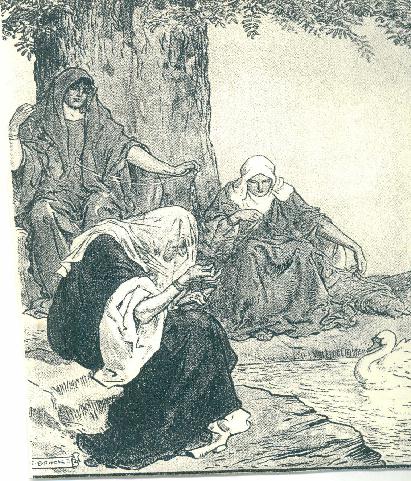
FHBH: How do the Nornir fit into this story?
ME: The Nornir stand at the heart of the saga. Many people think of them as fate goddesses who simply decide what will happen. I see them differently. They are the keepers of continuity. They maintain the threads that connect past, present, and future. Throughout the story, the characters repeatedly encounter the consequences of choices made long before they were born. The Nornir represent that reality. We inherit stories, wounds, obligations, and blessings. We do not choose where the thread begins, but we do participate in where it goes next. In many ways, The Threshold Mother Saga is a story about what happens when those threads begin pulling on us again.
FHBH: Which book fairs, conventions, or other events do you hope to attend in the foreseeable future?
ME: Right now my primary focus is introducing readers to The Threshold Mother Saga and connecting with the communities that have supported my work from the beginning. I’m particularly interested in events that foster meaningful conversation rather than simply large crowds. Independent book festivals, folklore gatherings, Pagan and Heathen conferences, and literary conventions are all spaces I hope to explore as opportunities arise. My health limits my travel, but Nornir willing I will get to meet the spirits I am meant to along this journey. For me, the most rewarding part of any event is the chance to sit down with readers and hear what stories have meant to them.
FHBH: What other projects are you working on?
ME: Far too many, if I’m being honest. I cannot stay focused on just one project, my brain likes to see how many plates I can spin until system failure or override kicks in (Override is usually the husband lovingly suggesting a break or even my publisher demanding I take down time). Much of my current work explores the intersection of folklore, spiritual practice, memory, and storytelling. Some projects are nonfiction works on seiðr and ritual practice. Others examine folklore through a modern lens. I also have several additional saga and fiction projects waiting patiently for their turn. My writing process has a bit of chaos bog gremlin vibes and I really wouldn’t change a thing about it.
At the moment, however, my attention belongs to The Threshold Mother Saga. After spending so many years walking alongside these characters, it is a tremendous privilege to finally place the story into readers’ hands and watch where the journey takes them next. But keep an eye out, last road map meeting with my publisher I may have pitched over forty-five works; to which she laughed and said, “Well, ok then we are going to be busy.”. She loves me I promise.


Looking forward to purchasing and reading this book keep up the good work!
Can’t wait for the book to come out! This is going to be a good read