So often, academic life feels like a quest to explore the biggest and the best, to stand on the shoulders of literary giants and use their texts as lenses to interpret the world. Although studying scholarly volumes leads to intellectual illumination, the academy’s preference for works of substantial length and weighty subject matter often relegates my favorite topics, fairy tale, folklore, children’s literature, and domestic fiction, to the shadows. A lifetime of studying these “small” things has taught me not only that they carry profound meaning, but that an attention to the smallest elements within larger texts can meaningfully alter our perceptions of the whole. When we shift our way of seeing, we realize that small words and images often convey the deepest symbolism, and an issue dedicated to Flash Fiction and Poetry, a genre defined by its brevity, seems the perfect place to explore the transcendent beauty of the small in art, nature, and spirituality.
Multum in Parvo, a Latin phrase meaning “much in a little,” exemplifies how even the smallest item can contain reflections of a greater whole within it. In literary studies, Multum in Parvo is most readily applied through the technique of close reading. When we find a work’s larger purpose in one short sentence or descriptive image, we know the writing’s form and content are woven tightly together, making it sing in a way less crafted works do not. The use of close reading to assess literary merit proves that storytelling does not need epic length to perform its most potent magic. The flash genre, which limits elaboration by diminishing word count, forces writers to imbue deep meanings into each small word and phrase, ensuring their final product transcends the constraints of its physical form. The tight, purposeful language found in flash fiction and poetry reminds us that even the smallest words carry precious power.
Like most writers, I have always loved words. Words convey information, harness emotion, and evoke images in the mind. Words may seem like small things to some, but writers and artists have always understood that words are paramount to thought itself. Properly wielded, words can change the world, and small though they are, their sacred value must be protected.
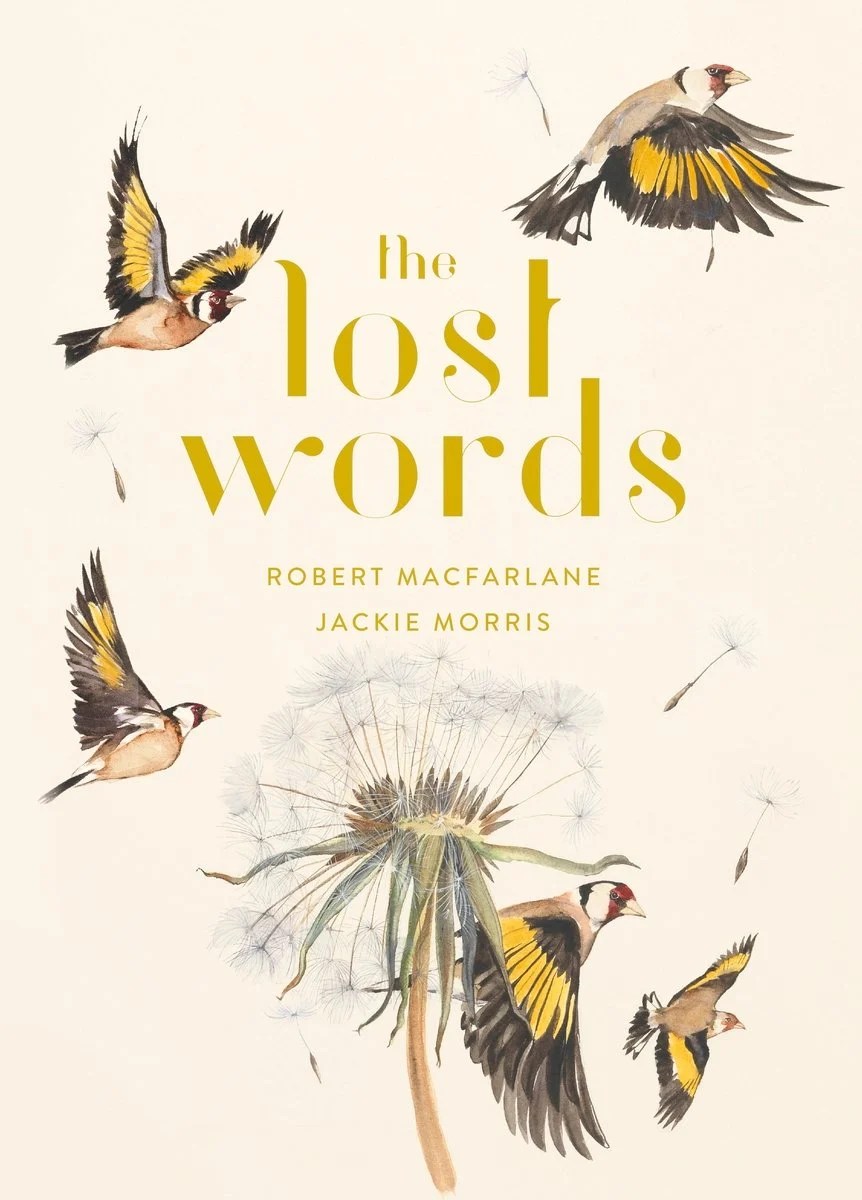
The Lost Words: A Spell Book, published in October 2017, is a book which seeks to protect abandoned words. Written in response to the removal of everyday words from the widely used Oxford Júnior Dictionary, the book highlights the vital role that even the smallest words play in shaping our perceptions of the natural environment. Its poet, Robert Macfarlane, and its illustrator, Jackie Morris, take issue with the dictionary’s replacement of nature-based words like acorn, bluebell, kingfisher, and wren with technological words like attachment, broadband, bullet-point, and voicemail. Without words to define and navigate the natural world, new generations will lose their ability to foster and protect the environment, and an emphasis on technology over nature, even at the basic word level, will influence our perceptions of humanity’s place within the structure of the universe. Together, Macfarlane and Morris reintegrate each “lost” word back into children’s vocabularies by creating acrostic poems accompanied by gorgeous watercolor triptychs. The poems, which are labeled as spells, are meant to be spoken or sung aloud, summoning the words and their meanings back into children’s minds and hearts.
After winning the Children’s Book of the Year award in 2018, The Lost Words inspired other artists and activists to join the movement to protect words that help us understand and interact with the natural world. Spell Songs, an album commissioned by The Folk of the Oak festival in 2019, is a collection of fourteen folk songs inspired by The Lost Words poems, and its musical lyrics extend Macfarlane’s project by bringing the book’s written and visual work into oral circulation. The final track on the album, The Lost Words Blessing, unfolds like a lullaby, a small, simple song usually reserved for the comfort of children. The lyrics advise listeners to walk through the world with care, letting the names of small things in nature take root in the imagination. “Like the gilded one in flight,” the singer Karine Polwart croons, “leave your little gifts of light / And in the dead of night my darling / Find the gleaming eye of starling / Like the little aviator, sing your / heart to all dark matter.” The song teaches that the key to a meaningful life, one that combats the dark matter, lies not in large, overwhelming tasks but in small ones which can yield achievable change. The message of The Lost Words: A Spell Book and the movement it initiated is clear; although words may be small things, they are valuable in helping our minds to envision, contemplate, and change the vast world around us.
In addition to highlighting the importance of small words in language acquisition, The Lost Words encourages readers to connect with nature, for it is within the small, everyday interactions we have with nature that we see the glory of the universe reflected. The grand spirals of galaxies are echoed in the small whorls of nautilus shells, the circular arrangement of pinecone scales, and the swirling motion of Humpback whales casting nets of bubbles to trap their prey. The sublime landscapes of nature may elude us and give us pause, but we can all revel in the beauty of the smallest elements, knowing that even the most accessible pieces of the natural world contain the whole of creation within them.
The concept of Multum in Parvo which we see in language and nature can also be used to help us understand the multiplicity of spiritual systems that operate across timelines and geographical locations. There are, of course, great and all-knowing spirits whose actions usher in the creation of the universe itself, but so too are there smaller deities who reflect the beauty of that creative whole. The Greeks give us immense Titans and powerful Olympians alongside minor gods like Morpheus, who rules over dreams, and nature spirits like dryads, whose very existence is often tied to the life cycle of one tree. The Norse pantheon includes Odin, the “All-Father” and Thor, the commanding warrior, but also an entire host of Minor Aesir like Forseti, the god of justice, peace, and truth. For every cosmological myth about the creation of the universe there are a dozen etiological myths about the creation of specific flowers, cultural customs, or natural phenomena. The act of creation can be initiated by an all-knowing deity, the stirring of a liquid-filled cauldron, the mating dance of a Sandhill Crane, or the flooding of ink on paper. And, in many spiritual belief systems it is the presence or absence of small, simple words, either spoken or written, that bless and cleanse ritual spaces, focus intent, and evoke the strongest blessings and protections. Even the small words that make up the whole of a prayer, spell, or incantation shape our understanding of reality, providing us with vehicles to connect with the divine.
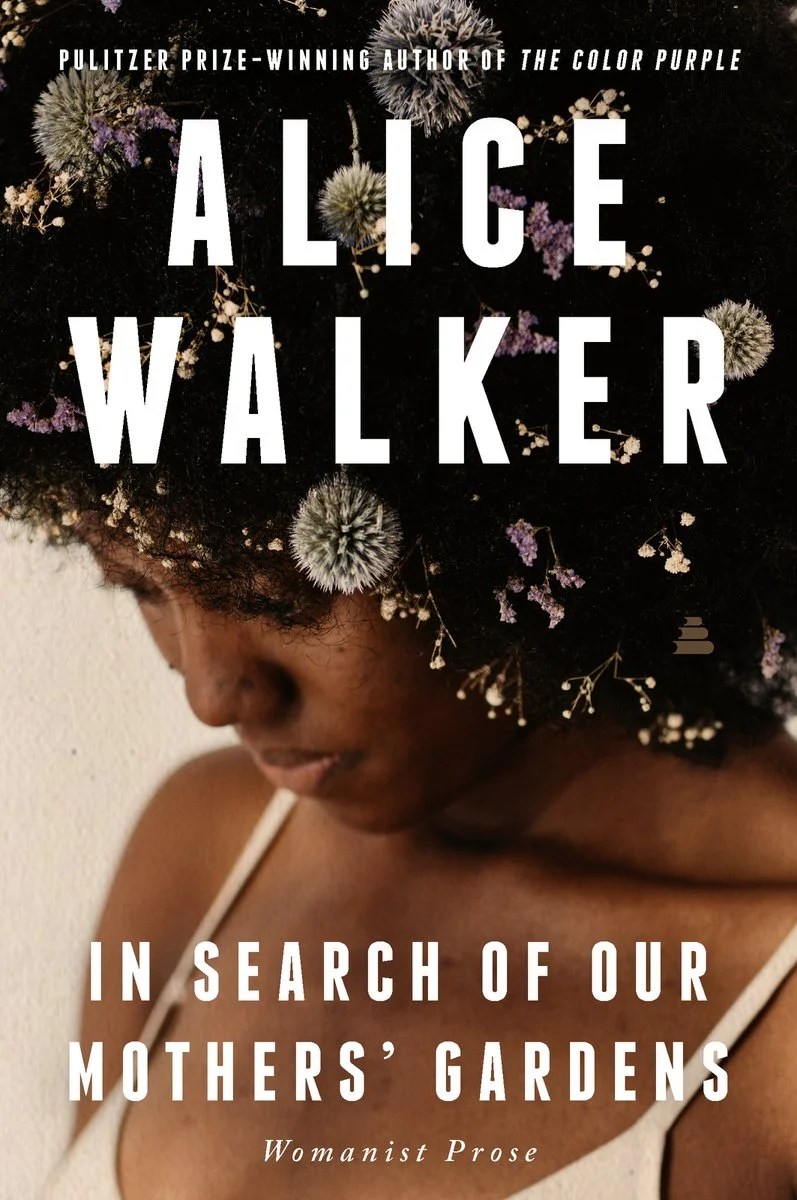
The beauty of small things in art, nature, and spirituality is explored in a short essay I often teach in my classes, Alice Walker’s In Search of Our Mother’s Gardens. Musing on the lives of creative Black women forced to toil away in the “heat of the post-Reconstruction South,” Walker contemplates how they must have “forced their minds to desert their bodies” as their “striving spirits sought to rise, like frail whirlwinds from the hard red clay.” Because their access to larger creative outlets was limited by societal structures beyond their control, the women kept their creativity alive in small ways. Walker’s mother, as much a creator as any goddess, expressed herself by cultivating flowers and ordering the rows of her small garden into shapes that reflected the complex beauty of the universe. “Whatever she planted grew as if by magic,” Walker writes, “and her fame as a grower of flowers spread over three counties. Because of her creativity with flowers, even my memories of poverty are seen through a screen of blooms—sunflowers, petunias, roses, dahlias, forsythia, spirea, delphiniums, verbena…and on and on.” Walker’s essay reminds readers to look both high and low, to contemplate both large and small, and she urges everyone to examine their own mothers’ gardens, her metaphor for the seemingly small ways marginalized people have kept their artistry alive in worlds which seek to confine and control them.
Another short piece I often share with my students to help them contemplate the enormity of small things comes from Emily Dickinson, a 19th century American poet famous for packing layers of complex meaning into works crafted of simple words and startling dashes:
The Brain — is wider than the Sky —
For — put them side by side —
The one the other will contain
With ease — and You — beside —
The Brain is deeper than the sea —
For — hold them — Blue to Blue —
The one the other will absorb —
As Sponges — Buckets — do —
The Brain is just the weight of God —
For — Heft them — Pound for Pound —
And they will differ — if they do —
As Syllable from Sound —
In this poem, Dickinson beautifully compares the size of the human brain with the endless stretches of space and sky, the unfathomable depth of the ocean, and the incalculable weight of God. The human brain, though small in physical size, is not less than the larger objects mentioned. In fact, the smallest objects in the poem, the human brain and a sponge, can absorb far more than their size implies, and the unknowable human mind housed within the muscle of the brain both responds to and expands upon the vast wholeness of physical and spiritual creation. Dickinson’s daily life was confined to a small domestic realm, and her poems, unpublished in her lifetime, were found clustered in tiny homemade fascicles bound with thread, but her subjects transcend the narrow limits of her social experiences. Dickinson’s poem perfectly demonstrates that small things can contain multitudes within their tiny spheres: Multum in Parvo.
If attention to small things can help us comprehend our artistic and spiritual place within the natural world, then small pieces of writing, like flash fiction and poetry, offer us far more insight and illumination than their brief forms seem to allow. The presence of unsaid things, often necessary when a piece of writing is limited by a prescribed length, carries important meaning. And, writing that explores topics deemed small by academia, topics like fairy tale, folklore, and mythology, can also surpass the narrow definitions thrust upon them if only we learn to see them with new eyes.
Flash fiction and poetry are condensed genres of writing which force artists to weigh the power of each word against the power of the white, silent spaces between them. Like nesting Matryoshka Dolls which open to reveal smaller versions of themselves inside their larger shells, abbreviated forms of flash fiction often contain all the power and meaning of a writer’s larger message. The compressed artistic expression in Eternal Haunted Summer’s Flash Fiction and Poetry Issue points to the immense beauty of art, nature, and spirituality stitched into the enchanted fabric of small things.
Works Cited
Dickinson, Emily. “The Brain — is wider than the Sky —.” The Norton Anthology of American Literature, edited by Nina Baym, W.W. Norton, 2012.
Macfarlane, Robert, and Jackie Morris. The Lost Spells. House of Anansi Press, 2020.
Polwart, Karine, perf. “The Lost Words Blessing.” Spell Songs, G2 Records, 2019, CD.
Walker, Alice. In Search of Our Mothers’ Gardens: Womanist Prose. Harcourt Brace Jovanovich, 1983.
[Kelly Jarvis teaches at Central Connecticut State University and works as a Contributing Writer for The Fairy Tale Magazine and a recurring columnist for Eternal Haunted Summer.Her poetry and stories have appeared in A Moon of One’s Own, Blue Heron Review, Corvid Queen, The Chamber Magazine, The Magic of Us, and Mothers of Enchantment: New Tales of Fairy Godmothers. Her debut novella, Selkie Moon, was a semi-finalist in the 2025-2026 Speculative Fiction Indie Novella Championship, and her new novel, Sea and Stars, publishes in July. Visit her at https://kellyjarviswriter.com/]

