Welcome to the latest installment of the Witches Save the World Micro-Interviews! In honor of the upcoming Halloween/Samhain holiday, and in celebration of the release of Witches Save the World, Forests Haunted By Holiness will be featuring a series of interviews with the contributors throughout October.
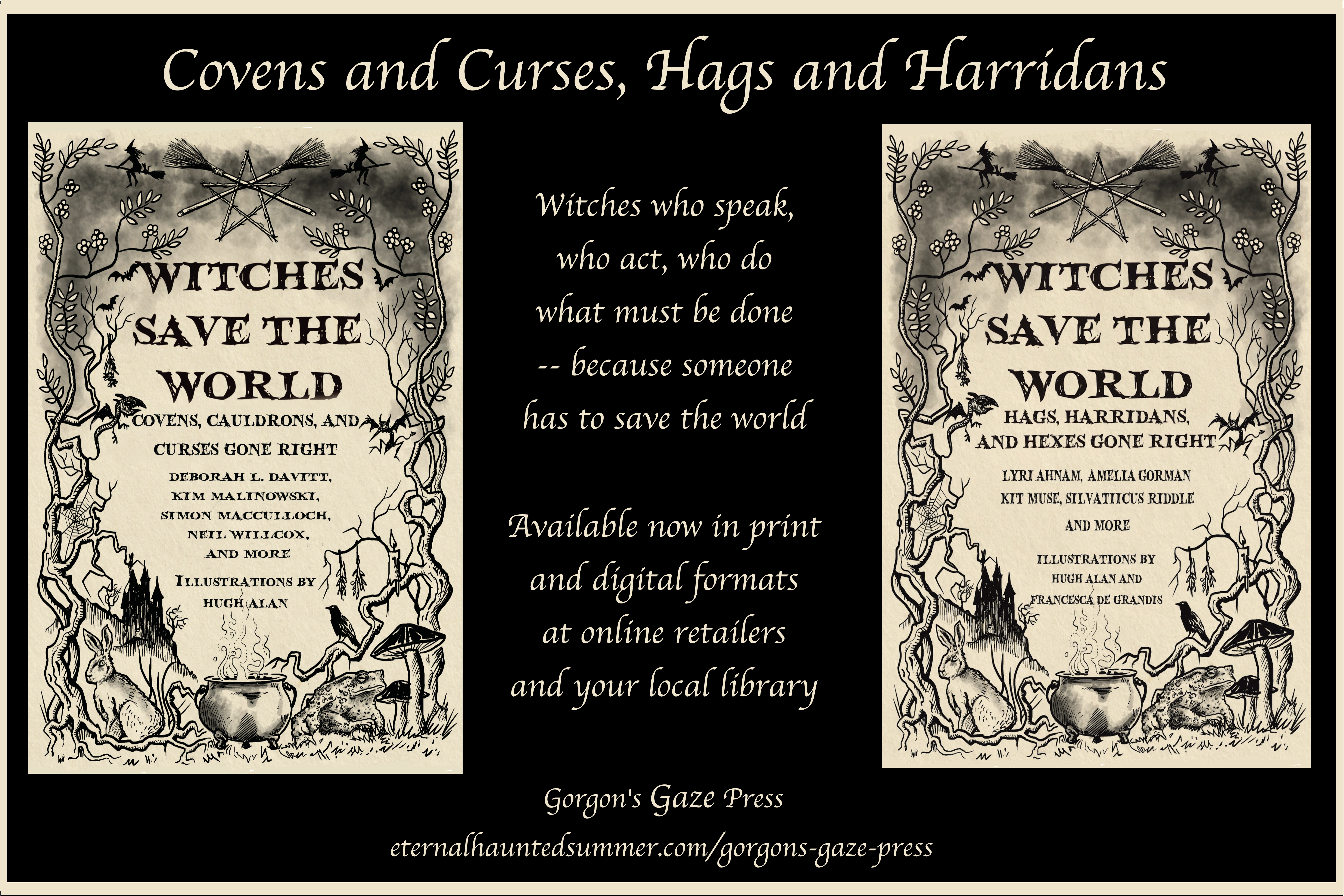
Witches Save the World was a labor of love. Across these two volumes you will find poems, short stories, and essays celebrating the witch and their role as wisdom keeper, protector of nature, avenger of the forgotten, and defender of the oppressed. Individual poems and stories range from historical fantasy to contemporary horror to science fiction, with many questioning the nature and cost of honor, integrity, and freedom.
In concert with these interviews, one physical copy of Witches Save the World — either Hags, Harridans, and Hexes Gone Right or Covens, Cauldrons, and Curses Gone Right— will be given away at the end of the month! Two books, two winners! To enter the drawing, just comment below and share the interview on your favorite social media platform.
Ready? Let’s get started!
Forests Haunted By Holiness: What is the title of your story and can you give us a spoiler-free summary?
Lyri Ahnam: “A Sorcerer is Born” reimagines the Greek goddess Circe as rule-bound priest Sary trying to get back to her comfortable life at the city temple—before she inadvertently summons a lioness and she-wolf who then refuse to leave.
It’s also a sapphic love story, an exploration of Pagan spirituality, a meditation on the nature of power and magic, and a celebration of gender pluralism.
FHBH: How did you go about writing your story? Lot of research? Or did you just wing it?
LA: This story is a “highlights reel” of some scenes from my novel-in-progress Sea God’s Lover. Sary is one of three point-of-view characters in the novel. I’ve done tons of research on my storyworld Kolkha — way more than I’ll ever need — but I’m a research nerd! I love exploring mythology, archaeology, and ancient history. It’s so fun to take a tidbit of research, like the three genders found in cemeteries of the ancient Near East, and extrapolate how three genders might’ve functioned in societies of the time period based on historical records, etc.
FHBH: What draws you to the character and theme of “the witch”? What do you find so compelling about it?
LA: The term “witch” and “wicca” are thought to derive from Proto-Indo-European *weyk-, meaning “to consecrate,” “to separate,” or to bend and shape. Though the word “witch” has been used to persecute women, and carries negative connotations in many modern Christian cultures, the base meaning describes my understanding of Paganism’s magic: to consecrate (by recognizing the inherent sacredness of our natural world); to seperate (into component parts for deeper comprehension); and to bend and shape perception. This last element is the point of my story: I want to look at the Greek myths of Circe and tease out a possible origin story that has nothing to do with ancient Greek heroes. How does it change our perception of Circe to understand her as someone with hopes and dreams similar to our own, caught up in events larger than herself?

