Welcome to the latest installment of the Witches Save the World Micro-Interviews! In honor of the upcoming Halloween/Samhain holiday, and in celebration of the release of Witches Save the World, Forests Haunted By Holiness will be featuring a series of interviews with the contributors throughout October.
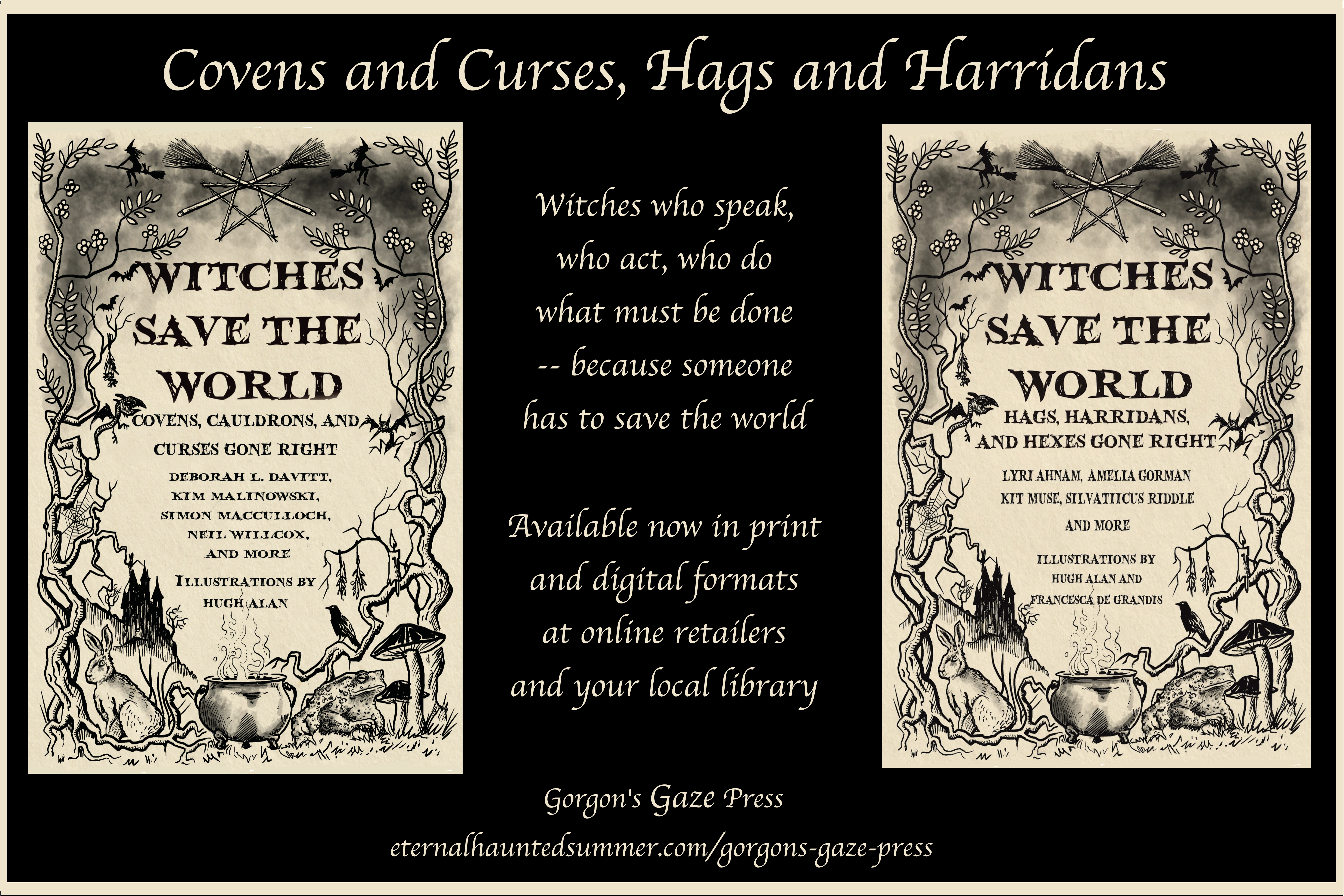
Witches Save the World was a labor of love. Across these two volumes you will find poems, short stories, and essays celebrating the witch and their role as wisdom keeper, protector of nature, avenger of the forgotten, and defender of the oppressed. Individual poems and stories range from historical fantasy to contemporary horror to science fiction, with many questioning the nature and cost of honor, integrity, and freedom.
In concert with these interviews, one physical copy of Witches Save the World — either Hags, Harridans, and Hexes Gone Right or Covens, Cauldrons, and Curses Gone Right— will be given away at the end of the month! Two books, two winners! To enter the drawing, just comment below and share the interview on your favorite social media platform.
Ready? Let’s get started!
Forests Haunted By Holiness: What is the title of your story and can you give us a spoiler-free summary?
Bryce Saputo: “Reap What You Sow” is about a cop who, while mourning his two friends, meets a woman in a bar. She offers a seemingly sympathetic ear, and the promise of being able to speak to the recently deceased prompts the officer to go home with her.
FHBH: How did you go about writing your story? Lot of research? Or did you just wing it?
BS: The process for this one began when I heard the song “The Witch” by Indra as featured on an episode of Welcome to Night Vale, but it wouldn’t really begin to take shape until it was steeped in the rage that can only come from current events. That was enough to help me land on the ending and figuring out how to get there was more a matter of winging it. Ultimately, I found leaning toward the folklore surrounding sympathetic magic helped guide the direction of the story as well as the magic system I employed. Whether or not any of those elements are accurate though would probably be better left to the practitioners.
FHBH: What draws you to the character and theme of “the witch”? What do you find so compelling about it?
BS: My fascination as a writer likely stems from witches’ versatility as characters. Witches can be terrifying eldritch villains with tremendous gravitas, or horror-themed superheroes balancing the physical and social costs of their abilities in order to do what’s right. The way I use the archetype, it tends to be a matter of what perspective I’m writing from: the witch featured in “Reap What You Sow” may certainly appear as the former from the cop’s perspective, but the person she’s avenging likely thinks of her more in the latter category. In that sense, what I find compelling about witches isn’t necessarily the occult abilities themselves, but instead how the characters choose to use the power they have access to and what they’re willing to sacrifice in exchange.

