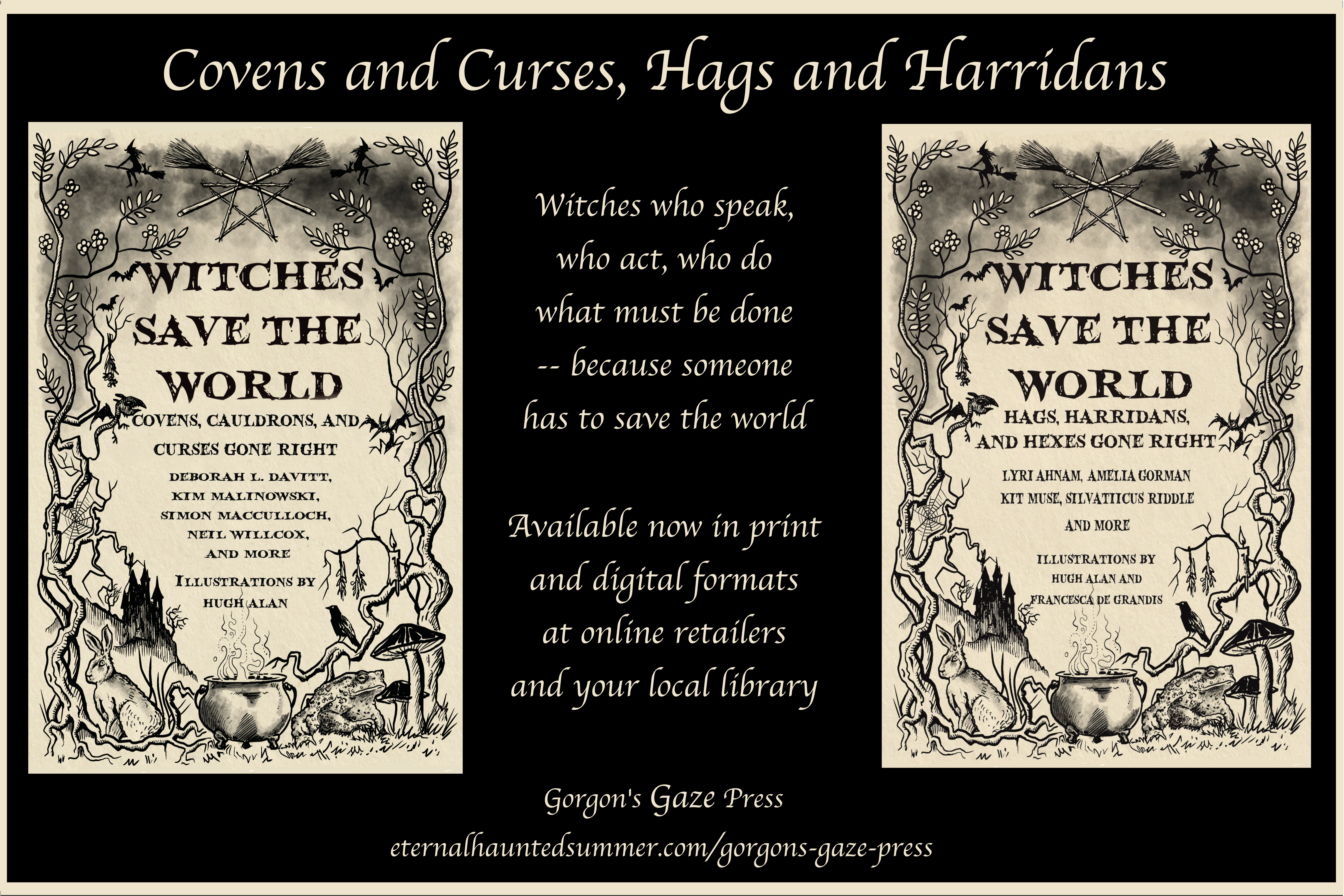
Welcome to the fourth installment of the Witches Save the World Micro-Interviews! In honor of the upcoming Halloween/Samhain holiday, and in celebration of the release of Witches Save the World, Forests Haunted By Holiness will be featuring a series of interviews with the contributors throughout October.
Witches Save the World was a labor of love. Across these two volumes you will find poems, short stories, and essays celebrating the witch and their role as wisdom keeper, protector of nature, avenger of the forgotten, and defender of the oppressed. Individual poems and stories range from historical fantasy to contemporary horror to science fiction, with many questioning the nature and cost of honor, integrity, and freedom.
In concert with these interviews, one physical copy of Witches Save the World — either Hags, Harridans, and Hexes Gone Right or Covens, Cauldrons, and Curses Gone Right— will be given away at the end of the month! Two books, two winners! To enter the drawing, just comment below and share the interview on your favorite social media platform.
Ready? Let’s get started!
Forests Haunted by Holiness: What is the title of your story and can you give us a spoiler-free summary?
Jennifer Weigel: “Frozen Words from a Lost Language” follows the witch as she is blamed time and again by the villagers for making their lives difficult through magical means. Despite her best efforts to live her life outside of their reach, she cannot evade their accusatory wrath and desire for vengeance.
FHBH: How did you go about writing your story? Lots of research? Or did you just wing it?
JW: Most of my stories evolve as wing it propositions, building on mood and sensory detail to evoke emotion. I had a sort of general feeling in mind when I wrote “Frozen Words from a Lost Language,” a sensitivity to the world outside of oneself. I wanted to convey a strong sense of repetition over time that could apply over years, decades, even centuries, thusly creating a timelessness which makes the story difficult to place outside of the fairy tale setting, becoming more of a pattern of events. The allegory applies beyond the reach of the specifics, casting the witch in a more deified and representative role than if she were an actual living, breathing woman. At its heart, my story essentially warns against vilifying that which we don’t understand in order to eschew blame ourselves, something I find all too common nowadays with as polarized as we’ve allowed ourselves to become.
FHBH: What draws you to the character and theme of “the witch”? What do you find so compelling about it?
JW: I am drawn to animals and the natural world, and I relate better to artists, writers, neurodivergents, and others who don’t follow traditional cultural norms than to society at large. I have myself felt outcast over much of my life, never fully fitting in anywhere or feeling safe among my peers, oftentimes even including other creatives and neurodivergents, so the allure of the witch persona has always been strong given the outsider role she tends to represent. Like most monsters, I have never perceived witches as inherently evil so much as misunderstood, and now, as I age, I better identify with the image of the witch as crone and the directness portrayed in the role of the older woman who simply isn’t going to put up with everybody’s crap any longer.

