
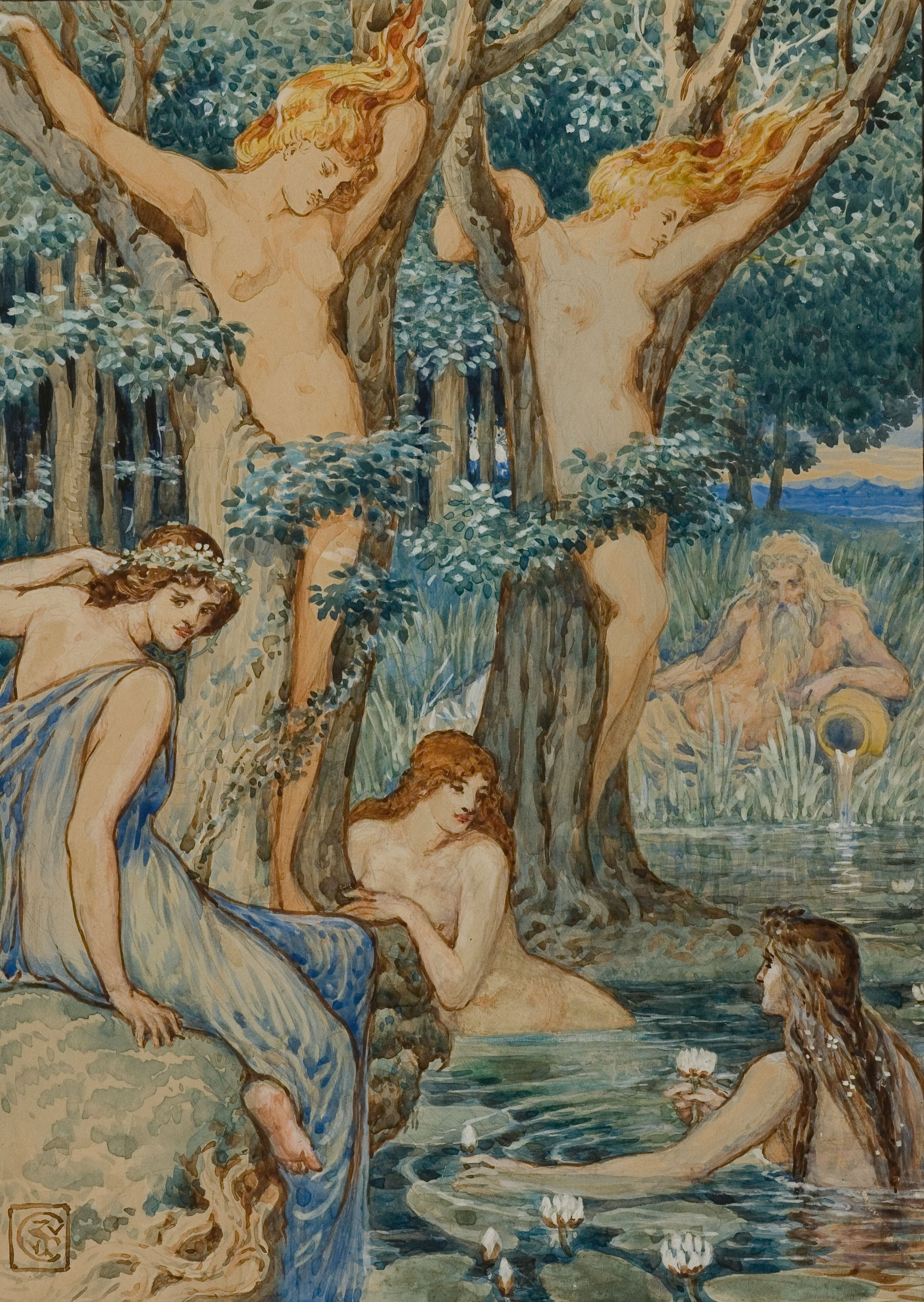
The moon was full and as yellow as the chainsmoker’s teeth.
Rada trudged along, doing her best to avoid thistles and nettles, something which she semi-succeeded in, even though various shrubs and small herbs did their best to trip her as she climbed up the steep mountain. She remembered coming to the mountain with her grandparents, her grandmother showing her where were the best places to pick the forest strawberries (tiny, so tiny, like drops of blood flowing from pinpricked fingers) while her grandfather cheekily smiled and showed her how to locate tobacco, how to roll it in a paper with his jaundiced fingers.
She didn’t feel comfortable on the mountain. She never did.
Not because she was a wuss, or too much of a city kid, or a preening girl, or whatever her older cousins had called her when she had been young and refused to play past the boundaries of the village. She was too young to explain it, to either them or her grandparents, but it was as if she could feel the earth and the wind and the trees staring her down, judging her, making it clear that she wasn’t welcome.
Now, walking through the mountain woods, the legions of thickly pressed fir trees, their bark nearly black, their needle-like leaves emerald, she felt it stronger than ever. There was tension in the air, which smelled of petrichor and old woodrot, as if the trees were barely restraining themselves from reaching out with their roots, wrapping them around her ankles, and pressing until the bone shattered.
She felt the same in the city, however.
The air there felt stale and hot, and it tasted of old oil and dust, yes. But it was more than that. Sometimes, she swore she could hear the earth groaning, cursing under the weight of asphalt, just as she swore she could hear electricity within household wires and street light poles hissing, like a snake waiting to strike at those who thought they could contain it. Within her own home, there was a constant nagging feeling, as if some nasty old man was whispering in her ear that she should get out and never come back, and she felt as if her father’s ancestors in old photographs were staring down at her in disgust.
Grandmother, the only person with whom Rada tried to talk about it, said it must be because of the way she was born.
Her mother’s water broke too early, they said. Rada herself was too impatient, and so she ended up born on the threshold of her grandparents’ house, half inside and half outside.
Rada found it hard to believe. Not the accuracy of the event itself, there was no doubt to it. Rada had always been drawn to the liminal existence; friendships where she hung on the edge of the group, the relationships that consisted of hatred and affection both; her accent hard and unusual to place, her most active time of day always being twilight. What Rada found hard to believe was it being an accident on her mother’s part.
Her mother had always been a methodical, clinical person, almost mechanical in some aspects. Haste was foreign to her, as if she had all the time in the world, and yet she was never late or mistaken, as if she could see the future of the entire Earth as easily as if it was laid out on her table, and plan accordingly. There was always an airy elegance to her movements, which appeared languid and unbothered, only for her to somehow overtake you by a mile. Rada’s mother could have entered a horse race on foot and won with a casual stroll.
Rada was nothing like her. Short and stocky where her mother was tall and slender, chatty and dissonant where her mother was quiet and melodic, ruddy when her mother was nearly bloodlessly pale, awkwardly overenthusiastic whereas her mother was always politely disinterested. In only one thing were they similar.
For though Rada’s hair was dark brown, worn out from various dyes, while her mother was famous for her unblemished, natural platinum shade, both of them had worn the same hairstyle Rada’s entire life. A cropped pixie cut.
’’Why can’t we grow out even bangs?’’ Rada had complained as younger, though even then she knew that no amount of whining would stay in her mother’s hand.
’’Because that is how your father wishes it,” her mother said, wielding scissors with the careful and cold precision of a cardiac surgeon.
Rada’s father had been a carefree, gentle man, though his wit could be sharp. He smelled of barbecue and motor oil, and he showered his stoic wife with affection, and called Rada his treasure.
But that was before Rada was eight. Before he had turned infirm and silent, lost in a dreaming haze even when awake, only occasionally snapping back to something resembling awareness to tell her same old story.
Three brothers, camping on the mountain. Coming across the fairy circle, seeing the vilas dancing. The first brother fell dead on the spot, his heart unable to bear such immense beauty. The second brother tore out his eyes and never regretted it, because they couldn’t stand looking at anything else after that. And the third brother, the most cunning and brave and the swiftest of the three, was invited to dance with the vilas, which he accepted though he knew that most who danced with fey ended up dead of exhaustion in the morning ….
Ever since she was eight, when visiting her grandparents’ village, Rada climbed up the mountain. It was only occasionally when she was child, but as she grew to adulthood, she would visit each night, up and down the pathless woods through the mountains. She found the circle, the piece of strangely flat and coloured grass at the very top, but never did she find vilas. She hadn’t expected anything different tonight.
When she got up, she found herself paralyzed, as if she had turned in the stone. For there they were, dancing through the air.
Šumarice.
Their bodies were firm and strong, and their skin resembled finely-grained wood, unvarnished surface decorated with asymmetrical whorls. Some were pale like birch, and others as reddish as cherry, but all of them had small beady eyes, the same amber colour as the wood resin. Instead of feet, they had the hooves of a deer. They wore long necklaces of pinecones, acorns and hazelnuts, and branches grew from their heads, like antlers. Their hair was dry and reddish, because it was now autumn, and decorated with a fuzzy veil made out of moss. From their backs, soft wings grew, each in the shape of leaves of their respective trees, enlarged to the point that it could carry their tall forms; Rada barely came up to their hips.
Zagorkinje.
They did not smile. Rada’s father said it was because their hearts were hard as rock, and because they did not understand the delicate feelings of the creatures of the flesh, nor did they care for things more transient than the mountains they watched over. Their skin appeared afflicted with vitiligo, for in some places it was as white as marble, and in others the warm, pleasant brown of fertile loam. Forking cracks spread over it, revealing ores contained within their veins. Their eyes were gray and dusty. Their hair fell down like a strand of wires, a dazzling colorful alloy of steel and gold and bronze, and their wings took the shape of fractal gems, ruby and sapphire and amethyst. Their veils were sheets of transparent crystal as thin as human skin, and when moonlight hit on one, lacelike geometric patterns etched on it could be seen.
Biljarice.
They varied most in size, some as small as bugs, others as tall as sunflowers or stalks of wheat. Their bodies were as thin as reeds, and seemed impossibly soft and boneless, so much that Rada was sure she could snap them with her bare fingers, tie them in a knot. They were as yellow as pollen, with pale green hair and berry coloured eyes, and their feet and fingers seemed strangely tangled and deformed, like the roots pulled from the earth. Everywhere around them, the heavy smell of burning herbs spread, and butterfly shaped wings grew from their backs. Their veils had the same texture and colour like petals of a daisy, the flower after which Rada was named.
Vodarice.
They numbered the least, the water fey, drawn from local rivers and ponds. Their skin was waxlike and indigo-tinged, as that of a drowned corpse, and Rada found it hard to watch them, for they moved through air as if they were underwater, and their bodies were amorphous, shifting from cutely plump to fatally underweight, from the form of a child to that of a hag within a minute. Their eyes reflected their surroundings, and their hair was as white as the roaring foam of the waves that drown swimmers and tear apart logs. Their wings were translucent, shaped like those of dragonflies, and their shimmering veils were like miniature waterfalls, in a thousand shades of blue.
They were beautiful, and impossible, and timeless, and Rada did think of plucking out her own eyes so she would never again have to look at anything else, and she found them lacking, and dropped at her knees, screaming like a wounded animal, beating her fists on the earth until they bled.
The scream came out of her parched throat as a raw, ferocious sound, akin to a heavy slam of the thunder. It hurt her too, hurt so much that it felt as if her vocal cords were tearing themselves apart, but she couldn’t, wouldn’t stop. She started beating herself over her head, but it wasn’t enough, even as concussion threatened to overwhelm her, so she started scratching her own face, leaving deep gouges in the flesh.
’’Half-breed.’’ A voice stopped her, patient, even, clinical. A deep alto, firm and velvety, and powerful enough that it seemed as if it could break her bones with a mere word. Rada stopped, and looked up.
Vilas gathered around her, like a swarm of bees. Fire did not lash out of their eyes, nor did they turn into boars and serpents, nor did they strike her down with leprosy and madness, as in some tales. They simply appeared a bit puzzled, a bit interested, but not very much.
’’Half-breed. What are you doing?’’ asked the vila in the very front, a zagorkinja whose hair appeared to be woven out of tin, and who had a patched hole in her torso, through which Rada could see hollowness. She remembered that her grandparents told her once that there used to be a mine on the base of the mountain, but that it was emptied out nearly a century ago.
’’My mother is not here,” Rada whispered, hoarse. She looked over them, and each was unique and beautiful, but none of them was as white as freshest snow, as cotton, not one of them had large swanlike wings or hawklike claws or wispy hair, not one of them crackled with lighting or wore a veil made out of mist. Not one of them was oblakinja.
The lead zagorkinja leaned in and sniffled Rada, like she would do to an animal. After she retreated, her gray eyes stared at Rada with something that slightly resembled kindness, but was mostly amused bafflement.
’’Why would she be? The cloud-kin rarely descend from the skies, and when they do, it is so that they could explore the world. If she was here, she won’t return until the continents have danced a new dance, and I am ground down to the dust,’’ the Zagorkinja told Rada, not unkindly, and Rada noticed that unlike other mountain fey, she had no feet, but was growing out of the earth.
’’I don’t suppose you know of a way to track her down?’’ Rada asked, wryly smiling, rubbing her crying eyes. It was no use, she knew that. Rada’s mother had never sought company, even if she didn’t complain if it formed around her, and she always appeared endlessly confused by the human need for names.
’’You could catch a wind and have it carry you to her, perhaps,’’ said one of the šumarica, whose wings, thin and pointed emeralds, told Rada that she was a fir-fairy. The words were not mocking, but sweet and cheerful, and Rada could only laugh at how life had offered her another futile, impossible task after she had achieved a pyrrhic victory with this one.
’’Thanks for having faith in me. I will maybe try once I get my thesis finished.’’ Because that was it, then. Back to the real life, back to ordinary drudgery and all the milestones of adulthood awaiting her, no answers and no more wonder, except that deep in the night she would know that this human life wasn’t real, that out there nature was alive and wild and immortal and it wanted nothing to do with her, remembering the vilas dancing, remembering how her mother had transformed when eight year old Rada had run down from her grandmother’s stairs to show her the pretty moving cloth she had found in the attic ….
’’I had a half-breed daughter, too. Do you perhaps know her? How is she?’’ asked one of biljarica, a nearly human sized one, who had lips as red as raspberry juice, and poppy flowers growing in her hair, their centers akin to large black eyes. She tapped her chin with a rootlike finger, as if musing about an old classmate she hadn’t thought of in decades.
’’I … am not sure. Where did she live? And when?’’ A few of the vila had sat down next to Rada, and their presence made her heartbeat speed up, made her feel frozen and burned at once, even as something inside her cried out in revulsion over how none of them were right.
’’Here. Back when everybody started using bronze.’’ At Rada’s shake of the head, the biljarica shrugged, and sat on the ground too, tiny crimson flowers popping up beneath her. She gestured towards Rada, and flowers started growing around her, and suddenly all of the biljarica were showering Rada with their own herbs and flowers.
’’Did you ever hate her?’’ Rada asked the poppy maiden, but expected no answer in truth. Her mind was lost in the past, in the memory of her mother’s eyes lighting up with never before seen glee, her wrapping the veil around herself as light bulbs exploded, the winds shattering windows, her father throwing himself to his knees, her mother spreading her wings and flying off into the storm. Rada had run after her, screaming Mama, mama! but not once did her mother turn.
’’Why would anybody? What has the child got to do with anything?’’ asked one of two or three vodarica, whose presence made Rada’s tears float through the air and gather in a ball in her palms, whose eyes stared at Rada with an understanding, if not an empathic then scientific one, born out of observing generations of mankind drown in the waters and still choose to face them.
Rada offered her a weak smile.
’’Do you want to dance with us?’’ the local vila asked, extending her hand to Rada, as others clapped, their wings buzzing.
Rada stared at her for a long, long time.
Her warm, fleshy palm grasped the stone. Rada got up, and felt her hair grow past her shoulder blades. She started singing.
‘Grad gradila bjela vila
Ni na nebo, ni na zemlji,
No na granu od oblaka;
Na grad gradi troje vrata:
Jedna vrata sva od zlata,
Druga vrata od bisera,
Treća vrata od škerleta.
Što su vrata suha zlata,
Na njih vila sina ženi;
Što su vrata od bisera,
Na njih vila kćer udava;
Što su vrata od škerleta,
Na njih vila sama sjedi,
Sama sjedi pogleduje,
Đe se munja s gromom igra,
Mila sestra su dva brata,
A nevjesta s dva đevera;
Munja groma nadigrala,
Mila sestra oba brata,
A nevjesta dva đevera.
[Rada’s Song: The white fairy has been raising the city, Neither high in the Heaven, nor down on the Earth, But upon the surface of the branching cloud; In the city she has been building three gates, One gate is made wholly out of gold, The second gate is built out of pearls, The third gate stands scarlet. Upon the gate which is of the pure gold, The fairy sees her son married; Upon the gate which is of the pearls. The fairy sees her daughter wed; Upon the gate which is crimson, There the fairy sits alone, Sits alone and observes; Where the lighting dances with the thunder, Darling sister dancing with two brothers, The bride dancing with two brothers-in-law; The lighting has outdanced the thunder. Darling sister has outdanced both brothers, And the bride has outdanced both brothers-in-law.]
[Sergej Pavlović is a young dramaturg, author and translator from Montenegro. He harbors a lifelong fascination with folklore and the way it lives on in the current day.]
 Eternal Haunted Summer