
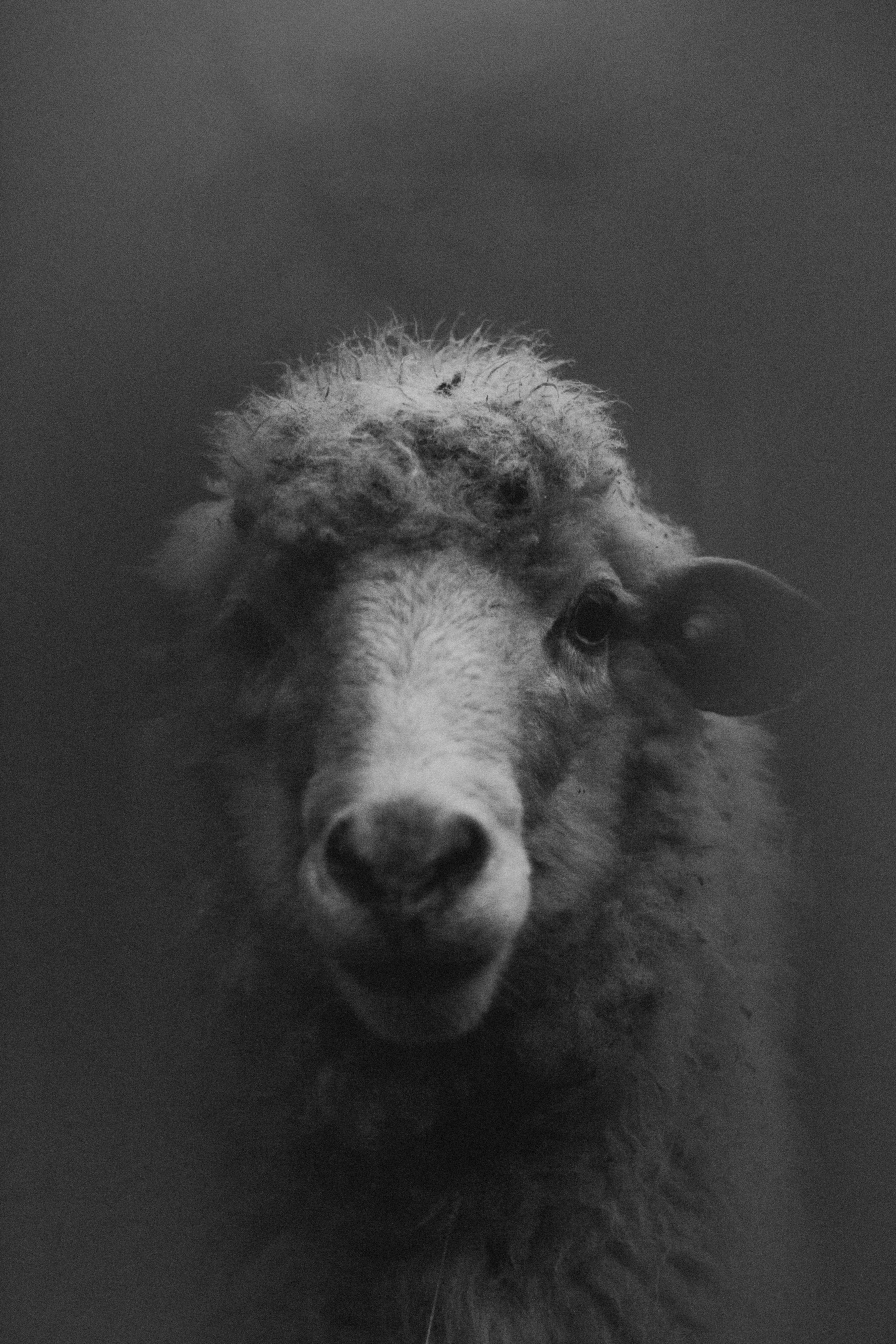
Billy was gone almost as soon as he arrived. The overgrown cottage was not for him. The countryside was not for him. He was a city boy, through and through. The planes, the bombs, the never-ending wail of sirens didn’t bother him. Even at its worst, London was the Devil he knew, and God knows he never did what he was told. In the early hours of the morning, from the lining of his jigsawed-together suitcase, he retrieved his homemade lockpicking tools, unhitched the mouldy window and off he went.
A whole day, dear Billy spent on the open road, only resting his scrawny legs whenever the all-too-occasional friendly farmer came by. In the backs of their trailers, alongside creatures of poor company and even worse hygiene, he hitchhiked from this town to that, each one of which could hardly be called more than a village – too tiny and sparse for him to make much use of, penniless as he was; if caught swiping from the market stalls, there were no crowds to disappear into nor familiar alleyways to slip down like Billy was used to. Impatience with the rural world only led him further into nature’s hold.
He abandoned zigzagging his way home via the circuitous roads and cut across the fields. For days on end, he went on this way, over hill and dale, avoiding the shifty country folk where he could, letting his presumed flawless sense of direction guide him. On the eve of what was looking to be his third night kipping in a ditch, only dry thanks to the frost, to take a gander at the setting sun and recover his somewhat flawed sense of direction, Billy climbed a particularly high hill with a particularly shrubless peak. By the time he reached the top, the grass had thinned away to not even a single blade. Yet from that spot where there was nowt but curdled mud and thin air, he looked out over an ocean of boundless green.
And that was where dear Billy-boy found me.
Not that he noticed me at first, despite the fact I was only standing a hundred feet from where he was obliviously taking in the view – I do tend to blend in. So I hollered.
“Looking for something?”
I made him jump, bless him. He stood agape for a few seconds – I am an odd-looking fellow, I suppose – then came out with his snide response.
“Anything, more like. What’s the point hanging about in the middle of nowhere?”
“I could ask you the same, young man. Although, from the looks of you, you’re trying to get somewhere else.”
“Yeah. London. As soon as possible.” Thankful for the company, I imagine, he crept forward, his shoes no more than a few pieces of leather, barely held together. “Why’re you standing like that?”
“Like what?”
“Like that. Like some sort of goat.”
I chuckled. “That’s what we old-timers do: we waltz around old places such as this like newborn deer to help us feel young. And this hill is older than most.”
Billy took a step closer, squinting even though I was only a stone’s throw away.
“You don’t look that old – just ugly,” he laughed. “I’d wear a hood, too, if I had a snout like yours.”
Then his laughter caught in his throat at its unexpected reciprocation. What can I say? His insult was fortuitously accurate, after all.
“Anyway,” he went on, painting a crude smile, pretending that he was not uneased by my bleating, “how’s this hill older than any other?”
“Like you said,” I replied, recovering myself, “there’s nothing here. And not just for the lack of buildings or fences; everywhere else, the grass grows, plants and trees all bloom and thrive, then wither and die. But not here. The dirt you tread has been undisturbed since this hill first formed. Since before the sea hemmed in and this island became its own. Before the green elsewhere grew, but deemed this spot too sacred. Back when giants roamed these lands. You walk in their footsteps, boy.”
Billy’s turned-up nose did little to hide his sense of awe.
“Don’t call me boy! It’s Billy.”
“Ah, like the famous Billy the Kid in those American pictures?”
“Yeah, I suppose.” He had no idea what I was talking about. “So, what’s your name then?”
“My name?” I pondered for a moment. “What is it they’re calling the Americans these days? Uncle Sam? Well, you can call me Uncle Lamb.”
Billy shivered and adjusted the rag over his shoulders to cover more of his pale, little neck – trying to pass it off as the cold. “Yeah, you sound like an uncle, pretending to be all wise and whatnot in your long cloak and with that huge noggin of yours.”
“Excuse me?”
“That or you’ve got some bloody big ears under there.”
Again, the boy’s charmingly astute observation made me laugh. “Oh, yes, the biggest! Great horns of ears! I hear everything,” I ceased my bleats, “and nothing goes unheard.”
Billy started backing away. “Well, I’m off.”
“Of course. Back to London with you. You’ll be glad to hear, you’re heading the right way.”
“I know that!” He turned, then stopped, gazing at the vast rim where the land eclipsed the sky, dimmed to a warm lilac, like rosy lips smiling back at their meal. “It’s just…”
“Worried about getting lost after dark?”
“No … Maybe.”
“And finding somewhere warm for the night?”
“Maybe … Yes.”
I could have said something to entice him then, offered an invitation, told him that he could stay the night at my dwellings, not too far away. But Billy-boy was smarter than that. I could tell. He knew better than to accept too friendly an offer from no friend at all but the strangest of strangers. There were other ways.
“Well, lucky for you, Mr Kid, you’re not too far from a quaint little market town.” He glanced back at me – curiosity caught. “It’ll do for a night, and the only road from there goes all the way to London.” His eyes flashed with hope – cat killed. “See that hill on the horizon, with a wide tree at its peak?”
“Yeah?”
“That’s no tree; it’s a windmill – abandoned for years, so you won’t see it turning, and you won’t be able to see it at all for much longer, not after dusk. Cut straight towards it. Don’t stop for a second and don’t turn an inch, or you’ll lose your way. Make it to the mill and you won’t miss the town just over yonder.”
“Right. Got it. Thanks … Mr Lamb.”
“You’re welcome, Mr Kid. Now, best be on your way while there’s some light left.”
He didn’t need to be told twice.
Once down in the vales, Billy could not keep the windmill in sight, anyhow. He caught a glimpse here and there, but as soon as the sun went down, he had to rely on the unbending straight line he trod, stomping down or kicking away all bushes and brambles in his path. Shadows swooped into every angle, every crevice. The terrain was lumpy and uneven, treacherous even in the muddy, low valleys. Billy’s socks were soaked through and riddled with holes. He could not even feel his feet. All day he had walked, without a single bite to eat, as his aching stomach loved to remind him, aside from an apple swiped from a carefree pocket when he’d passed through an otherwise untrusting, unfriendly village.
He came to a tall, thorny hedge blocking his path. Still, Billy-boy persisted. Cutting every inch of bare skin, he clambered through. When he emerged out the other side, he felt a chill on the back of his neck. He looked back to see his trusty rag halfway back, suspended in some twisted shape, torn and tattered on the spiky branches, next to useless to him even if he had energy to go back for it. No sooner had he turned away and left his sacrifice to the wilds behind than he beheld the reward such an offering reaped: the windmill, upon its hill, a great black shape against the dark sky, but clearly not a tree, less than a furlong away.
Through aches and pains, Billy rushed into the long shadows between him and the hill, thinking he was already as low as the land could go, believing salvation was just a sprint and a climb away. He thought he had made it. Wrong on all accounts. His foot fell through the shadows into nothingness. The rest of him followed. He stumbled down and down, bumping and breaking every part of him. The mass of mud at the bottom of the steep ridge did nothing to soften his fall. Where he could still feel, Billy felt only pain.
He could not bear to look at all the ways his body was bent out of shape, so he looked up. There was the windmill. He could move his right arm and left leg a little. If he could still see his goal, he could still reach it. Billy dragged himself across the cold, wet earth, further into the marsh, mind too scrambled to comprehend how deep it might be, ignorant of that sinking feeling, sinking deeper and deeper, until it came up to his neck.
He tried to turn back to shallow ground, but the sludge was too thick, engulfing his chin, oozing into his mouth. Reaching his arm over its sunken shoulder, he flung himself backwards, wrenching his jaw free, only to resume his descent staring at a starless, endlessly black sky. There was no going back, no going forward, only down.
Rather than let darkness be the last thing he saw, Billy lifted his head back to see how far he’d fallen. Then he saw a hooded figure nimbly trotting down the ridge towards him, like a newborn deer. The hood flung back, and he saw the horns.
That was how I found him. Just a red-cheeked face poking out of the hungry earth, gasping its last, ready for the coming of the Lamb.
[Alfie Court is a London-born, -bred and -based writer. Previously, he wrote and directed short films, one of which, “Boys Don’t Cry”, received several awards. He became hooked on writing prose during lockdown and has kept at it ever since, developing several short stories such as “She Hears Voices”, published in Eternal Haunted Summer’s 2025 Summer Solstice, “The Beasts of Bethnal Green”, published in the 35th issue of Tigershark Publishing, and “Dear Diary”, published in the Whumpy Printing Press’s High Stakes and Bloody Business anthology.]
 Eternal Haunted Summer