
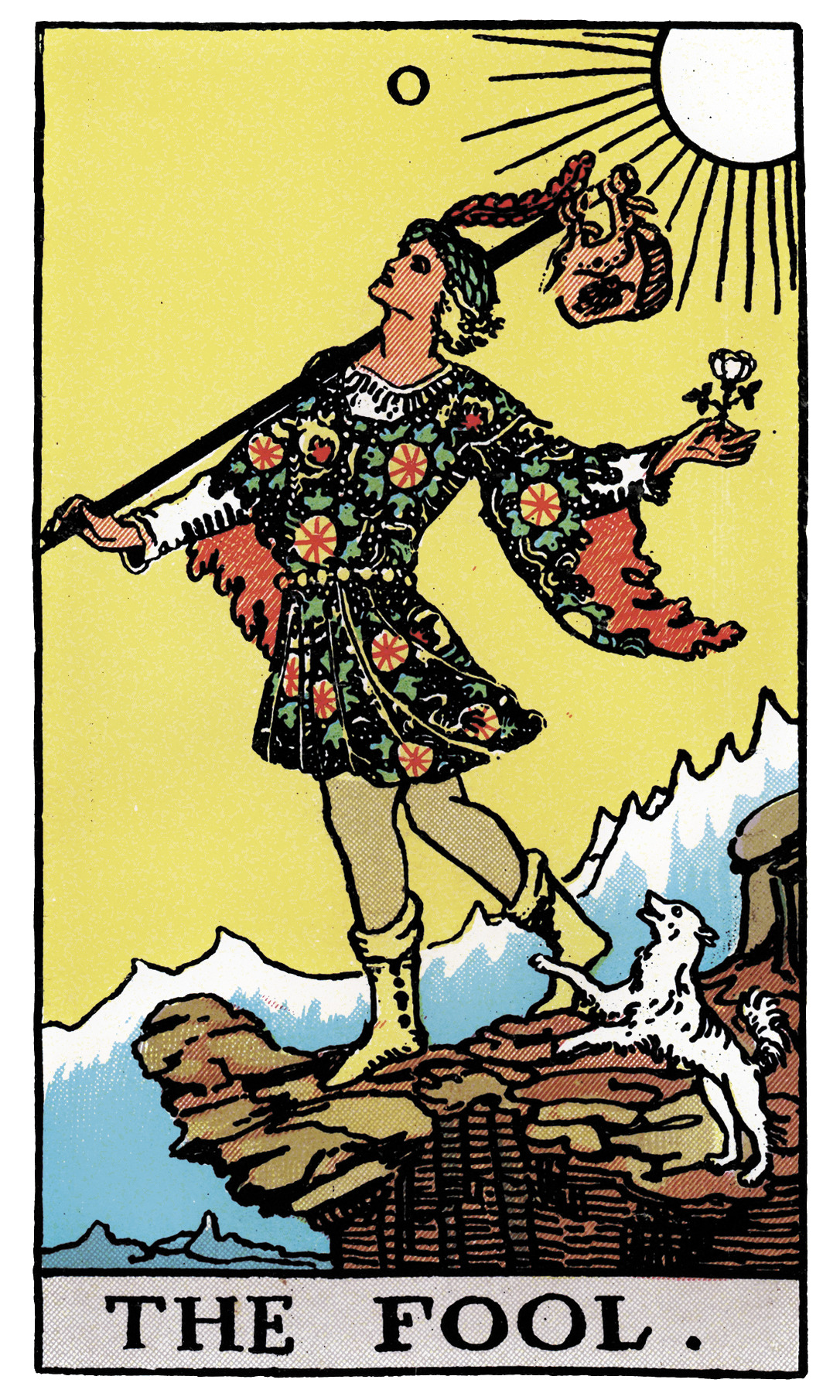
“You didn’t seem like yourself, vivian,” said the instructor after it had all happened, when i tried to engage him about it later that summer. We were in his office, and an apple was sitting on the corner of his desk, and he was looking at me with steepled fingers and careful concern. “Everyone else in the ensemble agreed that you didn’t seem like yourself.”
“Isn’t that,” i asked him through gritted teeth, “the whole point of acting?”
He dismissed the question, and i next asked him if he had read Max Frisch’s play The Arsonists, and when he said he had not, i asked him about Ionesco’s Rhinoceros. “Of course, vivian, i have read Rhinoceros,” he said.
“Well,” i replied, as gently as i could, but with a deep and serious conviction. “You’re acting like a rhinoceros right now.” With that, the instructor swept me out of his office and slammed the door in my face.
i stood in the hallway, exorcised and dazed and a bit stunned. i am still, writing this in 2025, two years after the summer it began, dazed and a bit stunned. That something had happened — and in a sense, is still happening — at the 58th International Congress on Medieval Studies, i am sure. What the particulars of that something might be are, like Avalon shrouded in fog, rather more obscure. As to why no one involved with the Congress is interested in exploring the matter further, either in conversation or through formal investigative study, i might as well have had my eyes plucked out for all that i can see.
There are some specifics of the phenomenon i am able to relay. The most immediately relevant is that the something happened during the production process of The Mostly Medieval Theatre Festival, and that it was at its most glaring and apparent during the adaptation and presentation of Marie de France’s Lanval for the wider conference. The Congress takes place each May on campus at Western Michigan University in Kalamazoo, Michigan, a longstanding tradition maintained by the school’s Medieval Institute and attended every year by several thousand scholars from all over the globe. At the time of the incident, i was an undergraduate at the institution, pursuing my primary degree in gender studies with a double minor in theatre and world religion. i had returned to formal study in 2020 following a hiatus from higher education after a near-death experience in 2018, first taking a handful of online courses at Lansing Community College before reentering Western in 2021. i had joined the Department of Theatre as a minor in 2022, and it was through this work i was drawn into the thrall of the Festival.
The Mostly Medieval Theatre Festival itself is a much smaller and more recent tradition nested within the greater basket of the Congress as a whole, begun in 2017 and repeated previously in 2019. The Festival of which i was a part was the third incarnation, devised and rehearsed throughout spring 2023 for performance at the conference in May. i had been invited to participate by the instructor, with whom i had previously studied script analysis and was at that time working under to complete an independent research study on the subject of clowning through history. The Festival was proctored through a course, Ensemble Building Then & Now, during which we as a group, with the guidance of the instructor, would select and adapt a variety of medieval texts for live performance at the Congress. We began the process with a meeting in which we all brought to the table whichever skills we felt would benefit and strengthen the ensemble, to which i offered my experience in designing and producing printed matter, cartomancy, and fooling. Between the rest of us we possessed such disparate skills as stitching, choreography, swordfighting, singing, technical design, and playing the hurdy-gurdy.
For my part, fooling had by this point come to comprise the bulk of my labor in theatre as both a working artist and as a budding scholar; i had fallen headfirst into the discipline following the car accident which had nearly claimed my life in May 2018, taking up the greasepaint that autumn as a way of rationalizing and recognizing the absurdity of my survival. i had met the fool previously through the many faces she had left scattered throughout theatre history, through Shakespeare and vaudeville and cabaret, but it was through tarot that i first formed a dedicated archetypal identification with the role. Procuring my first deck in the wake of the collision as a meditative and grounding tool, i at once saw myself in the image of the unnumbered card: standing on a precipice, ready, for the first time, to embrace life by flinging myself full-bore into it. The near-death experience had been the result of distracted driving on both a literal and metaphorical level, of piloting my body through a half-life and thus always living half-conscious. Writes Rachel Pollack in Seventy-Eight Degrees of Wisdom: “The Fool bears the number 0 because all things are possible to the person who is always ready to go in any direction … the Fool is movement, change, the constant leap through life… [and] responds instantly to the immediate situation.” (16-17) The demands of my particular situation were clear: i needed, one way or another, to wake the fuck up, and the fool seemed to offer me the possibility of an alarm.
By the time i entered into participation in the Festival that spring, i had been clowning for nearly half a decade in d.i.y. art spaces, beginning with burlesque numbers at Spiral Dance Bar in Lansing in 2018 and tumbling along the way through gigs performing at and emceeing parties, poetry recitals, variety shows, house concerts, stand-up shows, several pride parades, and an anti-pipeline protest. It was a desire to braid all of these disparate strands into a coherent thread which had led me to supplement my principle studies in sociology by applying for the theatre minor, and this idiotic pursuit which had led me back to the same theatre complex where i had faced my worst fears as an adolescent to face them again as a more fully-formed adult. Several weeks into the development process for the Festival, i realized these fears were winning out, impacting my ability to integrate myself fully into the fabric of the ensemble we were building. i was missing as many classes as i was attending, and after one of these sessions, i asked if i might speak to the instructor alone following class. i explained to him that as a teenager, Western Michigan had been my intended school, and that at fifteen i had begun preparing for my application and audition to the Department of Theatre as a prospective major. In 2014, i auditioned and was turned away, but was accepted into the University as a whole and enrolled as an undecided major. My first year was oriented around preparing to again audition, with over half my courseload consisting of classes within the department despite my outsider status; when i was again dismissed from auditions in spring 2015, i elected to step away from Western altogether to study the subject at Lansing Community College in Michigan’s capital instead. i explained to the instructor that as much as i had tried to leave this baggage behind, or better yet, burn it entirely, it had followed me back to campus all this time later. No matter how hard i tried to tell myself it was irrational, as a minor i still felt like an outsider, a stranger, a shadow, unentitled and unwelcome to full participation in the production process. The instructor smiled, acknowledged these fears, and then dismissed them: “You are welcome here, vivian,” he said, clasping my hand. “As welcome as anyone else in the group.”
With this assurance, i was able to banish my misgivings and throw myself into the work fully. By this point we had already selected our texts, and were in the process of ministering their transition into staged works. Our slate consisted of “Husband Swap”, adapted from a comedic skit translated by Jody Enders, new renderings of “The Enchanted Caves of Cesh Curran” and “St. George & the Dragon, and de France’s lai “Lanval”. Parts were distributed amongst the collective across several readings, working the text through recitation and gaining an idea how each might manifest in full production. It was during this stage of the process which i had my title bestowed upon me: “And vivian, it seems,” said the instructor following our reading, “is a natural-born queen.” It was the first time i had been cast in a part which i had not constructed or chosen for myself since participating in The Vagina Monologues at Michigan State University in 2019, and with that came the old rush of recognition which had been foundational to my adolescent identity as a performer. i by this point no longer considered myself an actor, but acting is one skill in the well-rounded fool’s pack, and one which i was delighted and excited to dip my toes back into after what felt like years of doing the islands with Dionysus in relative isolation. It felt like my chance to take the work i had done and was doing as a freelancer out of the open field and back into the closed fold, to share what i had seen and become while outside of it.
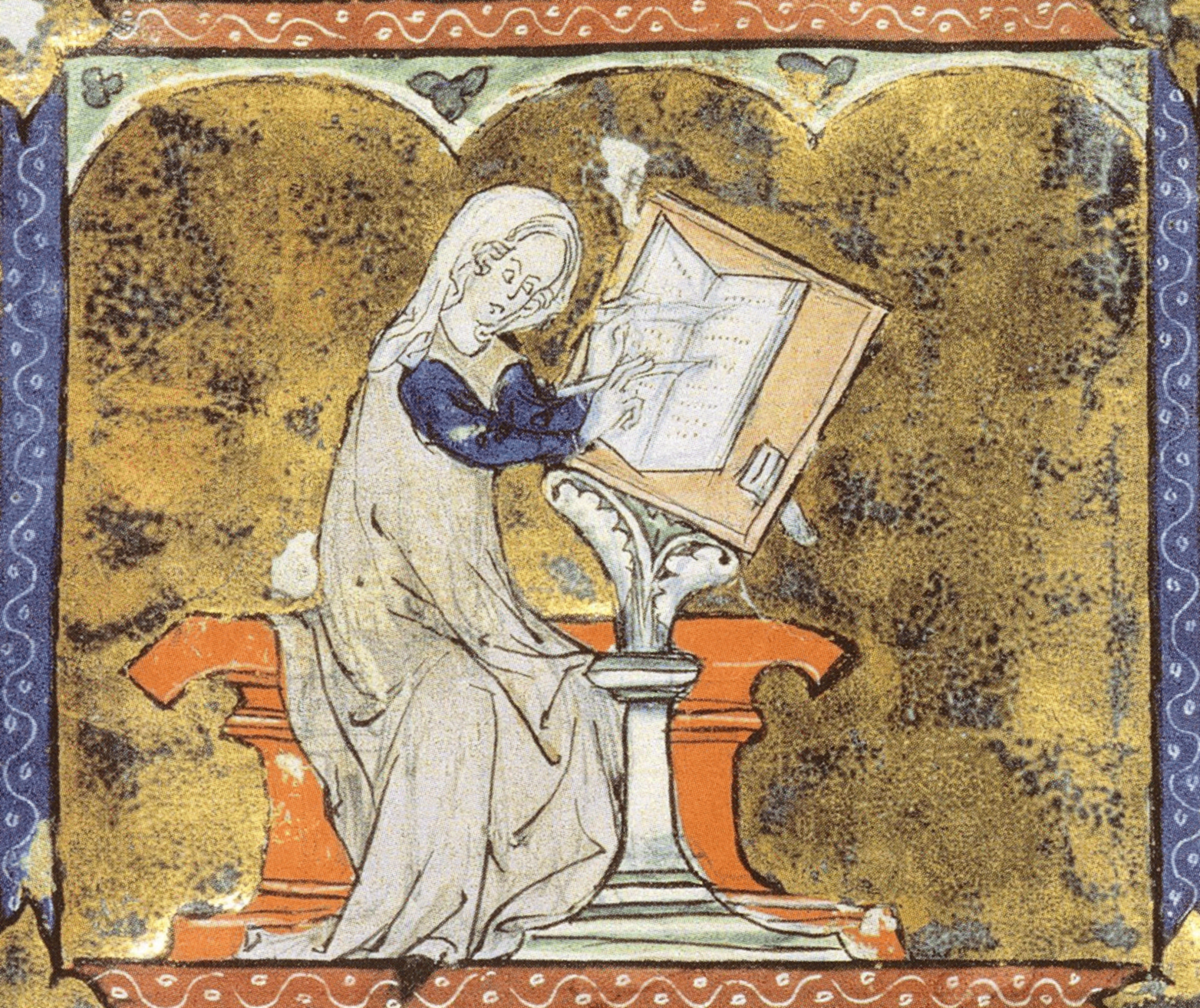
After my confession to the instructor, my relationship to the work shifted entirely. i no longer missed classes as i had before, and my responsibilities ballooned to include portraying the role of Liathluachra, daughter of Fionn, in “Cesh Curran” and to constructing the dragon puppet for “St. George”. With the instructor’s gentle encouragement, i seemed to have found my footing as a member of the group and established an understanding of my basic function within the whole. i began to investigate the part of the queen from inside-out, to examine her hideous desires, her expressions, her cruel passions and what had pushed her to them. The queen’s role in the drama is that of instigator, dangling her dead sexuality at the titular knight of her husband’s court to draw him away from the affections of his true beloved, a kindly fairy woman to whom he is secretly pledged. In Guinevere’s libidinal grasping, i encountered the psychological drive which Ann and Barry Ulanov describe as the psychology of the witch, a psychology which “… constellates female intellectuality and assertiveness in their primordial forms.” (39) At this point, the influence of the witch archetype over my performance was, like the archetypal witch herself, hidden. Throughout The Witch and the Clown, the Ulanovs consider witchery not only within its own context and those contexts closely related — the fairy story, the poetic, the operatic, the epic — but also within the universal context of human imagination and therefore, the human psychological condition. The witch needn’t be literal; she is merely (or mirroringly) the avatar for unexpressed, unbidden, undesirable female desire. In this developmental stage, witchiness combined with my own foolishness to transform my Guinevere into an avatar of the Empress, who, according to Pollack “sexuality, emotion and the female as mistress.” (45) This version of the queen, while devious, was in no real way dangerous, reflecting the goodness of Lanval’s mistress not with true malice but rather in her whole self embodying an absence, an emptiness, a lack. It is this emptiness she wishes to fill through her failed seduction of the knight, and she is, at the end of it all, a feeble figure, comic and almost pitiable in her pathetic posturing. Through her pitiability, she was lovable.
This was the version of the queen who was intended to debut at the Festival, the one who was invited and therefore welcome to put in her appearance. When the day came, she was not the version who appeared. When i arrived on Friday morning to the Fetzer Center, several hours before Lanval was set to perform, it was with a purple bruise the size and shape of a handprint on my left arm. Several nights before, it had been branded there by a woman with whom i had been going on a series of casual dates, painted onto my skin by her fingers’ inability to let go of me when asked. i had missed the last few days of rehearsal, had been hospitalized following the assault and was currently staying in a hotel room following the woman’s successful efforts to agitate for my removal from my home under the narrative that i posed a potential danger to either my own safety or that of my housemates. The evidence for my infirmity was predicated on a conflict which had occurred on a date between myself and the woman that previous Tuesday, and like Lanval himself accused by the queen, my previous history of self-harm meant that my protests held neither weight nor water with my prosecutors. i was already an assumed threat to myself and all it took was one revoked vote of confidence to tumble the whole house of cards which had contained my life up to that point.
i told myself, waiting for the Congressional attendees to begin arriving, that none of this mattered. What mattered was that despite all of it, despite being locked out of my life and being being held prisoner in a Radisson against my will and being assaulted by someone i had trusted, that i had made it to the venue on the day of the performance, as i had promised myself and as i had promised my patron, jolly Bacchus. i had lost connectivity with the rest of the ensemble after leaving rehearsal on Monday, but here i was now, where i was supposed to be slightly ahead of when i was supposed to be there and ready to reconvene with the body. i believed that, having survived the storm outside that room, i was in a safe space and could return to the task at hand.
Aside from building staff, i was the first one in the facility, the early sunlight falling through the high windows and dappling the open foyer where we were set to perform. At first, before anyone arrived, i did as i had done in the hotel room for the past several days, running lines over and over, trying to force my newly perforated memory to hold on to the material despite everything which had happened to my battered brain and body over the past several days. It was in the course of one of these loops that the witch herself, no longer a threatened presence but a realized one, revealed herself to me. She stepped from the shadows inside of myself, offered me an apple from one of the long tables laid out with coffee and tea and other refreshments for the attendees. Feeling my ability to hold myself together waning, i took it with ginger fingers, holding it out to my reflection in the windows and visualizing the way it would modify my action onstage. My face was not the one i had intended to wear; my makeup had been left behind at my house during my quick exodus, and i had been forced to color my lips and cheeks with nail polish, the only cosmetics to which i had access, in lieu of my usual whiteface appearance. If you want to survive, she said, do exactly as i say.
As attendees began to filter in, the witch reminded me that in first pitching myself as a member of the troupe, i had named cartomancy as one of my boons. i drew out my cards, at that time the Joie de Vivre deck drawn by Paula Fae, and fanned them out on the table in front of me. As the audience entered, many of them stopped by my table, enticed and intrigued by the deck fanned out in front of me. As each stopped to chat, i considered the role i was playing in the Festival, that of the fool, and allowed myself to be reconfigured, at least for the moment, into the shape of the sorceress, enchantress, the soothesaying slut. “Mixing substances and sensibilities into arcane potions, magic apples, talking mirrors, wondrous tinder boxes, the witch takes us to the edge of human perception,” say the Ulanovs. “She fashions new metaphors and original combinations from familiar substances. There are, for example, woman artists who are willing to yield to that level of experience as far as it is possible… willing to look to the far boundaries of the personal unconscious where the witch stands, and there to develop their creations.” (39-40) As they left the table, i offered to each one of the cards — a gift, a favor, a fancy, a fortune, i said, from the Festival to guide them in their exploration of the Congress. When all was said and done, two prominent cards were left: the High Priestess and the Devil. With their appearance came the revelation that i had never been playing Guinevere, the true Empress, herself — my queen had always been her doppelganger, her replacement, the negative space where Guinevere (and thus, myself) was not.
The modification to my onstage action was slight: in place of offering my body to Lanval in the orchard, i offered the apple, bewitched and bewitching, producing it from under my cloak and holding it out to the knight. My words were unsteady, dropping a few lines despite my best efforts at total recall, but aside from the deviation with the fruit, i went through the motions as writ and rehearsed. Afterwards, the instructor came up to me, and told me that the witch angle had been an alright decision, but that “the apple had been a little much”. It was not until later, back in the hotel room, that i received his phone call and was enlightened as to the ruckus i had inadvertently caused. He told me that i had not seemed like myself — this, if nothing else, was a fair assessment. Beyond that, i was admonished for my improvisation and ultimately, my participation itself. The next day, the instructor said, he would be taking over the role of the queen, and i acquiesced, telling him that i had simply felt compelled to, despite the circumstances, follow through with the performance to which i had committed. It was suggested, as it was by the woman who had assaulted me only a few days before, that i may perhaps be experiencing the symptoms of some great psychological breakdown or delusion.
The mechanics of whatever possession it was i experienced that day, and in the weeks leading up to it, are not and have not been the subject of this investigation. The subject has been merely my body, as i felt it move — as it was moved, by something, or someone, or by the frenzied kinetic motion of Festival itself. When i tried to discuss this movement with the organizers, with the instructor, with others in the Department of Theatre, any attempts to consider them in relation to my environment at the time were dismissed, sometimes angrily and sometimes violently. The official narrative was, and had remained, madness — individual madness, isolated madness, and thus, contained and suitably cut-off madness. The dysfunction, it was agreed, must have been the consequence of my dysfunction, could not be my body reflecting a broader dysfunction in the social order around me. Such is often the burden of the Witch, the Ulanovs tell us — the woman who witnesses, who goes and sees too far, is all too often the scapegoat for whatever broader collective madness spurred her to isolation and fragmentation to begin with. i know not what i saw in the mirror that day, with her claw on my shoulder — i know only that she was there, and that my life never recovered from her touch, and that i can feel the weight of that crone’s claw still, for good or for ill.
Bibliography
Durham, Lofton. Dent, Sidney. Lewis, Molly. Rose, AJ. Ensemble et al. 2023. Lanval.
Pollack, Rachel. 2007. Seventy-Eight Degrees of Wisdom: A Book of Tarot. Weiser Books.
Slavitt, David. 2013. The Lays of Marie de France.
Ulanov, Ann & Ulanov, Barry. 2015. The Witch & The Clown: Two Archetypes of Human Sexuality.
Chiron Publications.
[v.f. thompson is just compost in training. She can be found clowning around Thorold, Ontario and Kalamazoo, Michigan, where her play Taproot: A Play on Justice & Judgement was recently produced as part of Queer Theatre Kalamazoo’s ’24-’25 season. She also acts as an editor and event facilitator with the publishing and performance collective The Dionysian Public Library, producing plays, zines, books, poetry recitations, concerts, comedy shows, and more. Her work may be found in The Hard Times, Plenitude Magazine, Last Girls Club, Theaker’s Quarterly Fiction, the anthologies Monster Lairs, We Can Always Tell,The Crawling Moon, and a smattering of other nooks and crannies. Follow her on Twitter at @VF_Thompson or Instagram at @v.f.thompson or check out her work with the DPL at dionysianpubliclibrary.com]
 Eternal Haunted Summer