
The Tebtunis cosmogony is a fascinating text from the 2nd century AD, just before the start of Late Antiquity, a time known for its intense religious syncretism. It is an effort to reconcile previous Egyptian theological systems such as the Hermopolitan, Heliopolitan, and Theban traditions, each associated with a creator god (Thoth, Ra-Atum, and Amun, respectively), among others. Nonetheless, the main deity in the Tebtunis texts is Shai, a being that straddles the boundary between deity and concept. The god’s name, Shai, likely derives from the Ancient Egyptian word “sha,” meaning to ordain or to order, reflecting his role as the one who assigns Fate to each individual—essentially, the length of a person’s life on Earth.
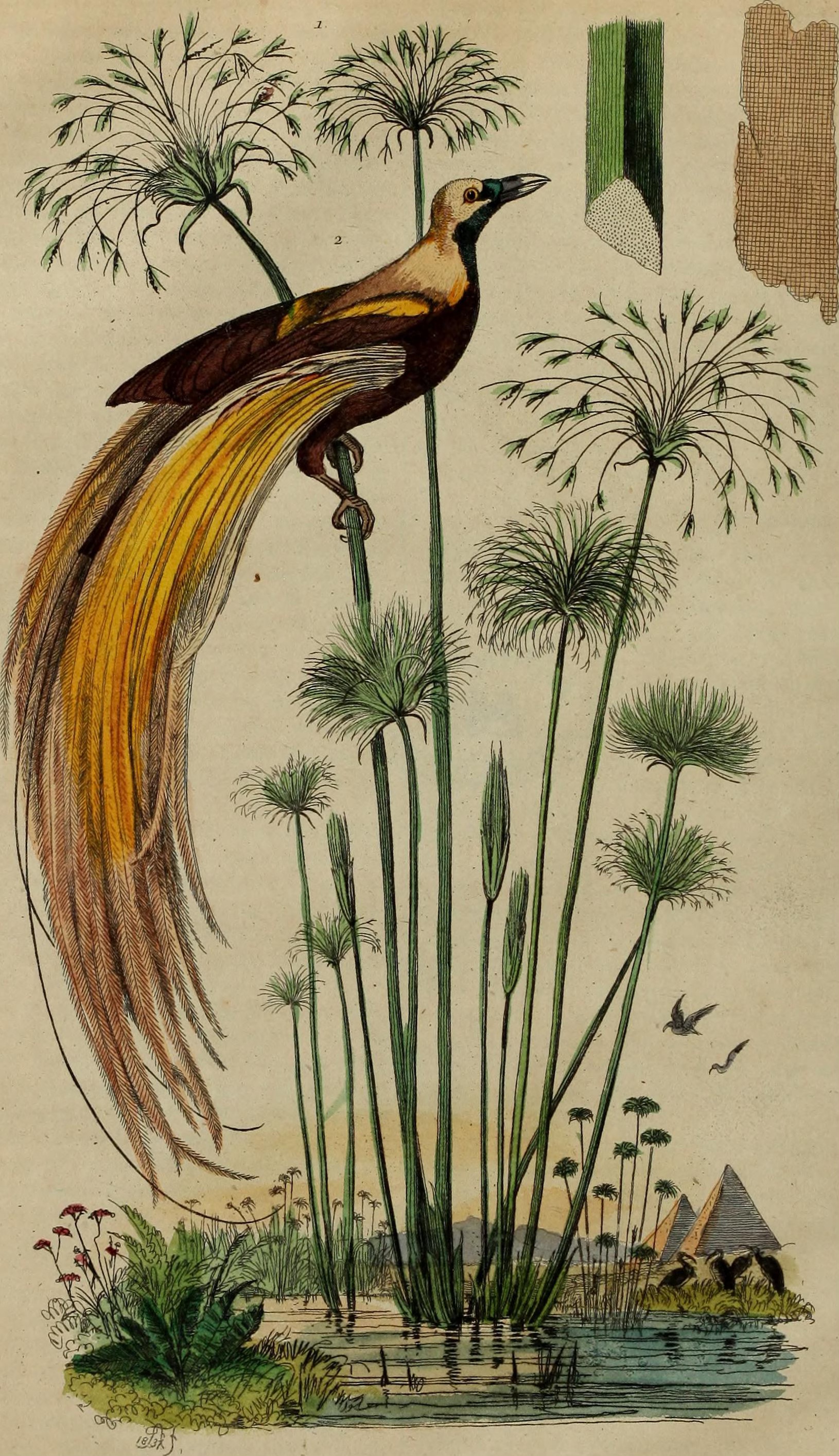
In summary, the cosmogony narrates creation as an act of Shai, who emerges from the primordial waters of Nun as the first god or hypostasis. He then establishes himself on a sandbank, where a reed plant begins to grow, and upon it, he ejaculates, creating the Memphite god Ptah, the divine craftsman. Ptah proceeds to fashion eight eggs, the Ogdoad, originally from the Hermopolitan cosmogony, which then merge to produce two hypostases, represented by a black bull and a cow. These eventually unite to give birth to the god Amun. Soon after, the Theban deity creates the four winds, which fuse into one to separate the Earth and the Heavens, thereby giving way to the manifest world. Interestingly, once our realm is formed, Shai reappears as the Sun (referred to here as Pre, with “P” being the definite article) and engages in dialogues with Thoth, likely explaining how the moon reflects the sun’s rays. In a more allegorical sense, Shai, as a solar deity, could symbolize a reconciliation between the fixed nature of Fate and the cyclical time associated with the Sun, known as “neheh” in Ancient Egyptian. Following this, the traditional Egyptian myth of Isis and Osiris, along with the constant battle against Apophis, unfolds. The entire myth is more complex, but this provides a general overview of its themes.
From the creation of the cosmos as described in the Tebtunis papyrus, one can infer that Shai, Fate-as-God, is the grounding force of the cosmos and, by extension, our material world, effectively making him the source from which everything emanates. On the surface, it might be concluded that the Ancient Egyptians were ultra-deterministic because of this; however, opinions were not homogeneous, and the perception of Fate evolved over time. During the Old Kingdom, Fate was seen as inescapable, but during the Amarna and Ramesside periods and beyond, it became viewed as more malleable. While Fate remained a powerful force, many believed it could be escaped by cultivating devotion to the gods.
What can be drawn from all of this is an almost Gnostic interpretation of the text. While the material world can be frustrating at times, it is not necessarily evil, as it would be arrogant to think the cosmos was created solely to torment humans. That said, the cosmos could be described as full of division and entropy, attributes personified by the serpent Apophis, who represents the opposite of ma’at, or order, and embodies isfet, or chaos. The interaction between creation and destruction is governed by Shai, the one who assigns a lifespan to each person, ultimately leading to their obliteration. The only way to transcend Fate and the repercussions of this world is by establishing a relationship with the Netjeru, the gods, who play a salvific role. In a hymn to Amun (Leyden I, 350, III, 17), it is stated, “[Amun] gives more than what is fated [shayt] to him whom he loves.” This aligns with the Late Antique Neoplatonic theurgists, who viewed “divine work” as a means to reach the ineffable One. However, the gods only assist those who are willing to learn, as stated in the Instructions of Ptahhotep: “He whom the god loves, hears; but he whom the god hates, hears not.” This suggests that, although there are things beyond our control, we must still make the best of what we have by listening and transforming ourselves into something better.
Shai was also worshiped extensively, as described in a Christian polemic written by Bishop Shenoute, which details how his cult was one of the last pagan cults in Egypt, specifically the worship of the “Shai of place,” a localized form of the deity. Fate worship was a popular “religion” in Late Antiquity, exemplified by other gods like Isis-Thermouthis or Aion. One could argue that the “Shai of the place” was a way to conceal other gods, but before the full Christianization of the Roman Empire, Shai was syncretized with the Hellenic home and hearth deity Agathodaemon. Perhaps there is some truth in the highly biased admonition of the Egyptian bishop.
Shai’s role as a powerful deity to petition is also present in the Greek Magical Papyri, magical texts found in Egypt from between 400 BCE and 100 CE. These texts were mostly written in Greek, but also in Demotic (a late version of the Egyptian language) and early Coptic. In the spell PGM IV, 1596-1715, a talismanic consecration is detailed, where Shai, presented as Agathodaemon, is identified with Helios and referenced as the serpent who copulated in the ocean. Here’s an excerpt:
“…the brilliant sun, illuminating the whole inhabited world; you are the great serpent, who leads the way of those gods, who holds the origin of Egypt and the completion of the whole inhabited world, who in the ocean copulates, Psoï Phnouthi Ninthēr.”
This is a striking reference to the Tebtunis cosmogony, showing how important and popular it was in later Egyptian religion. In another section of the spell, Shai is described as the very source of the universe:
“I call upon you, the greatest god, everlasting lord, master of the cosmos, who is over the cosmos and under the cosmos, stout master of the sea, shining forth at dawn, from the east rising for the whole cosmos, sinking to the west. Come to me, you who rise from the four winds, the cheerful good daimon, for whom heaven has become the meeting-place of revelers.”
Shai-Agathodaemon’s role as creator of the four winds, which produced Amun, is another direct reference to the original Tebtunis myth, demonstrating not only Shai’s growing role as the ultimate demiurge but also how Egyptian religion continued to innovate. It’s important to note that, despite the use of Greek names like Helios and Agathodaemon, the nature of the spell is profoundly Egyptian. The reason for the adoption of these terms is that, after the Hellenistic period, Hellenism became a tool to transmit local pagan beliefs to a wider audience. A famous example of this syncretic approach is classical Hermeticism, which blended Greek philosophical ideas with Egyptian spirituality.
The Tebtunis cosmogony is a significant work of both religious and historical literature, showing the persistence of the service to the Gods even during an era preceding the demise of the traditional cults, but most importantly It also highlights how we still have the power to make the best of our lives, despite its uncertainties.
REFERENCES:
Bowersock, Glen W. Hellenism in Late Antiquity. Cambridge: Cambridge University Press, 1990.
Butler, Edward. Shai. Henadology. n.d. Available at: https://henadology.wordpress.com/theology/netjeru/shai/
Chicosky, Alison. “PGM IV 1596–1715.” Practical Occult, July 8, 2022. Available at: https://practicaloccult.com/pgmiv-1596-1715/
Hosny, May Ahmed. Fate in Ancient Egypt. Faculty of Tourism and Hotel Management, Helwan University, 2020.
Pinch, Geraldine. Handbook of Egyptian Mythology. Santa Barbara: ABC-CLIO, 2002.
Wilkinson, Richard H. The Complete Gods and Goddesses of Ancient Egypt. London: Thames & Hudson, 2003.
[Anghel Valente Guimarães is a polytheist, an internationalist and a writer from Rio de Janeiro, Brazil. He’s passionate about the environment and has work published on Solarpunk Magazine, a non-fiction piece entitled Spiritual Ecology: A Polytheistic Perspective. Anghel grew up deeply influenced by his Esoteric mother and aunt, while surrounded by lush vegetation and monsoon rains. Find him on Bluesky: https://bsky.app/profile/a-valente.bsky.social“]
 Eternal Haunted Summer