
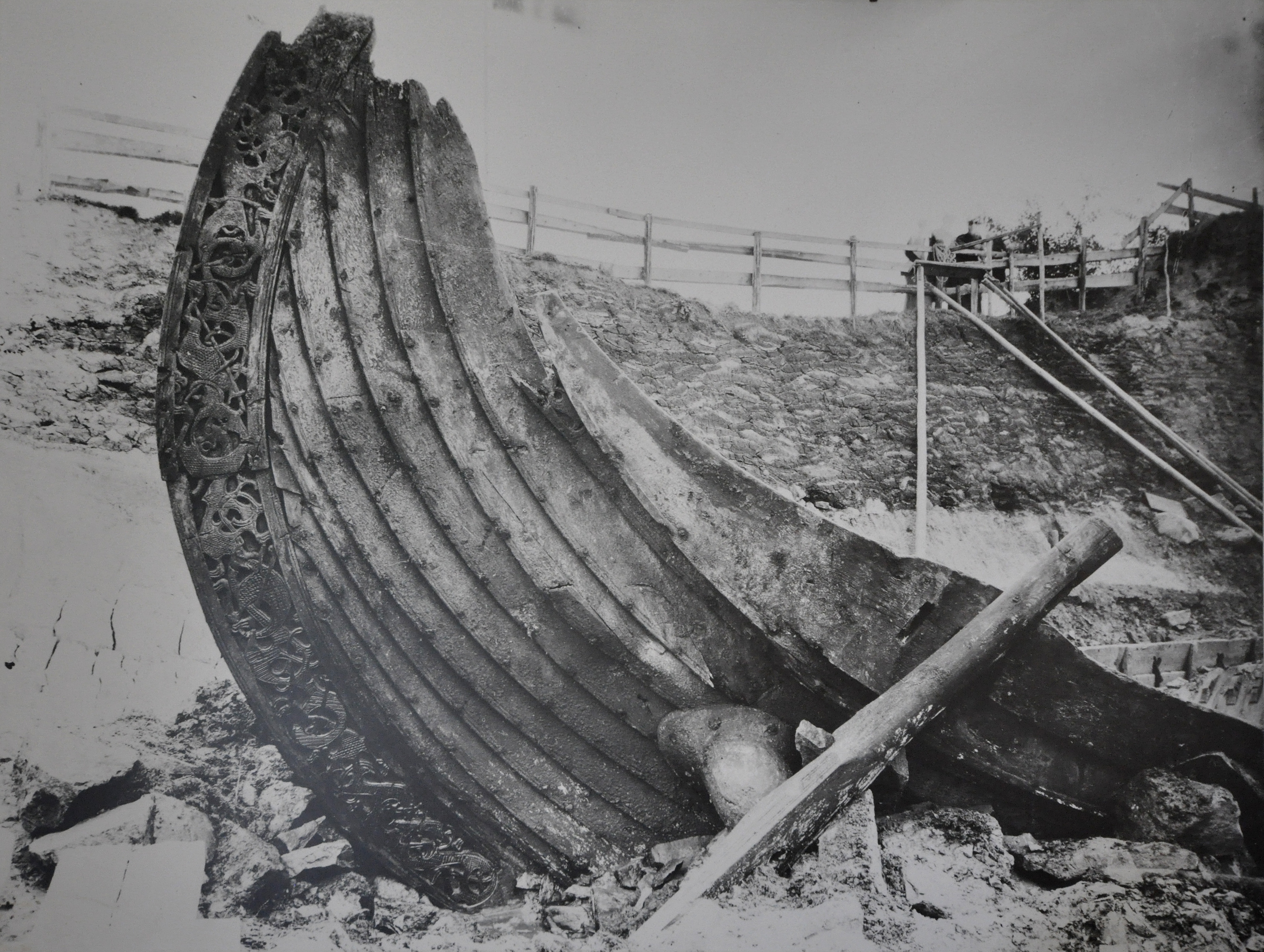
The sounds of the departed clang through the open field, where a ship once was unearthed. The bright summer nights have made way for autumn winds to tear at the grassland, and the creeping cold makes whispers of the leaves. Still, the soil is untouched by the coming frost, and mists swirl gently across the plain.
The skies are dark and filled with thunder, and yet the straw of the field sways only gently in the wind. Air from the open sea, the wide everything where many a man has been lost, carries with it salt and mud that mix with the ozone. The crescent hangs low in the sky, glowing even through the clouds, and here, the songs of the distant city, the distant hilltop, the distant sea, the rumbling overhead warnings, all wrap around one another in a cacophony. Softer than chiming bells and better cloaked than royal velvet against midnight, the song creeps into an intently listening ear.
I bury my knees in the hard-packed earth and inhale the scent of dried wildflowers and dead grass. Breathing into the white flute in my hands, I make a call, a melody, like tightly woven wool. The notes of a medieval children’s song, twisted from its roots to something almost beyond recognition. The original melody is older than what can be found in books, but there are ways to rediscover what even runestones won’t mention.
Strands of time intertwine in the misty dark. Harder to spot than the fairies dancing in morning fog or the reflection of Rán’s beckoning hands in the ocean, but there all the same. Blood flows in rivers, gold is weighed with horses of tin, woven threads pass from hand to hand, and in the centre of the flat grass, two women link their arms. Their hair whips about them, but they support one another and remain upright like gravestones. They are a fortified castle, each a tower in their own right. Horses, dogs, cows, and people mill around as the grassy mound before me falls away and births the outline of a ship.
Crosses rise from the ground, colliding with rune stones and hallowed grounds. Saplings grow into tall trees, are felled, rise and fall again, grow back into saplings. Toasting horns of mead, ravaged laughter, the sing-song babbling of a child too young for words. Endearing whispers into hair, rejoicing of gods, the ugly sobs of the bereaved. Fashions and fabrics change, there’s snow intermingling with red leaves and tufts of ripe dandelions. Fragrant flowers freeze, are collected and cooked, regrow, reborn. Wolves howl beyond the hill, metal and water tinkle in sunlight, and the chatter of foxes almost drown in the melodies.
Breathing in salted ozone and feeling like I’m leaning out of a speeding car, I play along the songs of the material world. Thor strikes the skies with his hammer, lighting the world in brilliant hues. Chaos, the unstructured force of the wilds, breaks the vibrations apart — pieces which each contain a little of all. The winds, circular, lift the fragments and, in a burst of power, rain splintered wood and emotion all over me. It’s so bright and so dark I can’t even close my eyes against it.
The land at the foot of the hilltop, a clearing where trees only sporadically take root, is the hall of the workmen. They chisel and saw, they break and bend planks to their will, they chop thick stems of oak. Their songs are deep and rich with the promise of splendour and drink. Women adorned with bronze spin wool until their hands chafe, and their melodies are multitudes of dizzying heights.
Though the ship was not made in this sacred place, I witness it growing from the ground, with skilled hands running over the boards and iron nails. I see the ghost of it behind me too, rolling in across the plain on wooden poles. What is real mixes with what is fabled, what is storied through song, drink and tale. There is little difference in the end; our realities are simply what we choose to build our foundations upon, the melodies we tell each other of the past, diverging slightly each iteration.
The ship’s colours are vivid, bringing the decorations to life. Fantastical beasts dance across the wood, glittering like stars. They twist over each other; dog-headed snakes and bear dragons slithering in harmony. Like links on a chain of life, they have the voice of blackbirds singing in unison. Behind the mast of the ship, rising high above the ground, a large burial chamber is constructed before my eyes. A serpent crowns the ship, curling circular around its own head — a menace on the North Sea.
On the plain, spectres move about buildings that rise and fall and catch fire. Silver coins from Persia melt and are reshaped, twisted into armbands and necklaces. Celtic book ornamentations are remade into brooches and pins, a connective tissue across ethnic borders. There’s blood, there’s gold, there’s violence and there’s trade linked with common root language and cultural exchange. Hunting arrows whistle past, sleighs rush along the snow, hammers clang on fire-red swords, whetstones make axe blades rustle in long cuts. Flames are made, people sent off to the afterworlds in flat earth and deep waters, fire strikers spit in clamour. Amber amulets and foreign coins dangle around the necks of workers and foreign visitors alike. Beads, glass, coloured stones on thread, clink in stiff jingles that make me want to sway to uneven rhythms. Space holds every joy and sorrow, the fear of the hunted doe, the love for a newborn child.
The workers, free and unfree, carry heavy loads with their songs. Old Norse words, softer than summer waves, slide off their tongues, and people bereft of their will carry songs of their own people in their hearts and throats. In the disharmony between the flute song and the ancient world’s own hum, I hear the faintest tingle of Latin worship, imposing itself in the currents.
This practice — the traditions of the Norse seeresses, the völvur — is a lost one. The last völva died a thousand years ago, once the cross-bearers suppressed the nature gods. Even so, the echoes of her rituals are still here, in the faces of the Æsir and the Vanir. I see them, like they were seen then, in the tufts of grass, the stormy sea, the hot midsummer sun, a girl growing into her own body. The chaos and wonder of the gods-given world makes sense, seen through a lens of nature, and there are ancient powers here. Awaiting taste. They’ve been dormant for so long, in the shadows of northern mountains. We forget where to look.
The winds are picking up in the cobalt blue clouds, and the straw lay flat against the earth. The two linked women, translucent half-ghosts, lie down in the burial chamber’s bed, among sacks full of soft down. Animals are slain in their honour, accompanied by songs for the afterlife, until blood colours the wood. Metalsmiths give the wooden beasts on the carved sleighs detailed bronze eyes, and workmen carry them aboard the ship on strong shoulders. Women bear Iðunn’s apples and wonderful tapestries of the most precise weaving work. Dogs bark in fervour as pained screams of horses and oxen flow with the mourning crowds of people circling the grave.
Rising earth swallows the ship, the treasures, the blood and the women, a steep, round barrow in the midst of the landscape. The wind carries sounds from the harbour — flapping woollen sails, creaks of boats and ships in the waves, the bustle of trade and faint conversation. Slowly, grass sprouts over the mound. Respects are paid by passing people, whose feet and herded animals maintain pathways through the cultivated wild.
Power exchanges hands, kings are crowned and dethroned, and the grave is broken into. The mound shifts with the movement of the earth itself, crushing the ship inside into a thousand pieces. A last woman passes, fleetingly, humming a song I’ve never heard before, but then she is gone too. With her, knowledge of the grave’s inhabitants die away.
I let the cow bone fall from my lips and the silence grows in the wake. The people lose their breaths, stiffening in second-death, their lives once again gone and forgotten. They disintegrate, crumbling in a fine, haze dream of crystallized dust. Nature’s grassland regrows over the pathways, erasing all imprints of feet, but the mound, now ship-less and treasure-less and woman-less, remains just as tall. My fingers shiver around the last melodies falling from the mouth of the flute, now in my lap.
The cow lies behind me in the tall grass. Flies have collected in a cloud above the corpse, feasting on the opened flesh on the cow’s hind leg, from where I removed the bone. The grass and soil couldn’t wash away the blood underneath my nails the way it cleans swords. Thor’s thunder still roars overhead, and Máni holds his crescent higher than before, almost completely overtaken by the heavy black clouds.
I look at the flute in my hand as rain pours over the plain. It has served its purpose, spurred on by violence — killing someone who does not want to die is the key to all power. Now it’s useless, devoid of blood. Just a bone. The song I heard in the image of the past — the last hum of the last woman — I’m already itching to make the right instrument to play it.
[Ava Rebecca Bosy has been drawn to myths her whole life. She’s interested in how ancient divinities and legends still shape our present time, whether through pop culture, folkloric vestiges, or just good storytelling. When not researching and writing, she’s trying to figure out new atheist ways to pray.]
 Eternal Haunted Summer