
[This issue, we sit down for five quick questions with fantasy author Scott Oden. Here, he discusses his cozy fantasy series centered around a magical garden, and his upcoming projects.]
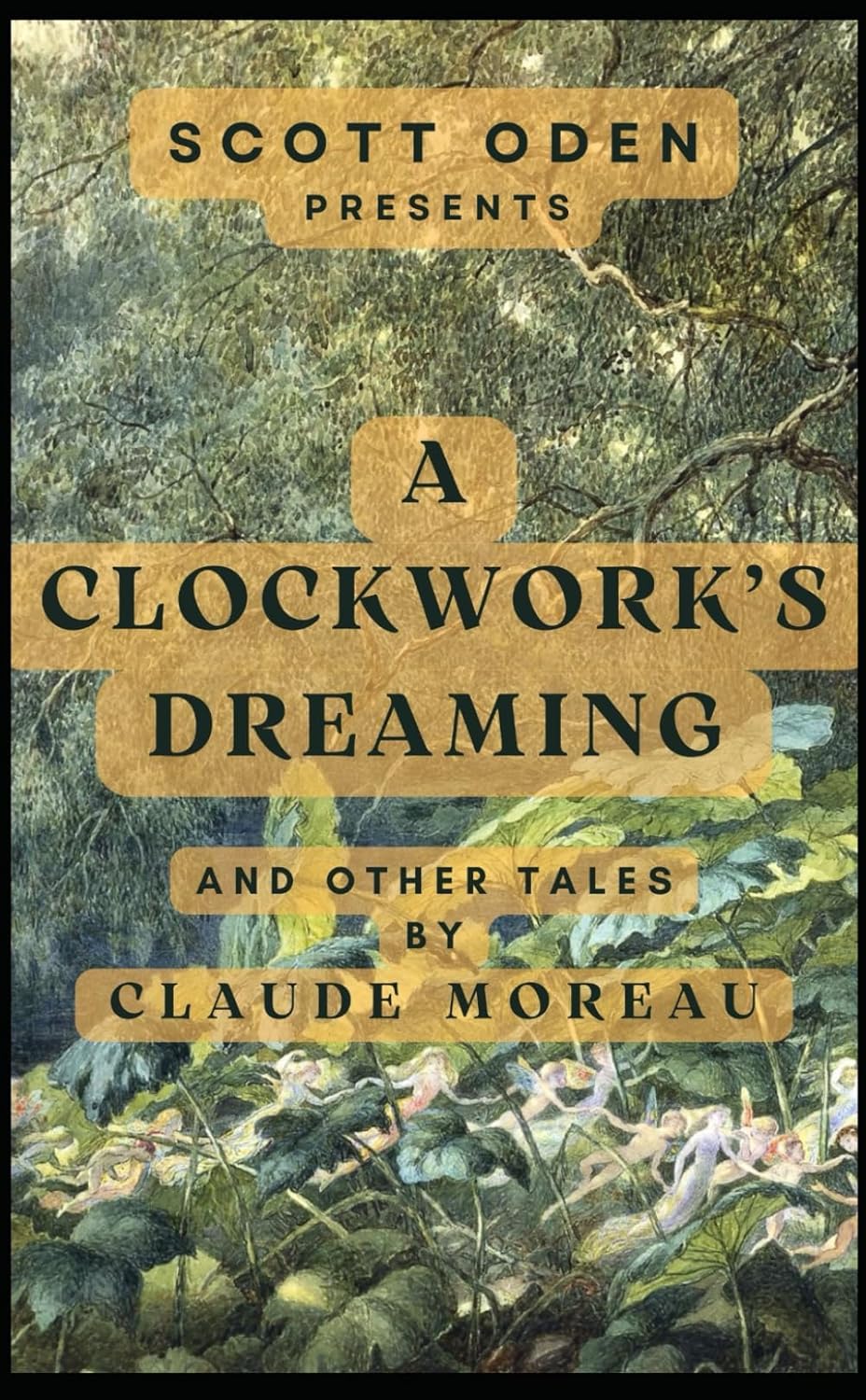
Eternal Haunted Summer: A Clockwork’s Dreaming: And Other Tales is the first collection set in Claude Moreau’s garden — and you are listed as the translator! How did you come up with this unique approach to storytelling? And how did you go about arranging and, um, annotating the tales?
Scott Oden: The “translator” conceit came about quite naturally when I realized I had a problem: I was a blood-and-thunder writer who was now writing cozy fantasy. So I needed a way to present these stories that would give readers permission to take them seriously for what they were, rather than thinking I was just taking the piss with them, setting them up for some orgy of blood and violence to come later.
The idea of “finding” Claude Moreau’s letters and manuscripts allowed me to have my cake and eat it, too. I could write earnestly about the profound wisdom of a mouse librarian organizing books by the quality of silence they contain, but frame it as historical documentation rather than “mere” fantasy. It’s a bit like how Tolkien presented himself as a translator of ancient texts rather than the inventor of Middle-earth.
As for the arrangement, that was largely dictated by the seasonal structure of A Year in the Garden (which was written before A Clockwork’s Dreaming and Other Tales). I wanted readers to feel they were discovering these tales in the same organic way Moreau supposedly did. Each story builds on the magical logic established in the previous ones, while the scholarly apparatus (my favorite part to write, honestly) creates this lovely illusion that there’s a vast archive of Garden lore just waiting to be catalogued.
I have a weakness for fictional scholarship — those wonderful rabbit holes where you can explore the implications of your world-building. That’s why I created Claude Moreau’s Garden on Substack, so I could include details that didn’t quite fit in the main narratives: how does magic work in the Garden? What is the Garden’s history? What spiritual practices do the mice hold to? All of this marginalia became a playground for my whimsical side.
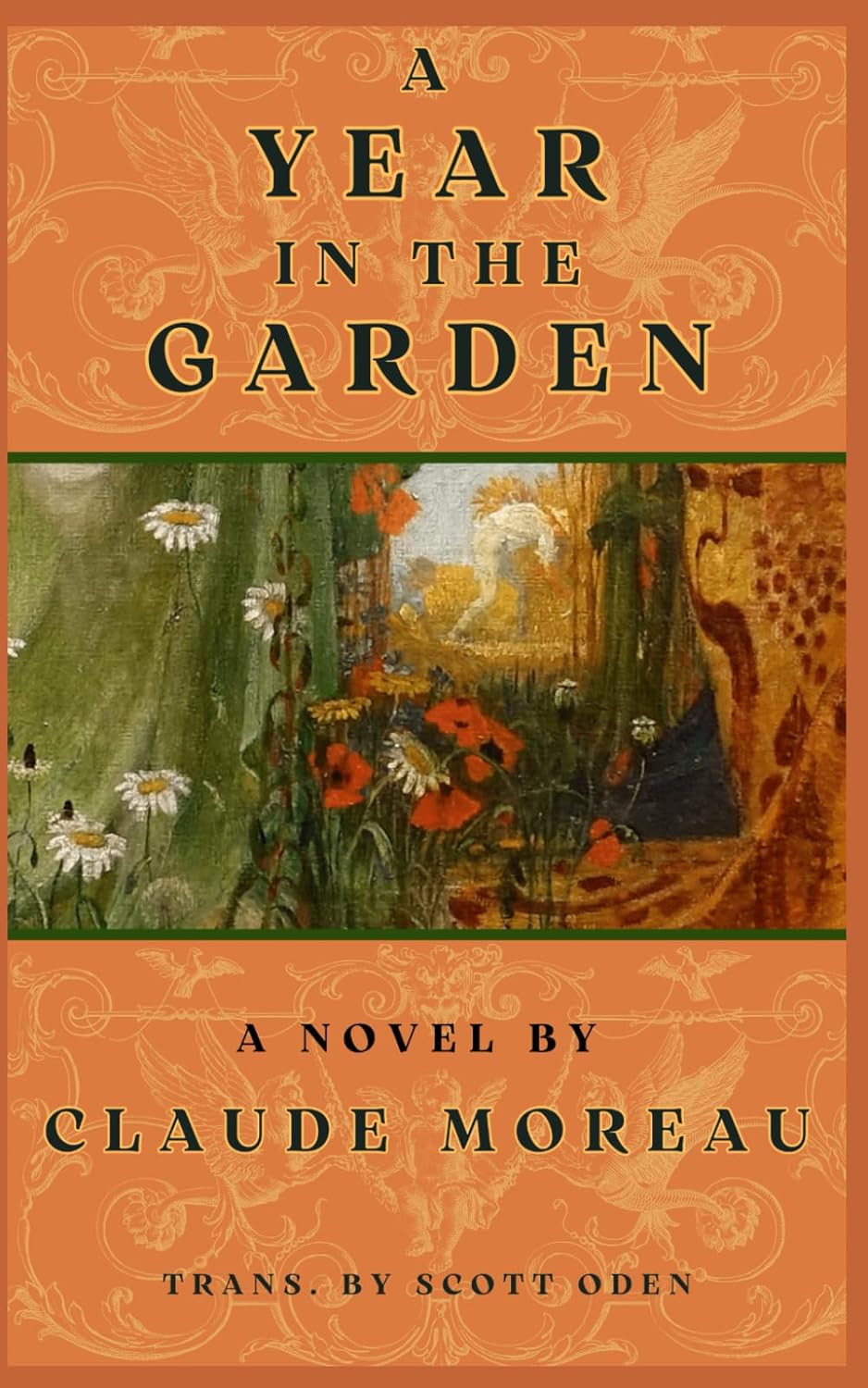
EHS: You just published A Year in the Garden, the second book featuring stories set “in a certain garden, not terribly far from here.” Congratulations! How did you go about populating the garden with such amazing and fanciful beings? Did you draw on childhood dreams? Wander around your own garden? Have a serious conversation with the local crows?
SO: Well, the crows and I have reached what you might call a diplomatic understanding. They’ve agreed not to comment publicly on my research methods, and I’ve agreed to leave out the more embarrassing details of their own literary pretensions. Did you know crows write poetry? Terrible stuff, mostly about shiny objects and the philosophical implications of roadkill, but they’re quite proud of it.
As for populating the Garden itself . . . the truth is, once you start paying attention to the spaces between things, the shadows under leaves, the way morning light catches in a spider’s web, the particular quality of silence in a library after hours, you begin to realize the world is already full of magical beings. They’re just very good at maintaining what Mr. Thistledown would call “proper discretion.”
My own garden was an 18-acre patch from my childhood, where I’m certain mushrooms among the weeds rearranged themselves when I wasn’t looking and goblins lived in the eaves of a small wood. Mostly, though, I think it came from remembering how to see the way I did as a child — when every shadow might hide something wonderful, when the space under the porch steps was clearly a castle, when ordinary garden mice were obviously engaged in complex political negotiations over bird feeder territories. The Garden’s residents were always there; I just had to remember how to notice them.
The real trick was learning to listen. Gardens and green spaces are chatty places full of whimsical drama, if you know how to pay attention. Every rustle in the leaves, every pattern the dew makes on spider webs, every way the shadows fall at different hours; it’s all conversation, really. You just have to be patient enough to translate. I write this after just witnessing a minor Iliad wherein six sparrows went from fighting over a dropped churro to banding together to keep the grackles from stealing their bounty. There’s a story to be told, I’m sure ….
EHS: You are most well-known for your rousing historical fiction and historical fantasy. But the Garden books are quite different. What draws you to cozy fantasy, or cozy literature in general?
SO: You know, after twenty years of writing about war and ruin — tales where characters carved out a name for themselves with steel and sorrow — I found myself drowning in the world’s digital fury. Every notification was another wave of darkness, every headline competing to shout louder than the last. In November of 2024, I made a choice that changed everything: I chose silence.
I deleted most of my social media accounts, silenced my news feeds, and turned instead to the small wonders I had overlooked in my rush to tell weightier tales. It wasn’t escape — no story truly lets us escape reality — but a reminder that reality contains more than suffering.
There’s a peculiar kind of courage required to write of small things in an age that demands grandeur. Not just the courage to risk dismissal from those who think only epics matter, but the courage to suggest that a mouse librarian’s careful organization of dewdrop-pressed memories might matter as much as a king’s great deeds.
The transformation wasn’t immediate. Old habits of dramatic tension and violent resolution died hard. But gradually, I discovered that comfort isn’t the absence of conflict, it’s the presence of something else entirely. Something I had forgotten how to see.
My alter-ego, Claude Moreau, understood this. In his “letters” to Henri-Jules Favreau, he wrote about watching mice going about their quiet business of keeping stories safe, while the world outside grew loud with “important” things. He recognized that sometimes the strongest response to chaos isn’t to shout back, but to create spaces where gentle thoughts can flourish.
The Garden’s residents taught me that comfort is not weakness, but a kind of strength. Their stories don’t deny the existence of owls or winter storms or the terrible vastness of the world beyond the garden wall. Instead, they celebrate the courage it takes to build something gentle in a world that often is not.
In the end, choosing comfort over chaos doesn’t mean choosing blindness over sight. It means learning to see with new eyes, to value different kinds of courage, to recognize that sometimes the most revolutionary act is simply to create something gentle in a world that has forgotten how.
Besides, the mice have a saying: “The quietest stories echo longest.” Perhaps that’s what we forget in our rush to make noise — that comfort, like dawn, comes not with a shout but with gradual illumination, changing everything it touches.
EHS: Where can readers find your books?
SO: A Year in the Garden and A Clockwork’s Dreaming and Other Tales are both available as physical editions via Amazon. The latter is also available on Kindle Unlimited and, by July, as an audiobook narrated by the wonderful Moose Matson (who, I swear to you, sounds just like Gandalf reading a bedtime story). For the time being, digital copies of A Year in the Garden are available directly from me.
A Clockwork’s Dreaming and Other Tales (print and KU)
A Year in the Garden (print)
A Year in the Garden (digital – PDF or EPUB)
Claude Moreau’s Garden (free short tales and lore)
EHS: What other projects are you working on?
SO: Lately, I’ve been feeling the call of historical fiction, once more. I have a novel I want to write about the siege and fall of Acre in 1291. But, I have far more stories to “translate” from the Garden, as well. By the time this interview is published, I should be hip deep in the release of a new Garden collection, called Autumn Herbs. But, rather than a traditional book launch, I’ll be releasing the individual stories one at a time at Claude Moreau’s Garden, free of charge, with a prompt to leave a tip if you enjoy what you’ve read. Later in the year, I’ll collect them as a paperback. I’m also going to collect together all the short tales from Claude Moreau’s Garden and release them under one (or two) covers.
The mice like it when I keep busy.
 Eternal Haunted Summer