
Ron Martin knew he would get a good pint of beer as soon as he walked in the door of the Arcadia pub in Great Marshway.
The decor was right — round backed wooden chairs with the patina of age, simple square tables of similar vintage, oak beans that looked genuine rather than made from painted plaster, a cracked and bowed ceiling yellow with decades of tobacco smoke, a wood stoked fire in the back wall, and bare uneven floorboards slightly sticky from spilled drinks. However, he had been fooled by that before. Plenty of old pubs kept the interior fittings but ripped out the cellar and kitchen to serve beer from metal barrels and food from the microwave.
The real clue was the clientele. You looked for somewhere that was patronised by either old men or hipsters with well groomed beards. If there were families with children, you knew both food and drink would be one step up from McDonalds. The Arcadia fit the bill perfectly. Only a dozen customers and only the man he had come to meet were below pensionable age. Most were sitting near the fire, nursing their drink to put off a return to their cold empty homes as long as possible. They wore the unofficial uniform of the rural old. Corduroy or worsted trousers, tweed jackets with pulled threads, and a smattering of flat caps shiny with age. The fire was belching smoke into the bar at intervals, but it probably gave the customers the memory of cigarettes without the exorbitant price.
The man he was looking for sat at a table by himself near a smeared window. It was hard to judge his age as he was the hairiest man Ron had seen for a long time. Slightly greying hair and long beard were matched by a grizzled tuft escaping from his shirt at the neck, and his bare forearms needed no shirt as they would be kept warm by his thick pelt. He was wearing faded jeans — from age and frequent washing rather than fashion — and a brown and black lumberjack shirt. Ron guessed he was hiding hiking boots under the table as his thick set body had muscles that looked as if they had been developed by outdoor life rather than circuits at the gym. Despite the pepper and salt hair, Ron thought he was in his late 30s. William Rushford had already bought Ron a pint which was placed in front of the chair opposite him.
“I got you a pint of Green Man,” Rushford said. “The landlord brews it in an old barn out the back. I think you’ll like it.”
Ron sat down, placing his camera bag between the table and the window, and took a sip. It tasted hoppy and strong with a hint of nettle that gave an earthy zing with a slight sweetness.
“Nice,” he said. “Good choice.”
“So did the paper send you because you have an interest in mysteries, or were you just the nearest photographer available?” Rushford asked. “I don’t suppose it matters as long as you do a good job.”
So much for small talk and professional courtesy, thought Ron. There’s a difference between being hard-nosed and just rude and this bloke is definitely the latter. Doesn’t really matter though if the money’s good. There weren’t as many jobs out in the sticks but the cash went further and it was better for his health than spending his days chasing celebrities and his nights drinking and smoking.
“I always do a good job,” Ron said. “You would be lucky to find someone as good in London, never mind here in the arse end of nowhere. And exactly what are your qualifications.”
The man smiled as if Ron had passed a test.
“Half a million regular listeners to my podcast — ‘The Elusive Mysteries’ — and my books sell more copies than your newspaper.”
“Not my newspaper,” Ron replied. “I’m a freelance. The Comet has first dibs on the pictures, but I keep the copyright and can sell them on. If you like them, you can buy them for your next book.”
“I may just do that,” said Rushford. “You could become as famous William Hope or John Spencer Wright. A clear image of something strange could sell for millions.”
And have me branded a fraud like those two so called “ghosthunters”, thought Ron. And no-one wants a clear image anyway. Countless times he had sent in a roll of pictures of some celebrity doing something they shouldn’t and they had printed the blurred one not the in-focus shots. The editors claimed people wanted to use their imaginations about what was happening rather than have it clearly presented to them. The same with UFOs and Nessie. People wanted mysteries to stay mysterious not be solved.
“Have you read the dossier they emailed through to you?” asked Rushford.
Ron leant over and unzipped his camera bag. He pulled out a dozen sheets of A4 and smoothed them out on the table. The local newspaper photocopy was at the top.
“What happened to missing teenager?
Police and relatives are baffled over what happened to 17 year old Eleanor Farjeon in the five days she was missing from her home in Great Marshway.
The girl vanished when she went on a mushroom foraging trip in Marshope Wood organised by a local nature group. She had separated from the others when she said she was going to see if she could see a bird she had heard in the trees. After 30 minutes the others went to look for her, but couldn’t find her and she didn’t answer any of their shouts.
When she still had not turned up after two hours, the Police were informed and made a search of the woods without finding any trace of the missing girl. After further searches over the next five days by the police and local volunteers including Eleanor’s mother Marjorie (45) and father Brian (47) of Machen Street, Eleanor was found only yards from where she had last been seen.
The girl was asleep in a dip in the ground, covered in leaves, with no sign of injuries, wearing the same clothes she had vanished in. Despite heavy rain over the search period, her clothes were dry and clean. She claimed she had no memory of what had happened while she was missing and was shocked it was five days later.
“It only seemed a few minutes ago I left the others,” Eleanor told our reporter. “It’s terrifying. Anything could have happened to me and I wouldn’t know.”
The police refused to comment on speculation by villagers that Eleanor had gone off with a boyfriend, or had been given a date rape drug by a pervert, and would only say were continuing they investigations.
“We are keeping an open mind at present,” said Detective Sergeant Williamson of Westfolk CID. “We are just pleased Eleanor has been found safe and sound and is back with her family.”
“I don’t care if people think she has been abducted by aliens or wandered off into Narnia,” said her father Brian. “She’s back safe, and no doubt her memory will come back eventually.””
“My money is on the boyfriend theory,” said Ron. “Or girlfriend. You don’t want to make assumptions nowadays.”
“Says the person assuming there is a simple explanation,” Rushford said, smiling. “I might agree with you if the police had found any evidence of a mystery suitor. She had a boyfriend and they had been together for three years. He was at work when she went missing and helped with the search. There were no drugs or alcohol found in her blood, and when they tested her stomach contents they only found traces of the burger and chips she had eaten for lunch when she vanished.”
“So what’s your theory Sherlock?” asked Ron.
“I don’t have one yet,” Rushford said. “But I don’t think we will find the answer just talking to her or the family. The police have done all of that and are still in the dark. We have to approach this from a different angle, not wander around the woods with a magnifying glass looking for broken twigs and footprints.”
“What do you want me to photograph, then” said Ron.
Rushford pushed a sheet of paper across the table.
“I need to do some research, so you can do the basic stuff today,” he said. “Get some pictures of the girl and the family – they are expecting you. I told them I was an expert helping the Police, which is sort of true. I’ve done it before. I’ve written out the sat-nav location details of where she was found so you can get some background pictures there too. Plus a few other places that may be good colour for the piece, I’ll meet you back here this evening and we can compare notes.”
Ron wasn’t entirely comfortable. He was used to diving straight into the story, snapping what he could, and then moving on to the next assignment. Still, he was getting a retainer as well as a fee for the photographs, so a job was a job.
***
The Farjeons lived in the newish houses at the edge of the village. The homes were not part of the London overspill that had moved families out from the slums to identikit homes in rural East Anglia, but they definitely did not fit in with the cottages and 30s buildings of the rest of Great Marshway. Even the older houses seemed like an extrusion in the largely flat landscape of the Fens amongst the reclaimed fields and the drainage waterways and windmills that kept the sea at bay.
The Farjeons were obviously doing some work to fit in. The astroturf fake grass at the front of the house was rolled up by the side of new flower beds which had been recently planted. Ron was no expert, but it looked as if they had chosen wild flowers rather than common or garden cultivated ones.
They seemed a normal, loving family to Ron. The boyfriend — Dougie Rodgers — was at their home when Ron arrived and sat with his arm around Eleanor’s shoulder as Ron explained what he needed. The affection between them was obvious, and years of taking pictures of liars, crooks and cheaters had given Ron the ability to tell from body language when people were being insincere. This family wasn’t. Eleanor didn’t have the demeanour of someone who was looking for any kind of celebrity, either. Ron had taken pictures of his fair share of nutters who would make up stories to jazz up their humdrum lives and get 15 minutes of fame. Again, he didn’t get that feel from the teenage girl, although she did seem to have a strange glow about her. Ron wondered if she was pregnant, although decided not to ask. He was just there to take pictures.
Although he didn’t ask about the story, they told him anyway. Again, this was not unusual. No matter what the tragedy or scandal, people generally had a compulsion to tell all. With Eleanor, he could imagine those missing five days must feel like you do when you get a tooth out and you have to keep poking the hole with your tongue.
“The last thing I remember was the bird song,” she said. “It was extraordinary. I’ve never heard a bird sing like that, and I wondered if it had escaped from somewhere. It was some kind of tune, like you hear thrushes and blackbirds make, but more of a warble than a whistle. I suppose it was a bit like a flute, or those things you hear men in ponchos play outside shopping centres.”
“Did you find the bird?” asked Ron. He felt he had to make some show of interest, even though the longer he spent here, the less time he would have to relax in the pub.
“Not that I remember,” Eleanor said. “I kept looking up into the trees and then down to the ground so I didn’t trip. I do remember feeling a bit dizzy and light headed but that may be because I was staring so hard at the tree tops.”
Ron had taken his photographs and was about to go when Eleanor spoke up again.
“The Police and doctors kept asking if I felt traumatised by whatever happened,” she said. “The funny thing is that I didn’t feel troubled at all, even when I woke up in the middle of the wood with no idea how I got there. It was as if I had just woken up from the most marvellous dream and felt completely comfortable with the world. Whatever had happened, I knew that the wood had looked after me.”
The Farjeon’s house had been homely, but Marshope Wood was anything but to Ron. It felt like walking into the middle ages. Ron had no idea what species the trees were — although some acorns on the ground meant some were oaks — but they were all very old and their branches had twisted together in the canopy as they stretched to find their share of sunshine. Not much sun got to the ground, despite the fallen Autumn leaves that crunched underfoot. Their place in the roof of branches had been taken by ivy and other evergreen creepers. He could see it was the perfect place for mushrooms, though. Lots of leaf mould and the crumbling remains of fallen trees and branches.
Ron was surprised no-one had chopped the place down and replaced it with fast growing pines. There didn’t even seem to have been any logging and infilling with young native saplings. It felt as ancient and untouched as a cliff.
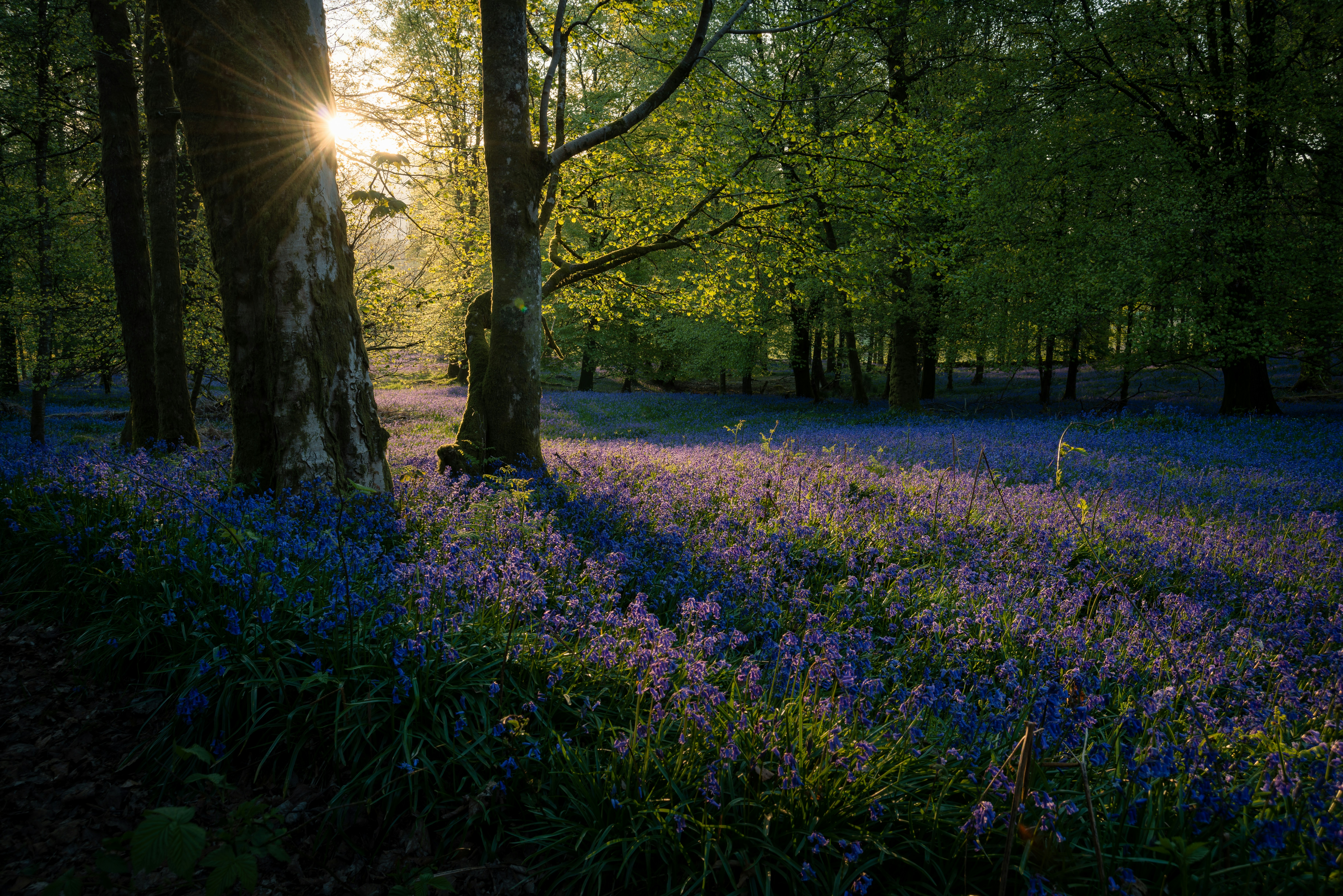
He made his way quite easily to the place Eleanor had been found, as there was a pleasingly strong signal on his phone. There were also lots of flattened tracks between the trees — rabbits and deer were his guess. And probably teenagers looking to have fun away from prying eyes, although there were none of the usual tell tale signs of empty cans and bottles, fast food wrappings and the silver bullets of nitrous oxide cartridges. If it was a hang-out for teenagers, they were surprisingly eco-friendly. The most surprising thing about the spot was that it was a garden. Trees had been cleared or somehow excluded from the open space, and it had an abundance of blooms surrounding a small grassed area in the centre. Like the Farjeon’s front garden, these were all native species. If they had been deliberately planted, there had been an effort to make it look natural rather than landscaped, but it was out of keeping with the overgrown nature of the surrounding wood. He would have expected trees, bushes and brambles to have encroached on the space, but it was open to the skies rather than overshadowed and there was a clear border where the flowers stopped and the trees began.
Ron was a city person. He had moved out of London but lived in the heart of Westwich rather than in the surrounding countryside. He liked to look at the natural world, but preferably on the television or through a train window. In the wood, which was on one of the few elevated areas in the locality, he felt a sense of claustrophobia he had never had when surrounded by the close buildings and bustling crowds of London. He knew it was only his imagination sculpting faces in the gnarled bark of the ancient trees, and conjuring venomous creatures from each rustle in the fallen leaves, but it didn’t reduce his anxiety. This place had too much nature for him. Yet the garden in the glade filled him with joy rather than dread.
Then he heard the birdsong. Just as Eleanor had described it — warbling and reedy — playing a tune he recognised at some unconscious level but couldn’t name. There were other birds singing, and he recognised some of their songs from the morning and dusk chorus at his home in Westwich, but this was different. It seemed as if it was just for him. A siren call he had to answer.
He had just started walking to the source of the song when a shock of fear pulsed through his body as a figure stepped out of the undergrowth.
“How do, boy,” it said.
Ron recognised the man as one of the pensioners sitting in the Green Man. He was wearing a worn tweed suit and had a large canvas bag slung over one shoulder. He also had a rifle in one hand. Ron remembered the man having a whispered conversation with the landlord and guessed he had been shooting rabbits which would end up in the pies on the specials board. The man’s face had the lined leathery look of someone who spent most of his life outdoors and when he spoke Ron could see he had a full mouth of yellowed teeth. He also noticed he was as extravagantly hairy as Rushford, and now he played back the pub scene in his mind he recalled all of the other customers and barman were equally hirsute. He had heard all of the jokes about inbreeding in the Fens and had photographed a football team who were all members of the same family. Given the comparative isolation of the area, he supposed it was unsurprising. He wondered if the stories of webbed feet were also true as all of this area was below sea level apart from a few raised points like the wood.
“I’m just taking some photographs,” said Ron. “That’s OK isn’t it?”
“You take away, young feller,” said than man. “This here’s common land. Belongs to everyone and no-one.”
“Is that why nobody manages it?” Ron asked. “As it’s above the flood level, I’m surprised no-one has built on it.”
The man smiled strangely.
“No-one round here would build on Marshope Woods,” he said. “This place is special. Been here thousands of years and I reckon it’ll stay a few thousand more. Course every now and again some townie comes along and tries to buy it, but they finds there’s no-one who’ll sell. No-one who can sell, tell the truth, ’cause it’s between all the different parcels of land, see. Don’t even appear on maps. Not that you could miss it, sticking up like it does.”
“Surely all land is owned by someone,” said Ron. “Even if it’s the King, or Parliament or something.”
“Just one o’ them mysteries of life,” the man said. “Like why eels swim thousands of miles to have sex and then all the way back. Don’t pay to wonder why, just accept it. This is a special place.”
“Were you one of the people searching for the missing girl?” asked Ron.
“Not me,” the man said. “Knew she’d turn up sometime. Not the first, won’t be the last.”
“People have gone missing here before?”
“Mostly young girls,” the man said. “Every few years. Always turn up safe and sound. The wood looks after its own – even newcomers like the Farjeons. Like I said, it’s a special place.”
It was certainly special, thought Ron. He knew it was alive, but it felt alive. Despite the chaos of vegetation it seemed as if it was somehow organised like an orchestra with an invisible conductor. If you asked people to imagine a wood this is what they would see in their mind, not a manicured or managed plantation. A living survival of the days when the country was covered in trees after the ice age retreated.
“Did anyone ever find out why they vanished or where they went?” he asked.
“Truth be told, not many people bothered asking,” the man said. “It’s just the way of the wood.”
Ron could still hear the strange birdsong but it seemed to be moving away and the hold it had had on his mind had faded.
“I’ve got what I need,” he said. “Good to talk. I’m back off to the Arcadia. Might see you later.”
The old man tapped the brim of his cap and strode off further into the undergrowth. Ron turned and made his way carefully back to his car through the bushes and brambles and fallen branches.
When he got back to the pub, Rushford was sitting at the same table. Ron would have thought he hadn’t moved if it wasn’t for the pile of books and paper that was now in front of him. The old men, however, seemed to have been there throughout the intervening hours, with the same nearly empty glasses on the tables. Now he had been prompted to look more closely, Ron could see how strong the family resemblance was between them. He wondered how many generations it would take for the families in the dozen or so new houses on the village edge to absorb the Great Marshway look.
“Did you get the pictures?” asked Rushford, without looking up from his book.
“I did,” said Ron. “Do you want me to email them to you? Remember I keep the copyright, though.”
Rushford nodded and grunted.
“The mystery is deepening,” he said. “That wood should be mentioned in local history books, but there are no references to it before 40 years ago.”
“Even a townie like me knows that place is hundreds of years old,” said Ron. “Perhaps it is just such a part of the area it wasn’t worth mentioning. I met a man there who said it isn’t owned by anyone so it’s not surprising it doesn’t come up on land deeds and such.”
“Even so….” said Rushford.
“Have you been here before?” asked Ron.
“Why do you ask?” said Rushford.
Ron shrugged. “Just a feeling,” he said. He wasn’t going to say it was because the man looked as if he was only 20 years off having his own stool and tankard behind the bar.
Rushford looked up properly for the first time since Ron had sat down.
“I was born here,” he said. “But my parents moved away when I was just a few months old. They never said why but I think it was because of some kind of scandal or family row. I know my father was posted away with the army for several years, and when I did the sums it seemed as if he couldn’t have been my real dad. I only found out when they died a couple of years ago and I discovered my birth certificate. I suppose that’s one reason I was keen to investigate this case.”
“And are you any nearer the solution?” asked Ron, sipping the pint he had bought from the hairy barman. Perhaps he was one of Rushford’s lost relatives.
“Not really,” said Rushford. “There have been a dozen similar incidents in the last 40 years. Young girl goes missing, claims to have heard some strange birdsong, turns up a few days later without any memory of what happened.”
Ron nodded. “The man in the woods told me the same thing.” He wondered why it had not made the papers before, but supposed it was because this had taken place on a slow news day. Strange none of the media had picked up on the previous disappearances though.
“All of the girls seem to have given birth nine months later, so it was generally assumed they had been off with their boyfriends,” said Rushford.
“The other strange thing is how long people here live,” he continued. “I looked at the parish records. Everyone seems to die aged at least 100, unless they are a newcomer. I don’t know if it is something in the water, or healthy eating and exercise working the farms, but it’s a definite anomaly. I asked some of the old boys in here, and they are all in their 90s despite looking in their 60s. It’s amazing. It’s as if there is some special life force here. I’m amazed no-one has investigated this before.”
“We’re in the arse end of nowhere,” said Ron. “Who would bother?”
“Everything interesting in my world happens in remote areas,” said Rushford. “You don’t hear of people being abducted by aliens from Manhattan. It’s always in Kansas or the rural Midwest. Rains of frogs, crop circles, they all happen away from street lights and CCTV. Bigfoot doesn’t have a mews flat in Kensington.”
Because otherwise they wouldn’t be mysteries, thought Ron. If there was proof they would be mundane.
“So what’s your next step?” Ron asked. “And do you need any more from me?” Or can I go home to Westwich and spend my fee was the unspoken addendum.
“The disappearances all happened around dawn,” Rushford said. “We need to go out there tomorrow and investigate.”
Good job it’s autumn and I don’t have to get up too early, Ron thought. He would bet they did a good breakfast here. He looked round the bar again. It seemed as organic as the woods as if it had grown rather than being built. Like the older buildings in the village, he realised. Wood, thatch, lathe, all local materials, unlike the red brick and tiles of the Farjeon’s house. Even the natives looked as if they had been harvested from a field rather than being born in a hospital.
Rushford and went back to his books and no-one else in the bar seemed in the mood for conversation so Ron got the key to the room his employed had booked from the barman and went upstairs with another pint. It was in the same timeless style as the rest of the pub and Ron noted with dismay that there was no television in the room. He was not really a reader so he got out his camera and looked through the pictures he had taken. There was a strange glow in the snaps he had taken in the woods, despite the shadows from the trees. It was as if the vegetation was lit up from inside. Looking again at the pictures of Eleanor Farjeon he saw there was a similar aura around the teenager. He wondered if there was some kind of light leakage around the lens. It would probably look good in the article, though, so he could get it looked at when he got back to Westwich rather than worrying about it now.
When he got up the next morning he was annoyed to find Rushford had set off for the wood without him. There was no rush to follow him as dawn was still an hour off so he had a full English breakfast which was, as expected, delicious. One of the perks of his job was eating on expenses and he had dined in everything from greasy spoons to fancy restaurants. This was up there with the best and he would bet the bacon, sausage, egg and mushrooms were all local. With food this good, no wonder people lived so long here.
The sky had just started to redden at the distant horizon over the flat landscape as he arrived at the edge of the woods. It was still dark within the trees and he switched on his torch to avoid tripping on the uneven ground. The path looked recently trodden which reinforced his theory of it being a deer trail. No marks on the tree bark, though, so they probably weren’t escaped muntjak or water deer. Good old fashioned native species.
He felt a chill of recognition as he walked through the wood and heard that birdsong again. What was that melody that slipped off the side of his memory? And why did he feel that compulsion again to follow it? It seemed to be drawing him towards the hollow where the teenager had mysteriously reappeared.
As he pushed past a branch and entered the garden in the glade, he was astonished. It was full of figures. All of the old men from the pub including the barman. More villagers with their trademark hairy heads and arms. The Farjeons were there with Eleanor’s boyfriend, and other people whose looks marked them out as incomers. The birdsong was so loud here he could feel it in his bones and his body seemed to vibrate in sympathy. It came from a figure sitting on a fallen tree near the centre of the hollow.
As the light grew in intensity, he could see the figure was playing some reed pipes. It wasn’t birdsong after all, although you could be forgiven for thinking it was because it sounded part of nature rather than something created by man. It was part of the wood, generated by its history and life. Ron realised it made him feel more alive than he had done for years. Closer to the living world and its wonders, erasing the efforts he had made to distance himself from the wild all of his life. The people in the clearing had that aura he had seen in his photographs and the warmth rising in his blood felt as if he shared in the light.
It was strongest around the figure at the centre, making it hard to see any details. Then, with a shock of recognition, he knew it was William Rushford. He also realised the man was naked, although his hairy body was clothing enough. There was something strange about the man’s feet.
And that was the last thing Ron remembered before he slumped to the ground in a deep sleep. And it was the image he struggled to process when he woke up three days later in the middle of an empty field.
[Tim Newton Anderson is a former daily newspaper journalist and PR manager who started writing fiction about four years ago. Since then he has placed more than fifty stories in a wide variety of publications and genres. “The Garden in the Glade” is partly inspired by the wonderful Avram Davidson. His blog is at https://atjentertainments.wordpress.com/]
 Eternal Haunted Summer