
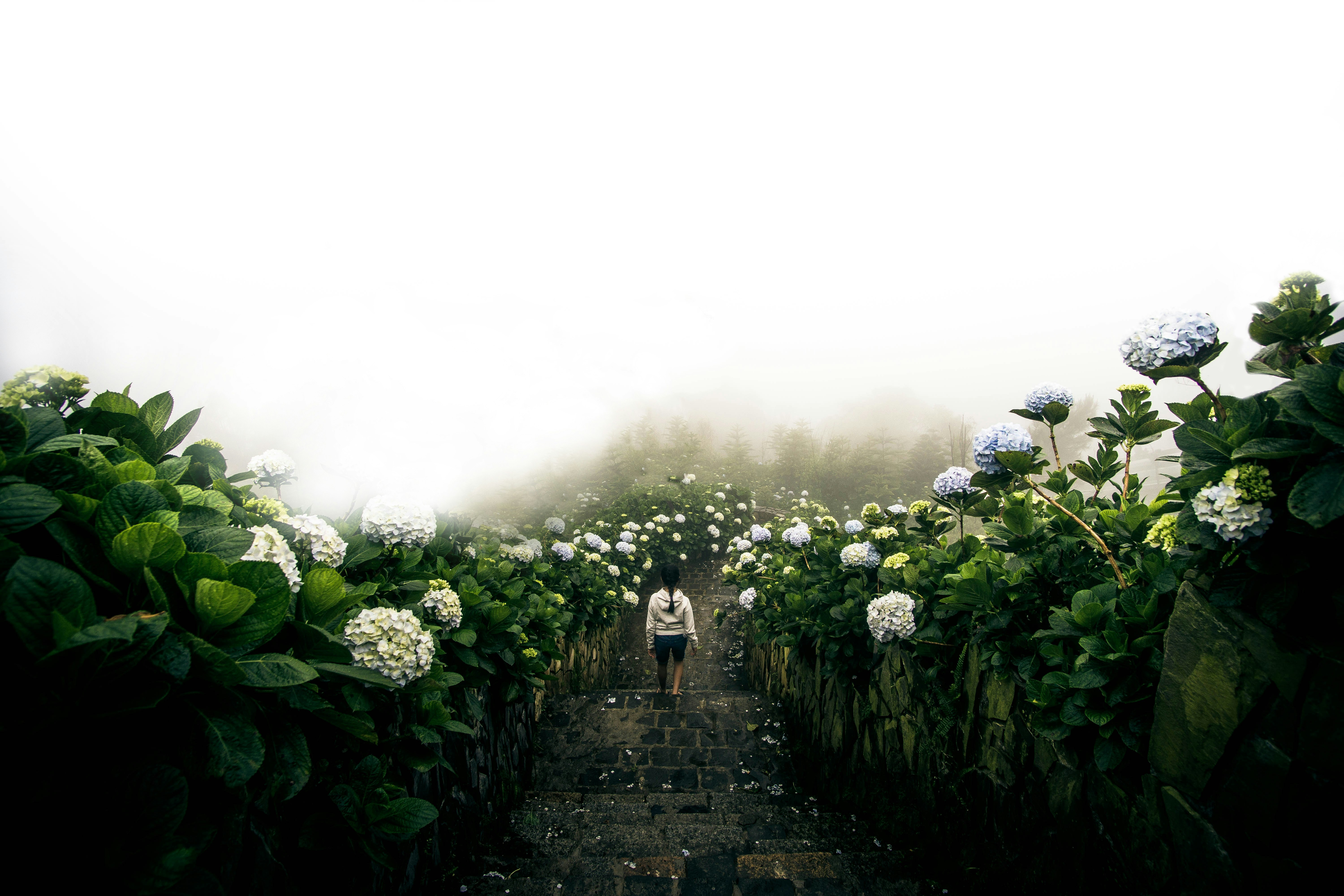
You awaken to the rocking and lilting of running water beneath you. The air around you has the damp mustiness of underground, pressing on your lungs and sending a prickle down your arms. Darkness shrouds your surroundings even as the whistle of wind gives the impression of traveling through a vast cavern. You blink, trying to make out life within the shadows, and your hands tighten on the splintery roughness of a wooden bench. Slowly, you begin to discern a cloaked figure some feet ahead of you, carrying a pole that drips as it swivels from side to side.
There is a story in your mind of a place like this – an underground river, a hooded ferryman. You have a fleeting memory of toying with your mother’s rings as she told the tale in some other space and time, your father’s flannel-sleeved arms wrapped around you both. But there was another story, murmured across distant landscapes of quilts and quietude, that you clung to even more fiercely. Every person was born to find their companion, your mother had whispered. They can be anyone – a partner, a sibling, a lover, a friend – but you, my sweet, will know them when they come. But thought there are truths embroidered within the oldest of legends, it has been a long time since you were young enough for the world to be explained in stories.
You open your eyes to make sense of these memories and what could have brought you from there to here, but before you can question the mysterious figure that lurks at the boat’s bow, the shapeless scenery engulfs you like a hurricane, a cascade of invisible motion and noise that clouds your senses again until suddenly you are standing not on water-worn planks but on the banks of the river, watching the shabby riverboat disappear into the mist.
Empty – wherever you are feels empty. There is none of the joy here you can just barely recall from your earliest days when your father used to play for his fiddle for you in the evenings, standing on your mother’s feet laughing as the two of you twirled. None of the quiet reassurance that came from the mugs of herbal brews you pressed between your mother’s palms, or the scraggly bouquets you gathered for her that grew along with the circle of your arms. Here, water the color of soot laps at your bare toes, and when you look down you realize that you are standing on a shore made of shards of dark stone. Though you can feel the jaggedness of the fragments against the soles of your feet, they leave no punctures. You bend down to press them between your fingers, seeking out some sense of physicality in this strange place, when something tugs at your focus like twine tangling amidst the coils of your mind.
There is a feeling that comes with finding your companion, you can remember your mother telling you: as though the troubles of the world stand still for a while. She herself had lost this solace when your father had died, growing grey and insubstantial, trailed by a mist of sorrow wherever she went. In the years you had spent trying to revive joy in her, giving yourself over completely to her care, you had long since given up hope of seeking your own companion, experiencing the contentment this bond could provide.
But a peculiar feeling pulls your attention now, and you turn to see a figure standing just a little further up the bank who had certainly not been there a moment before. They appear neither male nor female, with a sheet of glossy black hair that stops starkly at their shoulders, and jaw and cheekbones so sharp you can picture the skeleton that grins underneath. Gemstones dangle from their ears, and they are cloaked in a garment that winks in the torchlit cavern with flashes of the same jewels, a midnight sky full of luminous stars. They stand with shoulders back and chin tilted, expectant. Waiting.
But the most startling thing is not the stillness of their chest that normally would swell with the rhythm of breath or the solemnity of their gaze. It’s the sense of unexpected familiarity that has bloomed within you, despite the strangeness. This stranger has evoked in you a wary, wonderful comfort you thought you would never feel.
Their eyes are dark and rich as honey, and widen as they flick over you. “It’s you.”
If this being was a menace, you’d expect sneers or snarls. Not this breathy whisper, the tremor in their voice. Cautiously, you respond.
“Should I know you?” you ask. “Have you been expecting me?”
The smile they give you is small and sad and within it there is a solitude that has stretched on for centuries. “We do not know each other. Not yet. But I have been waiting for you for a long time.”
“And you are… And this is…?”
“Death.”
That one word, so simple and matter-of-fact, shoots straight down your spine and disperses across your limbs until you can feel your hands shaking, knees weak. Why should you believe them? But you remember suddenly a meadow, a picnic. Wildflowers strewn across a cotton blanket, a gift to brighten your mother’s windowsill that will never make it home. A basket packed with breads and cheeses and fruits, crimson beads clustered on your spoon that caught in your throat with no one to free them, and then nothing. Oblivion. Until the rocking of a boat.
And as understanding blossoms with the recovery of this memory, a new sort of panic sets in. After witnessing the ghost that your mother became following your father’s passing, you had suppressed all longing for companionship, vowing never to allow yourself to become dependent in that way. And Death did that to you. No matter how long you craved the comfort that Death’s presence evokes in you, no matter how gentle, how lovely the figure before you appears – they stole your father and left your mother to wither away, sowed distrust throughout your childhood where chances for love might have bloomed. How could you forgive anyone who had caused such pain? Anger surges in you, obliterating all other feeling, until your fists are curled and your brow is furrowed and you lash out with its gleaming blade.
“I want nothing to do with you,” you snap at them. “Leave me alone.”
You brace yourself for a wild sweep of rage or a spire of pain, but Death does not retaliate as you expect. Resignation has seeped into their features. “I thought you might respond this way. You are not the first human to come to this place. Few want to be here.”
But your grievances are greater than your own arrival on this dank riverbed. “You took my father away from us. You left my mother grieving and alone.”
Death’s eyelids flutter shut, their mouth a tight line. “I do not dictate life and death,” they offer, a feeble explanation. You want to scoff. “I am merely an overseer, supervising the transition, maintaining the critical balance. Why do you think I have not sought you out before?”
You suddenly recognize the expression still lingering on Death’s face. You too hold your muscles still, eyes squeezed shut, whenever you are trying not to cry.
“Many blame me,” Death continues. “And I do not blame them for this. But… I am sorry for the loss you have suffered and the pain it has caused.”
And though a part of you still wants to rail and rage, give yourself over to the grief you and so many others have experienced, you can feel the fury building on your tongue melting like sugar as you observe the remorse that is clear in Death’s features, your own human sorrow reflected there. How many other losses must Death have witnessed? How many elegies and funeral laments? And, though you have already begun to suspect, you wonder: what reason does Death have to be here with you on this riverbank? And what has become of all the other lost souls?
“If you have not come to punish me,” you ask, “then what keeps you waiting here?”
Death’s eyes are open again and fixed on you, the warmth in them like the glow of a campfire spilling out from a cavern. Though their chest does not rise and fall as yours does, you can imagine them sucking in a breath in the stillness before their words. “I have come to offer you a choice.”
And suddenly, you know what choice they will offer before they say it, the choice you have long anticipated despite fervent attempts to suppress this desire. And how could you possibly agree to be Death’s companion, some dark monarch preying on helpless mortal souls?
“I want to invite you – to welcome you,” says Death, “to share my realm and the wonders within it. But if you do not want this… I will help you go from this place. One word, and I will leave you forever in peace.”
A chance to go? To be free from Death? You must appear stunned, because Death continues quickly, haltingly, the only tone of uncertainty you have heard from them so far. “If nothing compels you… If you have no desire… This is a choice, freely given, for you to accept or refuse as you may.”
“May I have some time to consider?” you manage.
“You may have every eternity,” Death says, and they vanish.
***
You are standing in the strangest garden you have ever encountered. Time seems to run differently here where there is no linear trek from birth until death, but rather a circuitous perpetuity stretching in every direction, and so you have wandered until you stumbled upon this place. Gemstones sprout out of the ground like flowers: garnets spilling forth to form spirals of roses, topaz and opals scattered like daisies. The darkness above you stretches so high that you would mistake it for the night sky, except there aren’t any stars.
You sink onto a bench the onyx color of midnight and let your fingers brush across the emeralds climbing like ivy up the side of the stone. Music drifts down from some distant chamber, and you wonder whether there is an orchestra, or perhaps just instruments. What spirits would possibly play here? The music of your beloved fiddle is distinct, slow and mournful as the bow weeps across strings.
You think of your mother, then, and the home you have left behind: the meadow and its wildflowers, the herbs hanging in your kitchen windows, the days spent amidst rays of trickling sunlight and evenings with the patter of raindrops on window panes. You think of the night sky, of the true stars that glimmer there, and of the way the air feels cold and crisp in your lungs. But even as these images shimmer in your mind, you also can see the muted walls of your childhood home, any liveliness long since faded. You can taste the salt on your lips from countless tears shed for your mother’s loneliness and your own self-imposed isolation, mistrust of a world where love can grow and die and leave you desolate and alone. You’ve shut yourself off from the idea of companionship from fear of this loss – and at the same time fear of a closeness you have never gotten to know.
And as you ponder, another vision emerges, and you know that Death has given it to you. You can still sense their presence, no matter their attempts to be unobtrusive, like the heat from a furnace on a blustery evening. You see a river meandering, cloaked in mist, and then out of the torchlight, a city emerges, lit up in crimsons and indigoes, the glittering of jewels illuminating this hidden kingdom. You have spent enough time with one foot in the next life to be drawn to this mysterious otherworld. But the cobblestone streets and lantern-strewn pavilions are empty, no pedestrians strolling in the twilit warmth or lounging on the banks of the soot-colored river.
“Where are the people?” you wonder aloud, and Death is beside you on the bench in an instant. Their head is bowed, hands concealed within their robe’s gaping sleeves.
“I built this place for them long ago,” Death says. You had been too preoccupied before to notice the music of their voice, but you hear it now, soft and lilting as it mingles with the orchestra’s strains still trickling in the air. “But they have chosen to roam elsewhere, never to settle. They have never found home here. Too many are restless, resentful of being torn from their past existence, distrustful of anything I create.”
“They fear you.”
“Yes.”
“Should I fear you also?” But Death doesn’t seem like someone to fear, gazing out as though they can see that riverside city before them, as wistful as a child caught up in a dream.
“Perhaps you should,” Death says.
“Because you will keep me here. Forever.”
“I should. And yet…” Death’s shoulders are hunched, their jaw clenched. “People should be free to choose. To accept companionship, or to walk away.”
After so many years of resentment towards Death, this is the opposite of what you expect. Especially because – “You said it wasn’t possible.” The accusation escapes your lips. “That you have to maintain the balance.”
“It’s true,” Death says. Their eyes are fixed not on you, but on branches of amethysts that sway like lavender in a phantom wind. “And perhaps it is selfish of me to even offer. Perhaps goes against my very purpose. But… what kind of companion would I be if I forced you to stay with me? I would be exactly the monster they all think I am.”
And the press of their lips is so tight that you can almost taste their fear on your own tongue, coppery and bitter. They are not some Stygian overlord, you realize, cackling at the suffering souls crushed beneath their feet.
“So if you don’t want to be the monster… then what do you want?”
“I want…” Death pauses, glancing at you at last. Their gaze is shrouded by lashes like crow’s feathers. “What I want is to bring color and conversation and joy to this place. I want to give them life again.”
You can picture it also: the city full to bursting, revels in the squares, music trickling from the high windows, dancers in multicolored skirts that billow like clouds and laughter crowding the cobbled alleyways. You could help to create this, allow them all another chance at happiness. Perhaps you could even find your father again, inhale his musky scent that you can just barely recall from your youngest days when he would sing you to sleep in his arms. Perhaps your mother will join you. You can picture your parents, finally reunited, twirling and laughing to the rhythm of a bow across strings.
Excitement is building, a sense of purpose grounding you after years of drifting. You turn to Death. Their face is stony, but a twitch of their brow betrays the hope that trembles there. How many ages had they waited down here, watching the ferryman come and go, the only company people who hated them on sight for fates they hadn’t determined? How many moments had hope risen in their chest, fluttering wings like a butterfly only to tumble back down again, still abandoned and alone? Maybe that was why the music played; it was the façade of companionship, the illusion of another presence aside from just their own. And you are the end they have awaited so desperately, the culmination of solitude that has found them at last.
Solitude… just as you have taught yourself is the only way to endure. But to weave through city streets with another at your side, to return home to prepare a meal together, to sit in front of a fireplace, each with a book in your hands… You look at Death’s long lashes, the way their dark hair brushes the edge of their cheek, all at once patient and eager and aching and quiet. Waiting.
How incredible, to risk their one chance at connection to allow you the freedom of a choice.
“In accordance with the rules of life and death,” you ask them. “If I stay with you, I can never return?”
“That is the custom,” Death responds, but you catch a flash of mischief in their eyes as they go on. “But I am free to walk between realms as I must, and as my companion… I believe there is a possibility for exceptions to be made.”
And your fingers unfurl from your fists, blossoming like an invitation as you reach out for them, your answer contained in the bridging of the space between you. Their dark rich eyes widen again, bringing life to the sunken face, and a smile bursts forth from their solemn cheeks like a sunrise. Slowly, their fingers extend from beneath their robe, reaching, hesitating. They are slender and smooth and strikingly human, nails crooked at the ends and bitten to the quick. And as they brush against yours, you can feel a warmth there seeping into your veins, an anticipation that fills you like bubbles rising to the top of a glass.
[Zoë Mertz received her MFA in creative writing at Emerson College in Boston. She also enjoys martial arts, embroidery, and wandering around her native Pacific Northwest. Her most recent stories have or will appear in Lunch Ticket, Fairy Tale Magazine, and Written Tales. She is excited to share her writing with readers of the wider world.]
 Eternal Haunted Summer