
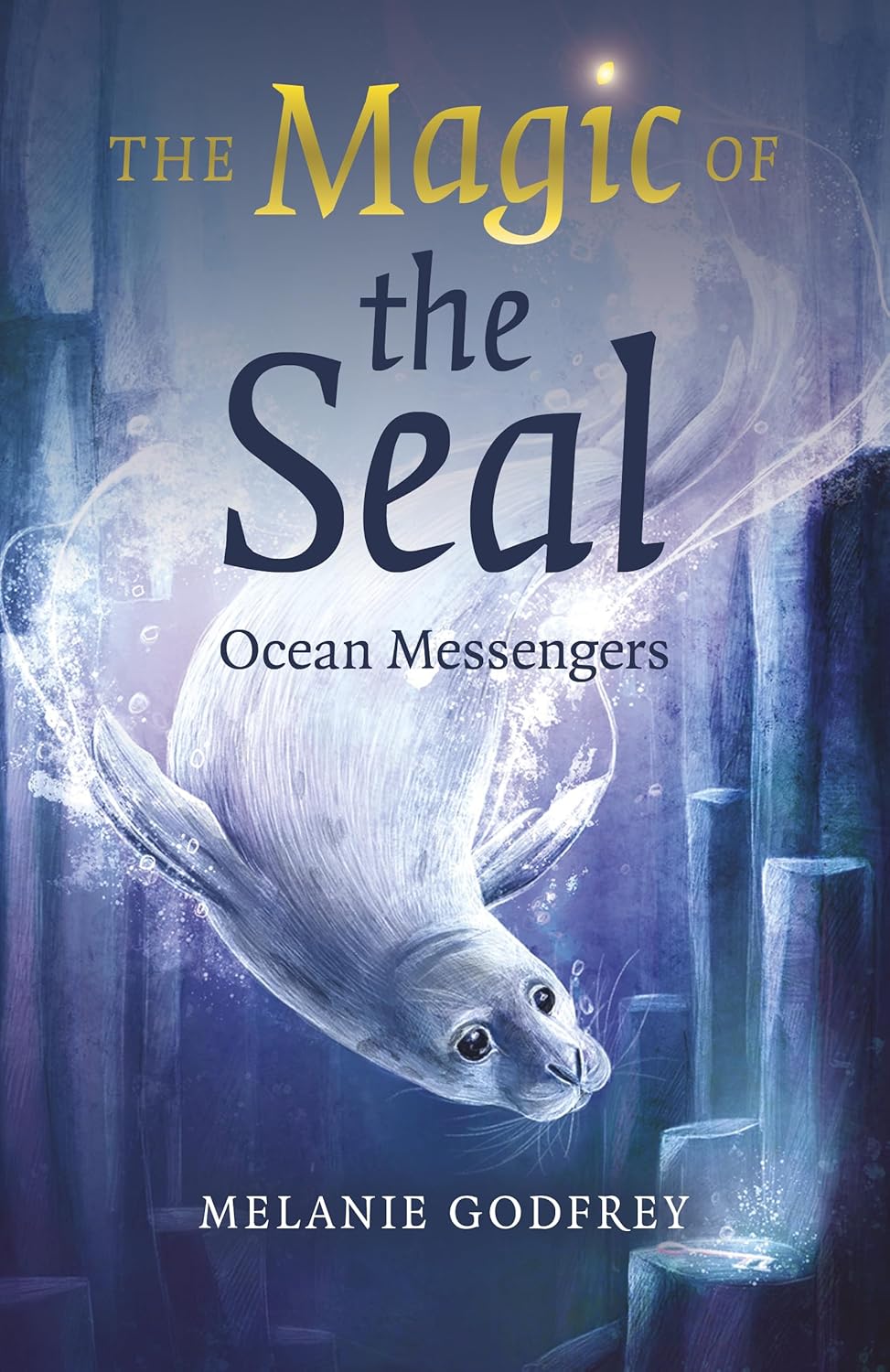
[Today, we sit down with Melanie Godfrey, Neo-Druid and author of The Magic of the Seal. Here, she discusses her new book, her fascination with and devotion to seals, and her upcoming projects.]
Forests Haunted by Holiness: How do you define your personal spiritual practice? Does it have a name, or is it more eclectic and intuitive?
Melanie Godfrey: I study Neo-Druidry. I keep my practices uncomplicated and heart-centred and honour all forms of life. In my early spiritual practice thirty years ago, I incorporated Buddhism and Taoism into my daily life. And although I love to study the history, folklore, and mythology of the British Isles, as I feel called to connect deeply to the spirit of my ancestors and the land here, I meditate, am mindful, and feel Taoism is still relevant in my spiritual practice. I follow my intuitive senses, my spiritual heart, and it has never failed me. So, yes, I am intuitive and eclectic in my beliefs.
FHBH: Which Deities, spirits, or other powers do you honour in your practice?
MG: I honour the spirit and voice of the natural world. I feel animistic in the way I relate to the world around me; I like to have relationships not only with humans, but with animals, and trees, and also the mineral kingdoms I come across.
The deities I hold close to my heart are the essence of St Brigid, and Mary Magdelene, who inspire strength of spirit and a heart-centred path. Although I love all animals, I have an affinity with seals and the spirit of the selchie – the larger grey seals found basking on remote Scottish islands.
FHBH: You recently published The Magic of the Seal: Ocean Messengers through Moon Books. First, congratulations! Second, how did this book come about? Why a book on the magic and lore of seals?
MG: Trevor Greenfield put out a message on the Moon Book author page about doing a ‘Magic of’ series. There were many authors who replied with different animals they wanted to write about. That night I put together an outline for a book about seals, which have been close to my heart after I found a wild grey Atlantic seal pup that was only three days old. I wanted to explore them further and decided to write The Magic of the Seal: Ocean Messengers. The research took me on an enchanting and emotive journey to the Outer Hebrides, where there were once seal clans. I never told Moon Books about my idea until a year later, once I had completed the first draft of the manuscript.
The research changed my life in many ways. Although I had for many years felt an affinity with seals, I now feel they are a part of me in symbiotic relationship. I realised seals need us as much as we need them, as we advocate and understand them at a deeper level. We can journey back in our imagination to the past when there were once seal clans on the British Isles, we can take seals into our hearts and create safety at the ocean where humans cause the least disturbance in their natural habitat. The deeper we look at their being, we come to understand there are aspects of the seal we will never completely understand, particularly if or even how seals were worshipped in the past. Seals will always remain a mystery in a sense.
FHBH: You include sections on seal lore from the Scottish islands, Ireland, Wales, Norway, and even Canada. What sort of research went into these sections? Tall stacks of books? Long discussions with lore experts from those regions?
MG: A mixture of both books and discussions with experts from around the globe took place. I specifically sought out storytellers on the Outer Hebrides of Scotland, who held old Gaelic stories of seals and humans living in symbiotic relationships, close to their hearts.
My main research took place in Scotland and the Outer Hebrides. I asked locals about selchie folklore on the Isle of Lewis and Harris, but it wasn’t until I visited North Uist, and Berneray, that the pieces of the jigsaw came together. I met with the islands’ storytellers and visited Hougharry – an area where the MacCodrum seal clan lived, and which ignited my imagination to journey back into the past.
I had many conversations with Dr Linda Williamson, who was kind and gracious in helping me to understand seal lore at a deeper level through navigating Duncan Williamson’s seal stories. Dr Andrew Hoffman briefly informed me where seal lore may have originated and about seal beliefs in Greenland. He recommended I watch Angry Inuk, a documentary about how the people in Iqaluit – the capital of Nunavut in the Canadian Arctic Circle – have survived by hunting seals, not culling, but only sourcing what they need.
I never managed to get to Connemara to ask people about the seal clans in Ireland, but I contacted museums who helped me understand the concept of nineteenth century totemism relating to seals.
Scotland was my main source of inspiration about selchie folklore. I gathered many books during my research and looked to the tobar an dualchais – a rich online resource of audio recordings of Scotland’s cultural heritage. With the permission of storytellers and their families, I was able to share original seal stories.
Although there are thirty-three species of pinnipeds worldwide, my focus was the wild grey Atlantic seal of the British Isles, because it was not only a grey seal pup who inspired me to write this book, but apparently, it’s the larger of the grey seal species who transform through therianthropy into a selchie.
FHBH: What one piece of lore did you absolutely have to include?
MG: Although it’s one of the most common selchie folklore stories, I had to include ‘the selchie maiden’, because I needed to understand the different interpretations of this story, how it relates to loss of personal power, and how she reclaimed herself, and her independence. Having a metaphorical seal skin when we feel most vulnerable, lost, or sad, the seal and their silky skins are powerful medicine which represents ultimate freedom and courage.
Another one that had me fascinated was the story of the seal skin tobacco pouch which had magical powers – a tale I found through the tobar an dualchais. Archie MacAulay went on to tell the tale about a seal skin tobacco pouch – or spliuchan in Scottish Gaelic. The seal skin was tied together with a ball of wool and placed in a trouser pocket. While seal skin and wool sat together, at high tide the wool was meant to wind around the sealskin, and at low tide the wool would unwind. Archie knew of a man who tried this, and it was spoken in truth.
FHBH: You describe seals as ‘liminal creatures’. What can we humans learn from such beings?
MG: Seals have no control over their environment and are constantly crossing a threshold of liminality every single day, as they rest on land and feed in the ocean. Crossing land and sea, they belong to neither. In a deeper sense, seals teach us to trust liminality, as they cross this metaphorical precipice of change every single day. They are joyful and content with their existence. Humans, in contrast, experience liminality as we go through changes, switching jobs, moving house, experiencing loss. Yet these transitions can be unsettling, leaving one feeling ungrounded, lost, and afraid of what the future may hold. Seals hold a steady space for us to metaphorically trust a liminal space, as they work with this magical space every day. They transition over land and sea and have no control over their lives, constantly having to survive the harshest of conditions. Seals, as I have said before, are powerful allies to walk with in a spiritual sense. Although they seem vulnerable, gentle, and peaceful, we must remember they are a species that has survived eons and coped with the test of time.
FHBH: For those who wish to start working with seals as ancestors or guides or spirits, how do you recommend they begin?
MG: Gently ask the spirit of the seal to guide you. Create a simple space with a candle, and maybe a photo of a seal, and take time to concentrate on prayer for wild seals or an injured seal. Visit a local seal sanctuary where you can see them interact and play with each other. Visit the oceanside or harbours where seals may frequent. Meditate on what the seal means to you; what appeals to you most about them? They are sensitive, peaceful, and joyful beings who are conscientious and skilful hunters, clumsy on land and powerful in the ocean. Let them appeal to your curiosity, and allow their gentle and peaceful natures to inspire and calm your spiritual heart. Over time, let your relationship with them grow. We have much to learn from pinnipeds about survival at the ocean side, as we learn to live beside them, giving them the space that they need to life safely and free from human disturbance.
FHBH: There are a number of organisations dedicated to rehabilitating seals and protecting their habitats. Are there any in particular that you recommend?
MG: The three organisations close to my heart, and those who helped the little seal pup I rescued, are:
British Divers Marine Life Rescue: www.bdmlr.org.uk
Cornish Seal Sanctuary: www.sealsanctuary
and the Seal Research Trust: www.cornwallsealgroup.co.uk
These three organisations have dedicated people who work tirelessly to help protect and rehabilitate seals of the British Isles – the wild grey Atlantic seal and the common seal. I am grateful for everything I learned from these groups, and in particular Sue Sayer for her dedication to help protect wild grey Atlantic seals. There are many seal organisations throughout the British Isles that are worthy of support. Do look up local seal groups in your area where you can become a volunteer, or learn all you can about seals to become an advocate for their protection.
FHBH: What other projects are you working on?
MG: I’m working on a large project; one I’d rather not share too many details until its nearer completion. But let’s just say it’s to do with the geological aspects of the British Isles. I am really excited about this new project and haven’t thought about much else, but I hope after this large body of work I can have a rest from writing for a while … if that’s at all possible.
 Eternal Haunted Summer