
[Today we sit down for a quick interview with author Irisanya Moon. Here, she discusses her new book devoted to the Goddess Hestia; her upcoming book on the entire Greek/Hellenic pantheon; and her future plans and projects.]
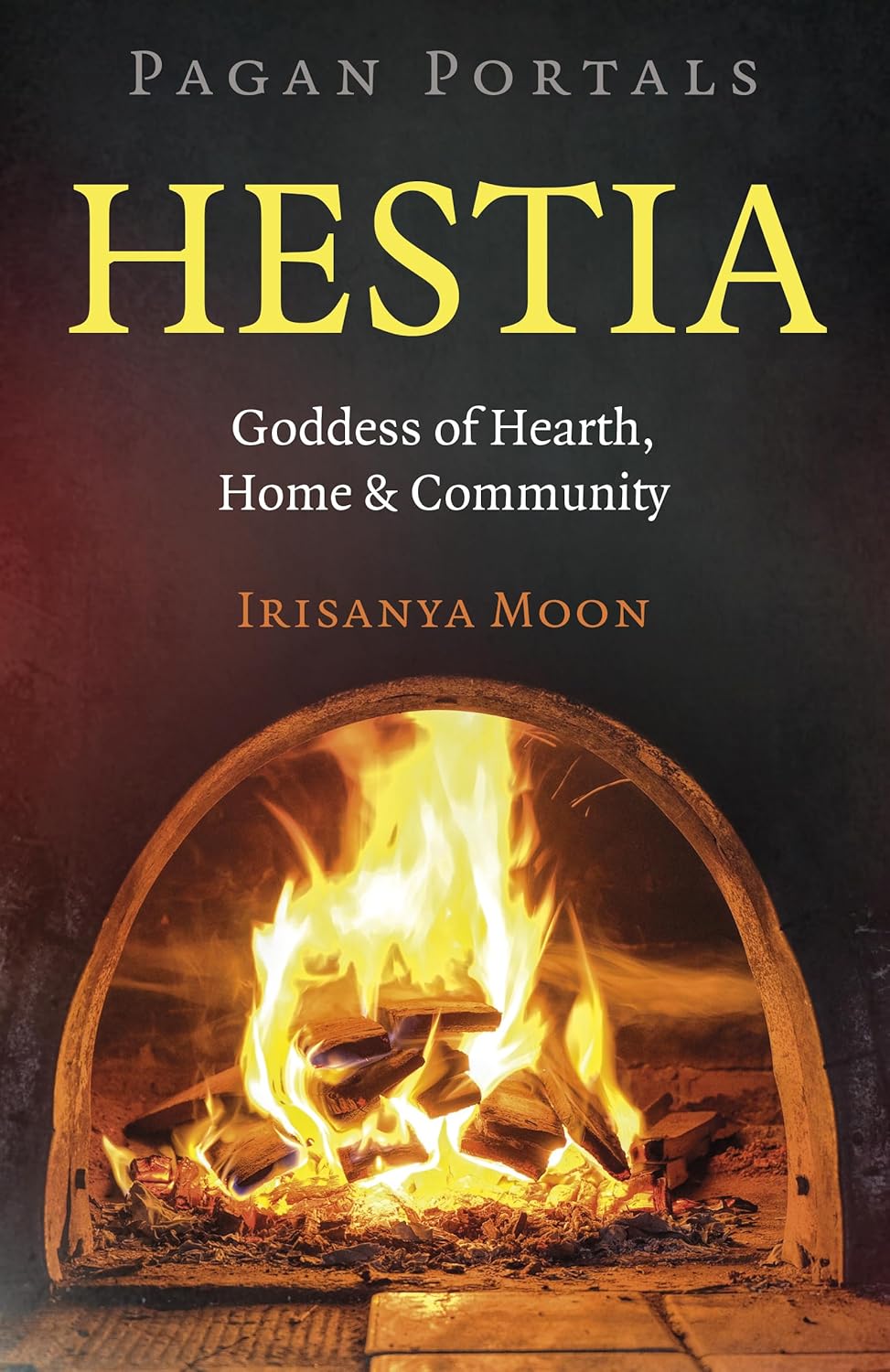
Forests Haunted By Holiness: Your next book, Hestia: Goddess of Hearth, Home, and Community, is coming out from Moon Books near the end of March. First, congratulations! Second, why a book about Hestia?
Irisanya Moon: Thanks so much! The idea for Hestia came out of a conversation with a friend about community. We were talking about how to make things more sustainable for groups and Hestia’s name came up. I had a mentor who embodied Hestia’s energy, and I wanted to share that with readers who might be feeling disconnected or dispirited about their local community.
FHBH: What sort of research went into Hestia? Big stacks of book? Conversations with her devotees?
IM: I typically get out all of my Greek mythology books, find all references to the deity I’m writing about, tag those pages, and organize the books into piles that stay on my counter until I’ve used every one up — or included them as references at the end. I also start from the place of asking myself what questions I would want answered by a book and how those answers can be made accessible to a wide audience of readers.
FHBH: Hestia is not well-known outside of the Hellenic/Greek polytheism community. If you could share one favorite myth or historical tidbit about her with someone not familiar with Hestia, which one would it be and why?
IM: While this story comes from Robert Graves, and thus lands more in personal gnosis territory (which I think is completely valid too!), I love the idea that Hestia ‘resigned’ from the Olympians because she thought her siblings were too dramatic and messy. To me, this aligns with other writings about her, and speaks to the idea of leaders knowing when to step back.
FHBH: You are also contributing a volume to Moon Books’ Pantheon series with The Greeks. How long did it take you to put together this book? And what sort of resources did you consult?
IM: That was the first book I tracked in terms of how long it took me to actively write it and then to edit it for submission. I think the active writing took about thirty days of about four to six hours a day between April and June of 2024. I also had additional edits to complete later in the year.
Since I’ve been writing about the Greeks for a while, I have a lot of information on my bookshelves, but I also checked and re-checked source materials, used various translations of stories and poems, and used some online resources to identify information that would benefit the reader. This book not only has pages and pages of footnotes, but also a long list of reference texts and recommended reading.
FHBH: If someone wants to start building a relationship with the Greek Deities, what would you recommend as a good place to start?
IM: I encourage folks to read the stories of the Greek deities first to see what they resonate with and what makes them want to learn more. For me, this includes reading different translations to see what shifts between the stories. It’s also wise to learn about ancient Greece and the culture (while keeping in mind ‘ancient Greece’ is not a monolith) to have context for the stories.
FHBH: There are lots and LOTS of Deities, demigods, and other spirits in the Greek pantheon. Which of these do you wish had more devotees among modern polytheists, Pagans, and witches? And why?
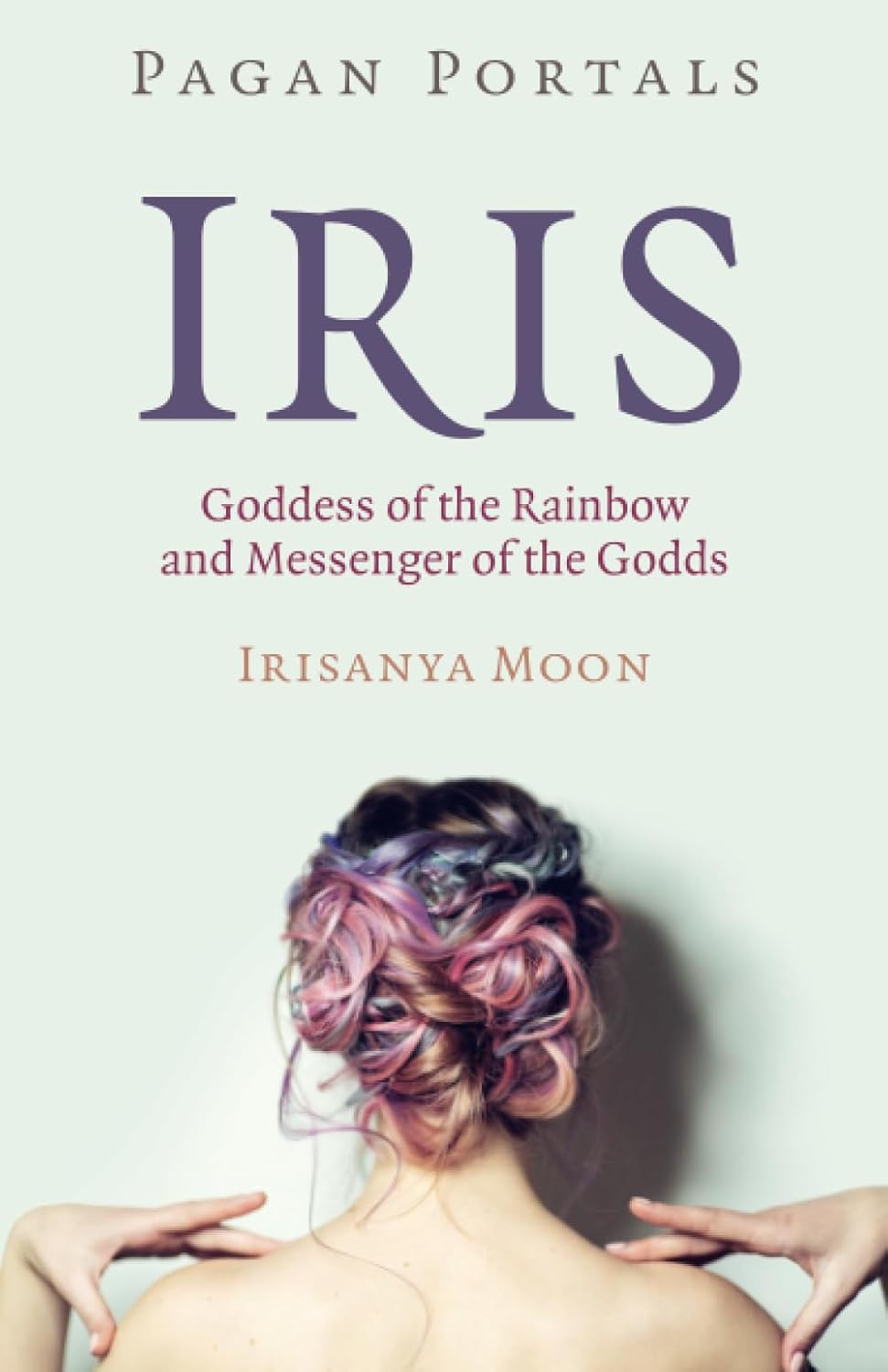
IM: Yes, there are SO MANY deities and beings. I’m sure I missed a few! I tend to write books on the ones who I wish had a greater following. For example, Iris and Hestia are not as popular as I think they could (or should) be. Iris has a number of big roles in well-known stories, e.g., Persephone and Demeter. Hestia feels crucial to study since the hearth extends far beyond any human-like form and into the realm of source and lifeforce of community.
FHBH: Which book fairs, conventions, or other events do you hope to attend in the foreseeable future?
IM: I just got back from Paganicon 2025 in Minnesota, and I had such a great time. I hope to return there next year. I’m presenting at a few online conferences in the coming weeks, including the Water Priestess Confluence (April 4 – 6) and Root & Rise Witchcraft for Resiliency Virtual Summit (April 11 & 12). Details are on my website to see what I’m presenting on and how to get registered. They’re both free to sign up, and you get some cool things when you do.
I also teach online classes and have a few of those coming up, including an Artemis Immersion on April 13 and a 6-week Devotion Pentacle class with my friend Riyana. Again, details to register and learn more are on my website.
And since I tend to create things spontaneously (!), signing up for my newsletter is a great way to see an up-to-date list of my goings-on. It’s called Heart Magick and it’s at irisanya.substack.com
FHBH: What other projects are you working on?
IM: Right now, I have those classes coming up (and more that haven’t been revealed just yet…), while also writing a book on Athena that you can read one chapter at a time on the Moon Books’ Pagan Collective blog.
My Pantheon: The Greeks book comes out in November 2025, and my Pagan Portals book on the Muses is out in the spring of 2026. After that, my Pagan Portals book on Hecate will be released, though I’m not sure when. It’s still in the editing process.
I’m also working on a new book on Aphrodite priestess/priestex training and another book on building relationships with deities through a modern lens. There are many other things in the works at different stages, so see my website, my social media, and my newsletter for updates along the way.
Thanks for these questions and thanks to folks who took the time to read my answers.
Find me at:
https://www.collectiveinkbooks.com/moon-books/authors/irisanya-moon
 Eternal Haunted Summer