
[Today, we sit down with folklorist, dramatist, poet, podcaster, and composer Doctor Ceallaigh S. MacCath-Moran. Here, she discusses life after school, folklore resources for writers, her two folklore-inspired EPs, and her upcoming projects.]
Forests Haunted By Holiness: You recently earned your Doctorate in Folklore from Memorial University. First, congratulations! That is an incredible accomplishment. How did you celebrate? A quiet day on the beach? A big party with friends?
Ceallaigh S. MacCath-Moran: Thanks very much! My convocation week was a celebration in three parts, which is itself a fairly witchy thing, withal. I wrote my dissertation from home, so we had to return to Newfoundland from Cape Breton Island for my convocation, and the journey itself was Part I. It’s an overnight ferry ride to the province and then a ten-hour drive from Port-aux-Basques to St. John’s, but we made it on one of the loveliest autumn days I’ve ever seen. It would rain a little, and then the sun would return, and then the most brilliant rainbow would appear. We must have seen at least ten hanging over the Newfoundland wilderness. My husband Sean and good friend Crystal were with me, and at one point we all decided the rainbows were a graduation gift from the Gods. Perhaps, and perhaps not, but they shine in my memory now.
Part II was the convocation itself. I remember standing backstage with all of the other doctoral candidates, waiting to be seated onstage for the convocation ceremony. We chatted about our research and took pains to call one another “Doctor.” Later, when we were asked to rise from our seats as the conferral of our degrees began, we were met with a wall of applause from the audience. I can still feel the memory of it in my body as I write this. When I crossed the stage, I shouted thanks to my husband Sean, and he shouted back that he loved me.
Three days later, we held a catered vegan graduation luncheon at home, where we could put a fire in the wood stove and spend time with friends. Because I’m a folklorist, I asked everyone to tell me a family story. Our house has a long history in the community, and one of the previous owners was present, so we got to hear stories of the house as it had been under her stewardship. We also got to hear a few supernatural family stories (folklorists call these “memorates”). In all, the food was delicious, and the house was full of people who care about us. That, of course, was Part III.
FHBH: Second, for people who are interested in folklore, but who are unable to pursue a degree, what resources would you recommend to them? Books? Podcasts? Websites?
CSMM: I have an easy answer for this one! A couple of years ago, Germanic scholar Joseph Hopkins and I co-authored “Getting Started with Folklore & Folklore Studies: An Introductory Resource.” Hopkins is the force behind the wildly popular folklore, art, and ecology books published by Hyldyr, and you can find the article on the Hyldyr website.
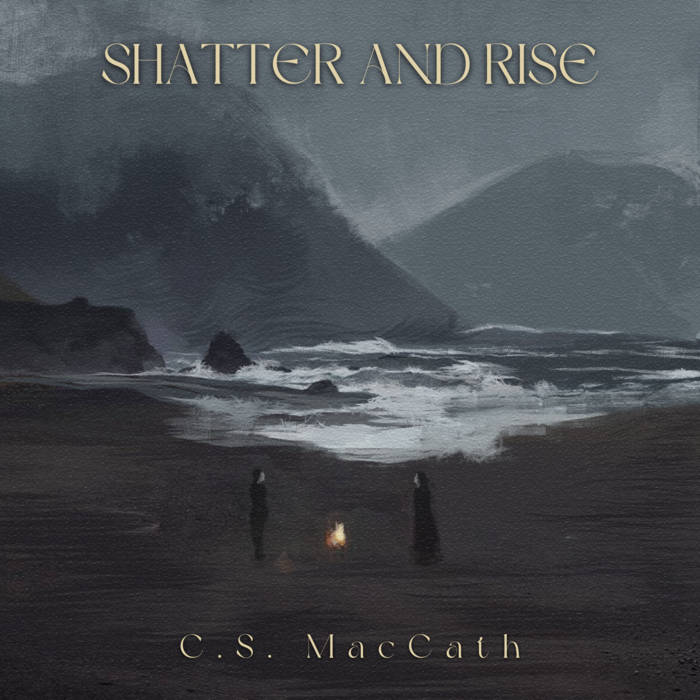
FHBH: You also just released the original EP “Shatter and Rise.” How long did you take to compose the songs? And which was the most difficult, but ultimately most satisfying, to write?
CSMM: Shatter and Rise was a pandemic project. I wanted to give voice to a couple of songs I had written many years ago, and I also wanted to record a new version of Child Ballad #10, “Twa Sisters.”
I honestly can’t speak to the difficulty of writing the title song, because I wrote it so long ago that I have no memory of the composition. It was probably sometime between 1993 and 1995, because I remember singing it for a lover at the spiritualist retreat Camp Chesterfield in Indiana on a frosty winter day. I wrote “Seven Weeks” for that very lover; a tall, lean guitar boy with long black hair who was far prettier than he was dependable. “Cruel Johnny” was a subversion of the “Twa Sisters,” written because it had always vexed me that in the plot of the ballad, one sister kills another for the sake of a man who dates them both. I wrote that one during the height of the pandemic, when I had time to brood on such things.
Of the three, “Seven Weeks” was the most difficult to write, because I carried a torch far too long and held it far too high for that pretty guitar boy. “Cruel Johnny” was certainly satisfying to subvert. But I wish I could remember writing “Shatter and Rise.” It’s so magical and satisfying a ballad to sing, and I know that when I wrote it, I identified with the young woman searching for a teacher in the song. Now I identify with the teacher she finds.
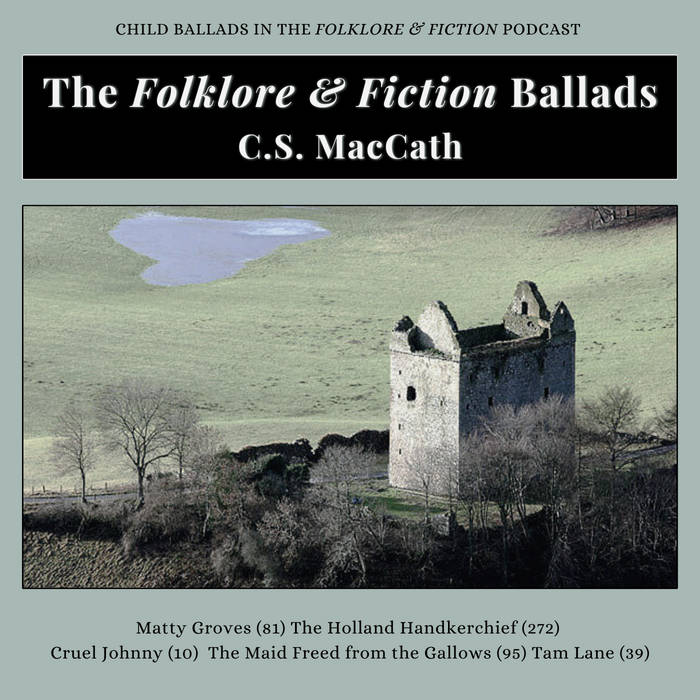
FHBH: Your second EP, “The Folklore and Fiction Ballads,” is due out on 20 March. How did you decide which five of the Child Ballads to feature on your podcast, and later on the EP? Do you plan to continue your research into the Child Ballads and produce more songs in the future?
CSMM: The Folklore & Fiction Ballads is essentially an educational EP. I recorded it to reacquaint me with the music production process after a hiatus while I finished my PhD, and I wanted to give podcast listeners who were singing the ballads themselves a complete set of those I had performed for the Folklore & Fiction podcast. I selected them because they’re listed in The Types of International Folktales: A Classification and Bibliography (the ATU index) as examples of traditional folk tale plot types, and I worked with the ATU index quite a bit in the podcast. I’m especially proud of the liner notes for this release, which you can only get through Bandcamp, because they contain quite a bit of folklore.
At present, I don’t have any plans to research and record any more Child Ballads, though that could certainly change! I love these narrative songs, and I’ve devoted an entire chapter to them in The Storyteller’s Guide to Folklore.
FHBH: You recently partnered with Storybilder to create content on folklore and creative writing. What drew you to Storybilder, and what topics do you plan to cover?
CSMM: Tanya Gough is the creative force behind Storybilder, and she’s been following the Folklore & Fiction project for some time. I can’t remember when we started talking about collaborating, but the big inhibitor for this and all of my other projects has been graduate school. Now that I’ve completed my studies, we’re looking at providing a series of articles for new writers at the intersection of folklore and storytelling. We don’t have a final list compiled yet, but I can write with confidence that we’ll be covering some of the same ground Folklore & Fiction covers. There might be other collaborative projects on the horizon as well, but we’re still hammering those out. I’m really excited about this, because Storybilder and Folklore & Fiction are a natural fit for each other.
FHBH: Now that you have completed your doctoral degree, do you hope to return to writing fiction and poetry? If so, can you give is a hint as to what you will be creating?
CSMM: I have three projects in various stages of completion. I’m writing The Storyteller’s Guide to Folklore, which is a comprehensive handbook for writers who want to make use of folklore in their storytelling. It’s rooted in the Folklore & Fiction podcast series but significantly expands on the topics I covered in that work. I’m also editing a completed science fiction novel that I stopped submitting when I went back to university, tentatively titled The Decoherence of Light. Both of these projects are slated for completion by the end of 2025. Next year, I’ll begin writing a dark climate crisis fairy tale series titled Song and Covenant.
FHBH: Where can readers and listeners find your stories and songs? And can they follow you on social media or through a blog or newsletter?
CSMM: You’ll find me at https://csmaccath.com and https://folkloreandfiction.com (both addresses point to the same website). You can sign up for the Folkbyte newsletter there, and you can also sign up to use the Folklore & Fiction archive of podcasts and transcripts. I have a Linktree profile, and all of my most recent music and writing is linked there. Finally, I’m most active on Bluesky, and my handle there is @csmaccath.bsky.social.
FHBH: What other projects are you working on?
CSMM: I have all the lyrics written for an EP titled Lead On, Wild God. I’ll start writing the music tomorrow.
 Eternal Haunted Summer